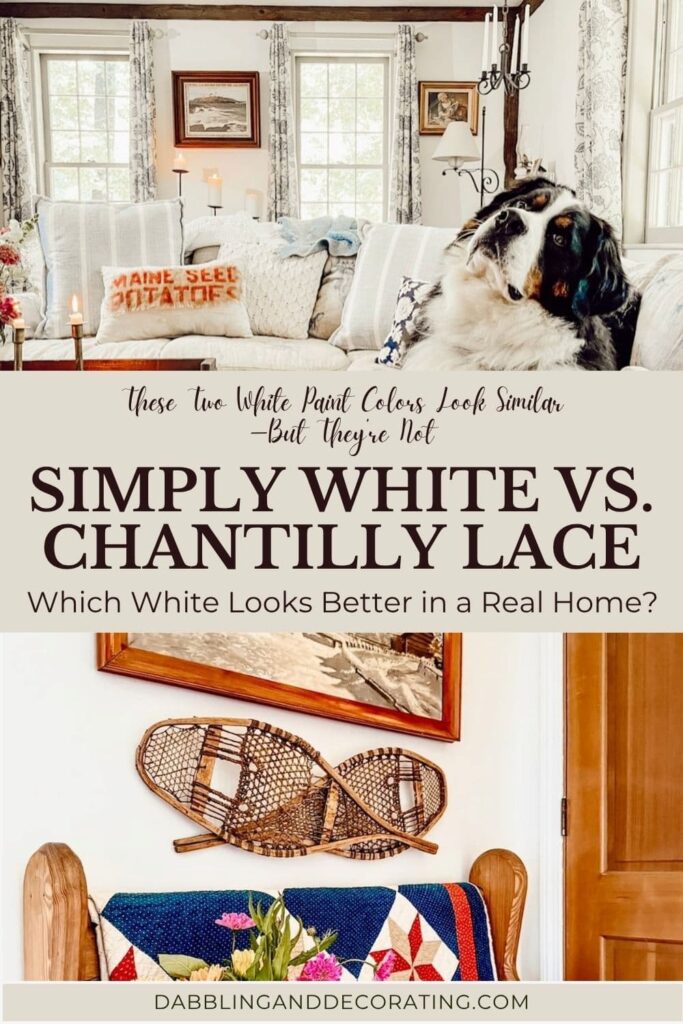

Simply White vs. Chantilly Lace—which is right for your home? See both Benjamin Moore whites in our New England homes and why we chose each one.
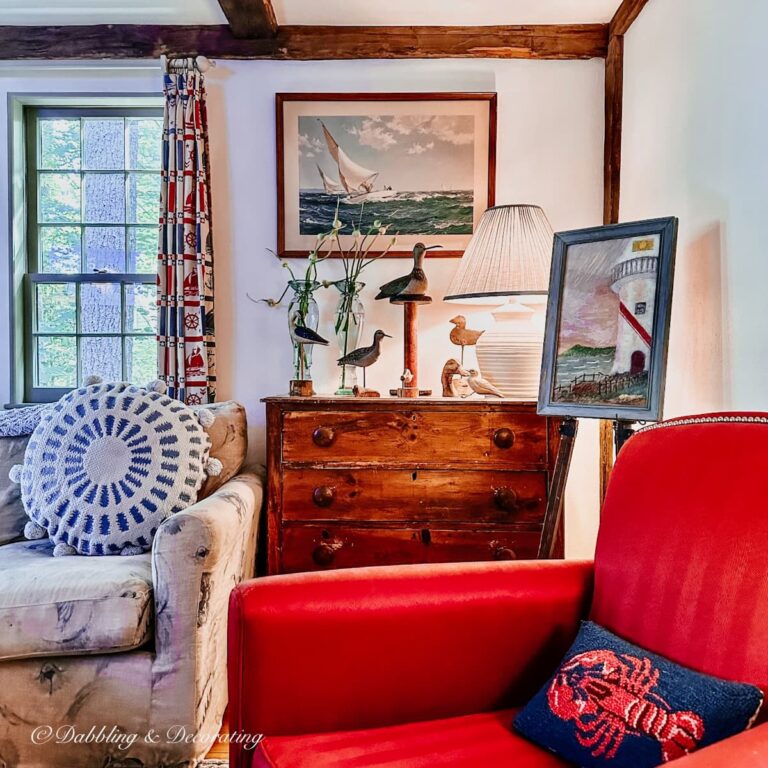
If you’re trying to choose between Benjamin Moore Simply White and Chantilly Lace, I’ve lived with both—and love them for very different reasons. We chose crisp, clean Chantilly Lace for the trim, doors, and built-in bookshelves in our vintage-style Vermont home, while the plaster walls throughout our antique-style Maine home are painted the slightly softer Simply White. Both whites beautifully brighten our older New England homes without feeling stark or modern, but the differences between these two popular whites really do matter. Here’s why we chose each one, how they look in different light, and what I’ve learned from living with both.

In My Mother’s Maine Home
Step inside our inherited coastal Maine home where antiques, thrifted treasures, and family memories come together. Explore the full series for room-by-room decorating ideas, restoration updates, and the story behind this special place.
Benjamin Moore Simply White vs. Chantilly Lace: What’s the Difference?
At first glance, Benjamin Moore Simply White and Chantilly Lace can look very similar, but put them side by side and the differences become much easier to see. Chantilly Lace is the cleaner, crisper of the two, while Simply White has a touch more warmth and softness. Neither feels overly creamy or yellow, which is one reason I love them both. Let’s take a closer look at each white before seeing how we use them in our two homes.
| Simply White OC-117 | Chantilly Lace OC-65 | |
|---|---|---|
| LRV | 89.52 | 90.04 |
| Overall feel | Soft, slightly warm white | Crisp, neutral white |
| How we use it | Plaster walls | Walls, trim, doors & built-in bookshelves |
| Our finish | Eggshell on walls | Eggshell walls; gloss trim |
| Our style pick | Antique, Early American, traditional | Cottage, vintage, farmhouse |
Benjamin Moore Simply White
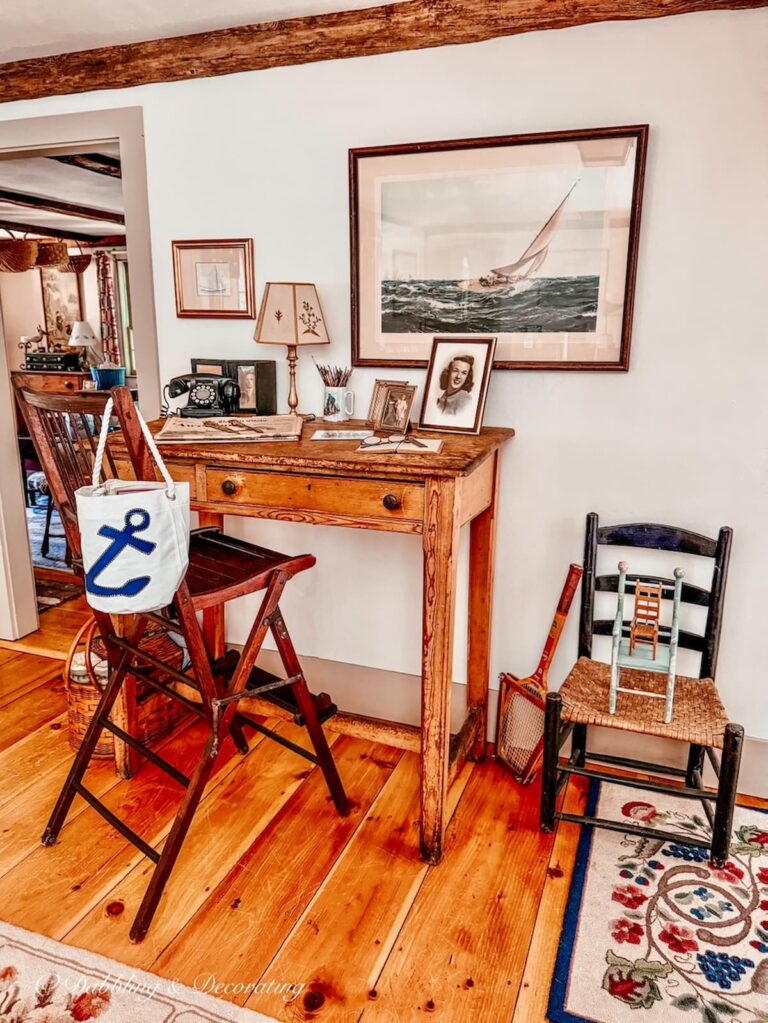
Benjamin Moore Simply White was my first introduction to a white that felt truly fresh without looking stark. When we began renovating our Maine home after inheriting it, I asked our painter to recommend several whites and painted large samples of each directly onto the plaster walls. Simply White was the clear winner.
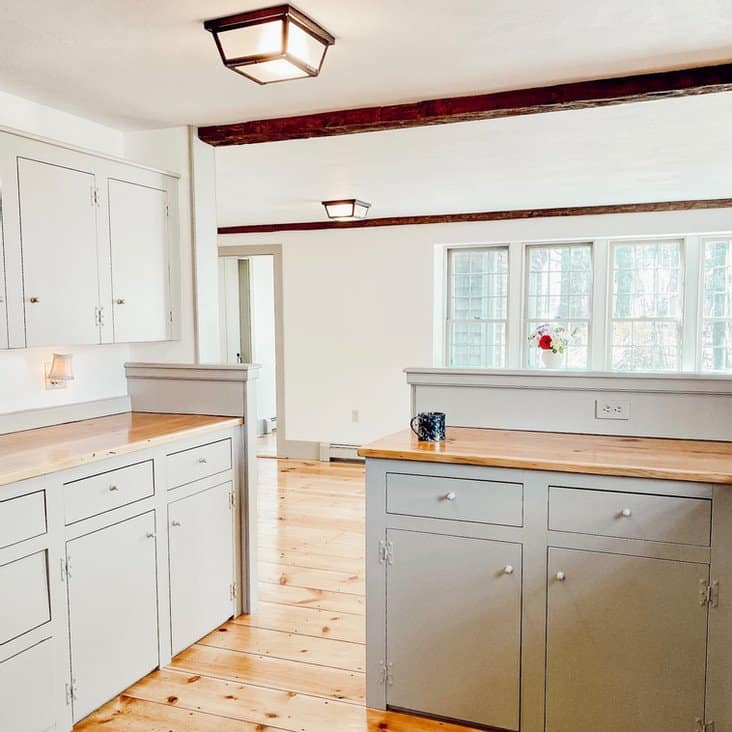
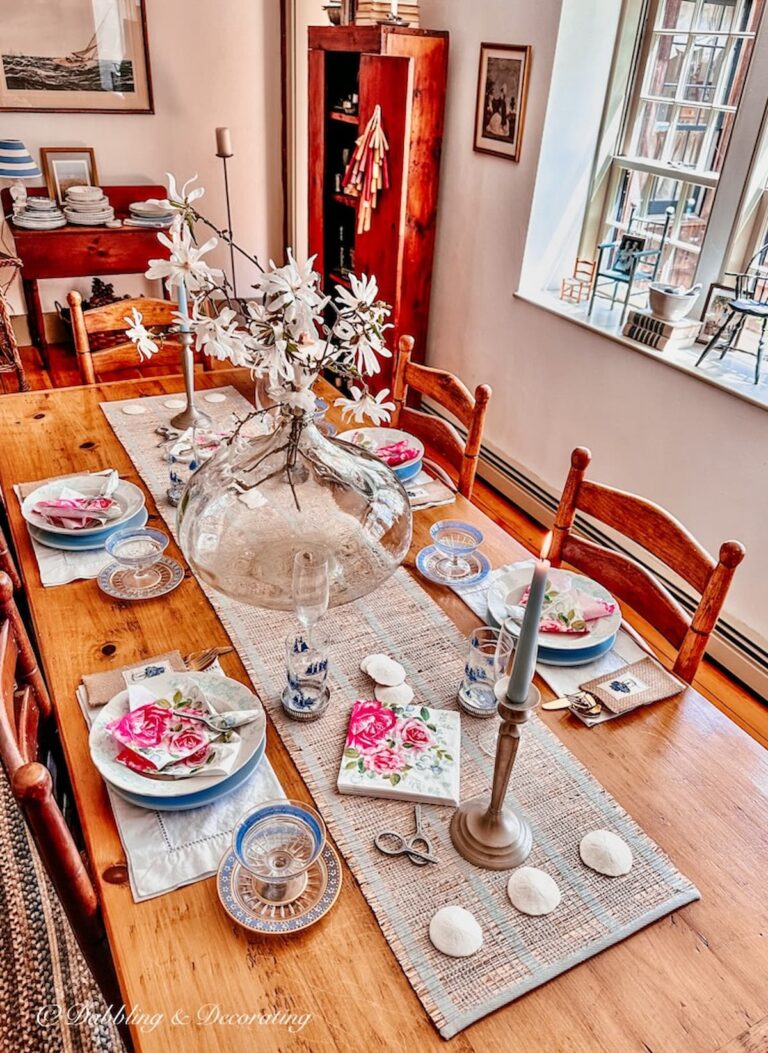
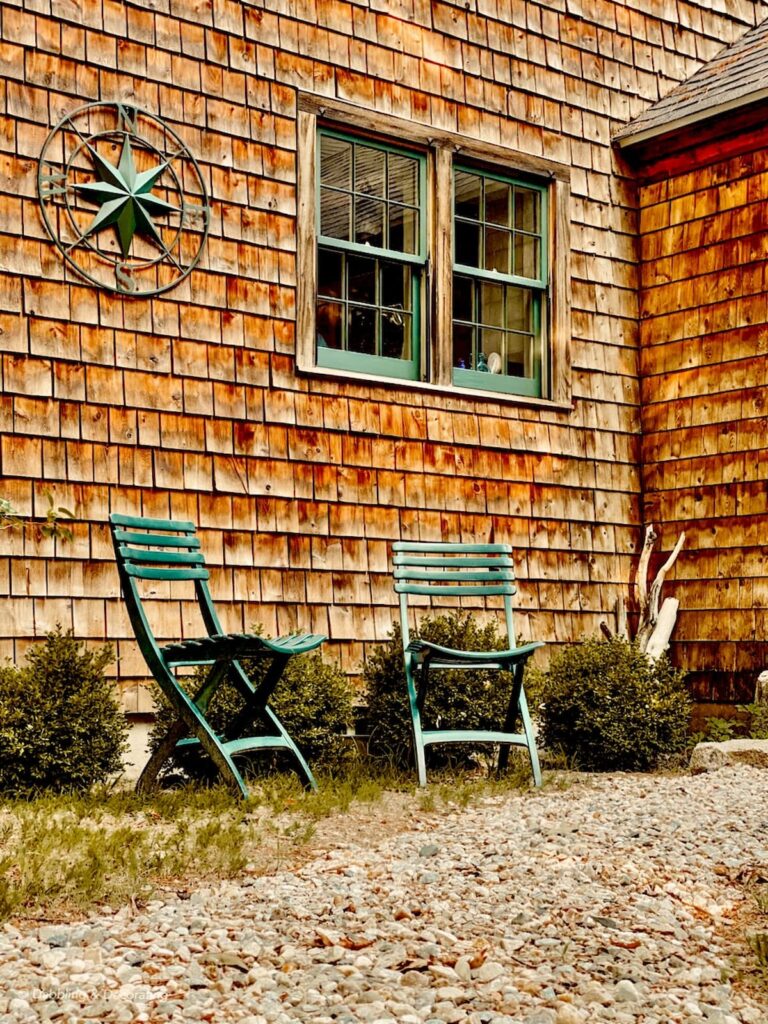
It immediately brightened the rooms without looking yellow against our soft pine floors, exposed wood beams, and other warm natural elements. Just as importantly, it still felt appropriate to the house’s traditional character rather than giving the walls the crisp, modern “builder white” look I wanted to avoid.
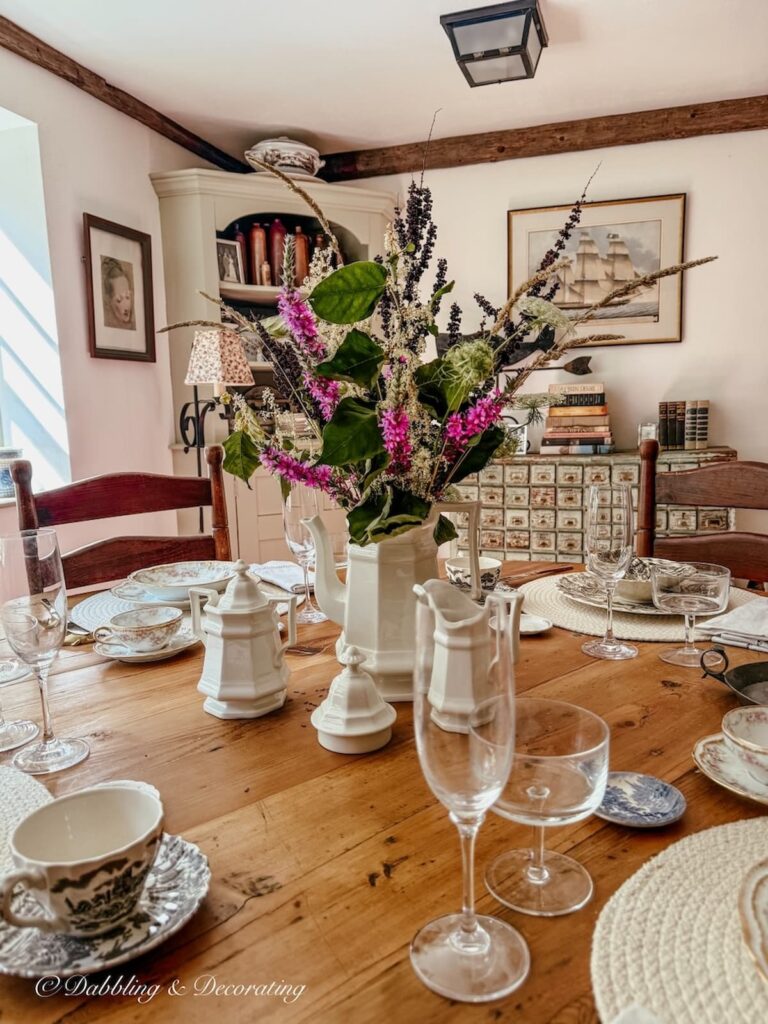
Today, Simply White pairs beautifully with our Nantucket Gray kitchen and trim, custom historic blue-gray trim, antique furnishings, and natural wood. After living with it for years and seeing it in every kind of New England light, I would choose Simply White for plaster walls and an older home again and again.
Vintage Coastal New England Decorating Ideas
Looking for vintage coastal decor ideas? Explore timeless New England decorating inspiration, thrifted finds, and creative ways to style your coastal home.
Benjamin Moore Chantilly Lace
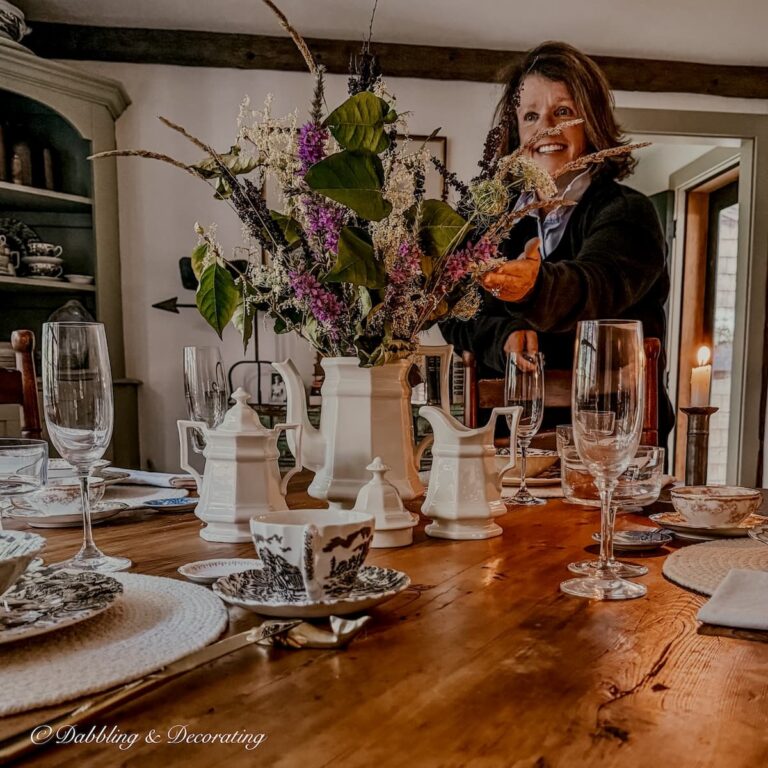
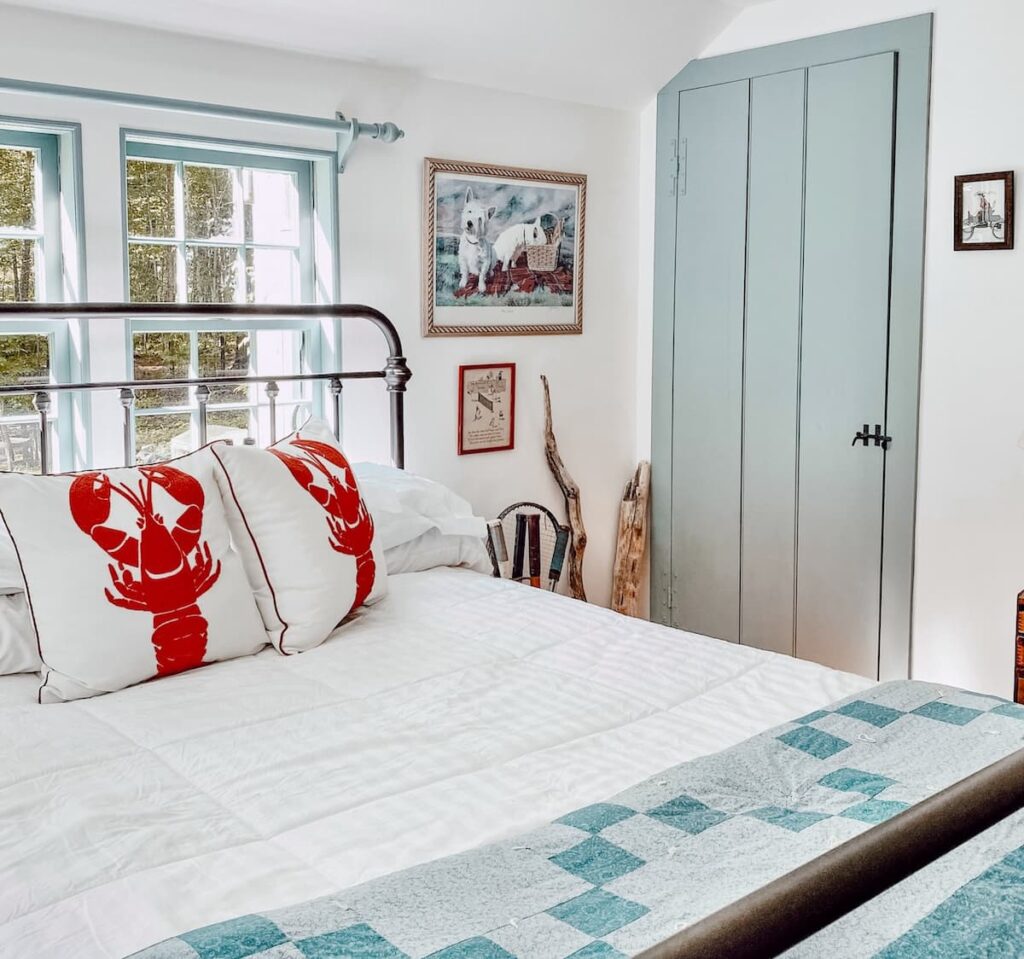
I first discovered Benjamin Moore Chantilly Lace through my friend Molly of Molly in Maine, who raved about using this beautiful white in her colorful, vintage-style coastal home, and she was absolutely right. When it came time to repaint our Vermont home, we chose Chantilly Lace in a glossy finish for the trim, doors, and built-in bookshelves, pairing it with Stardew, a soft blue-gray. We also used Chantilly Lace in an eggshell finish on some of our walls and hallways.
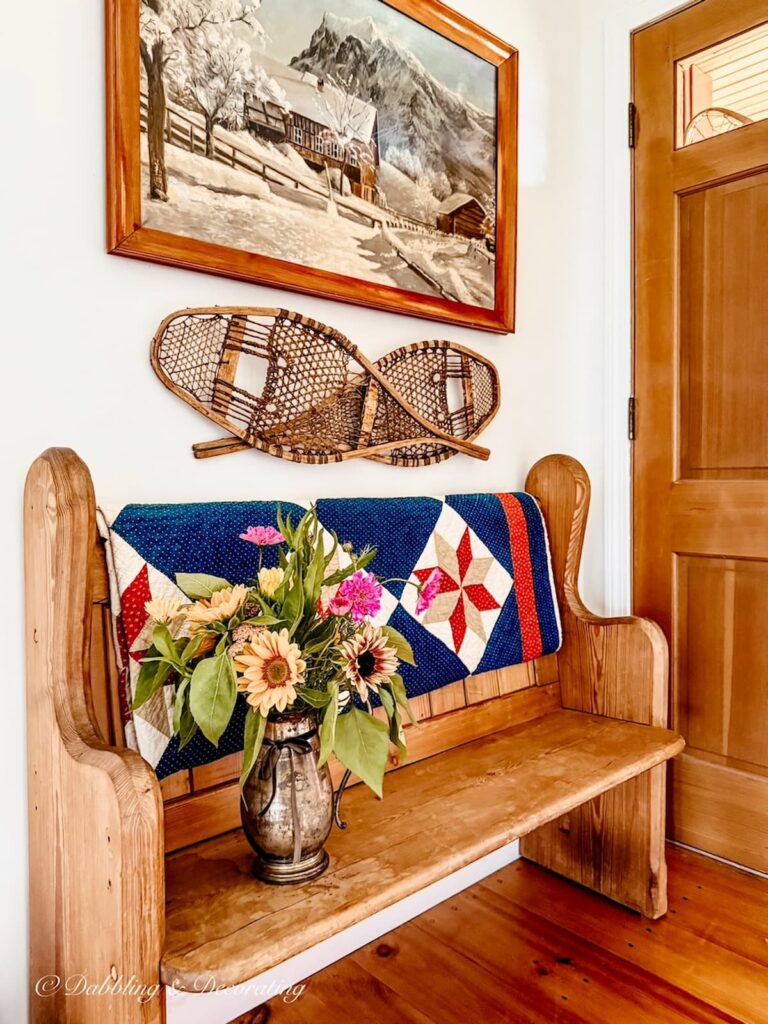
Chantilly Lace reads as a crisper, more neutral white than Simply White, with very little noticeable warmth, which gives our vintage home a fresh, updated feel without taking away from its character. Against Stardew, the clean white really makes the blue pop, while our soft pine floors add warmth and keep the combination from feeling too modern or stark. I especially love Chantilly Lace with blues and blue-grays; it creates that clean contrast I was looking for while still working beautifully with vintage furnishings and natural wood.
And yes, I’m pretty sure my husband ended up liking the Chantilly Lace even more than the Stardew!
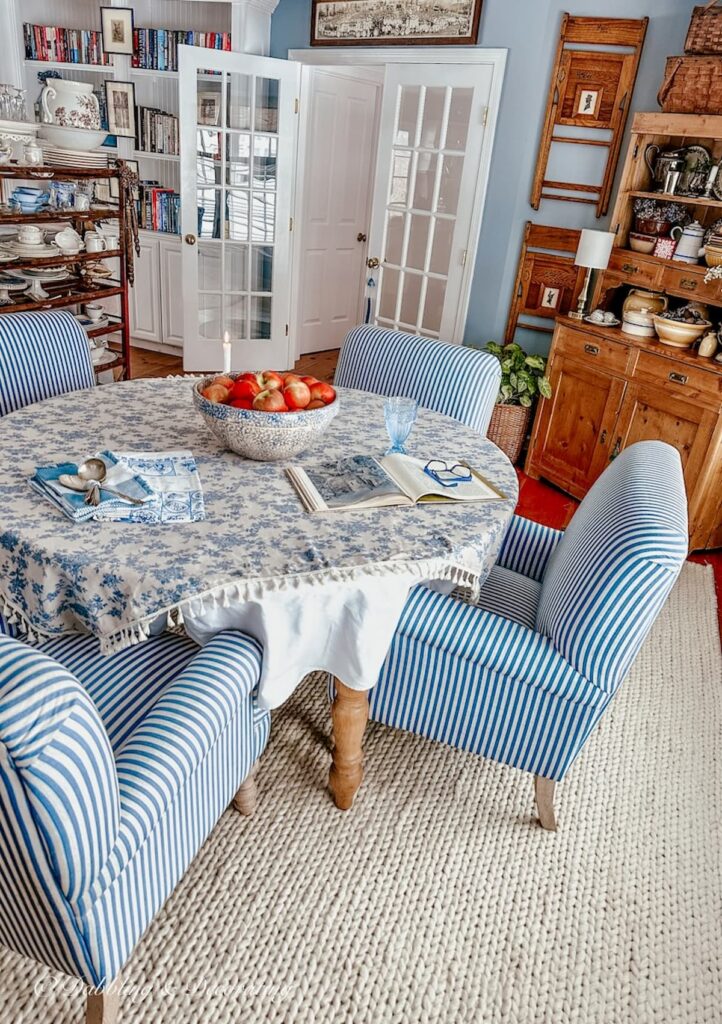

Prefer a Warmer, Creamier White?
If you’re looking for a white with more warmth and creamy undertones, take a look at Benjamin Moore Navajo White, which we previously used throughout the open floor plan in our Vermont home. I still love this classic creamy white, and I think it would pair beautifully with crisp Chantilly Lace trim. The contrast between the warmer Navajo White walls and clean white trim would be especially pretty in a vintage, cottage, or traditional-style home where you want warmth without giving up that fresh white contrast.
How to Choose Between Benjamin Moore Simply White and Chantilly Lace
When choosing between Benjamin Moore Simply White and Chantilly Lace, the biggest difference to consider is warmth. Simply White (OC-117) has an LRV of 89.52 and a subtle warmth that keeps it from feeling stark, while Chantilly Lace (OC-65), with an LRV of 90.04, is slightly brighter and reads as a cleaner, crisper white. Interestingly, their LRVs are very close, so the difference you see in a room often has more to do with undertones, surrounding colors, natural light, flooring, and paint finish than with brightness alone.
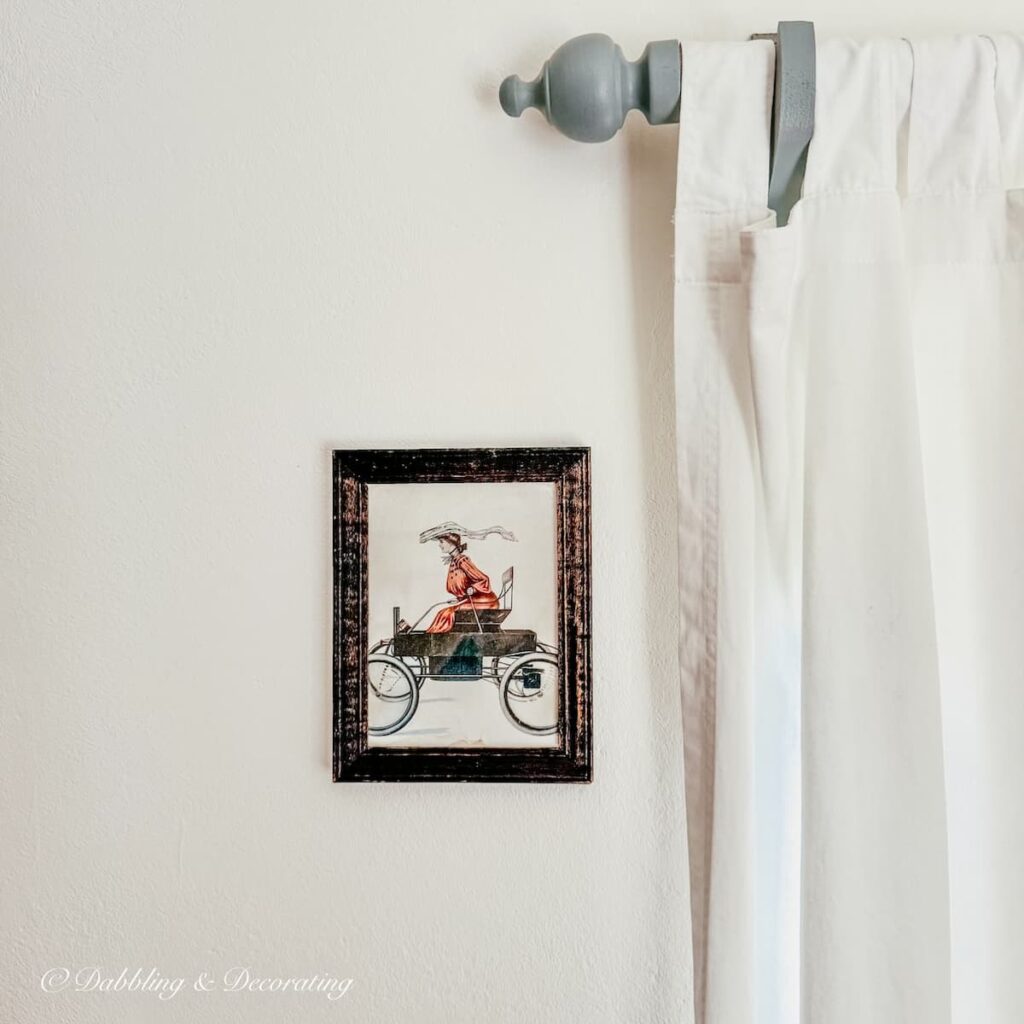
For the plaster walls in our antique-style Maine home, we chose Simply White in an eggshell finish. The softer sheen works beautifully on older plaster while the slight warmth of Simply White complements our pine floors, exposed wood beams, antiques, and traditional New England style. Despite that warmth, I’ve never found it to look noticeably yellow in our home, something I was particularly careful about when choosing a white to use alongside so much natural wood.
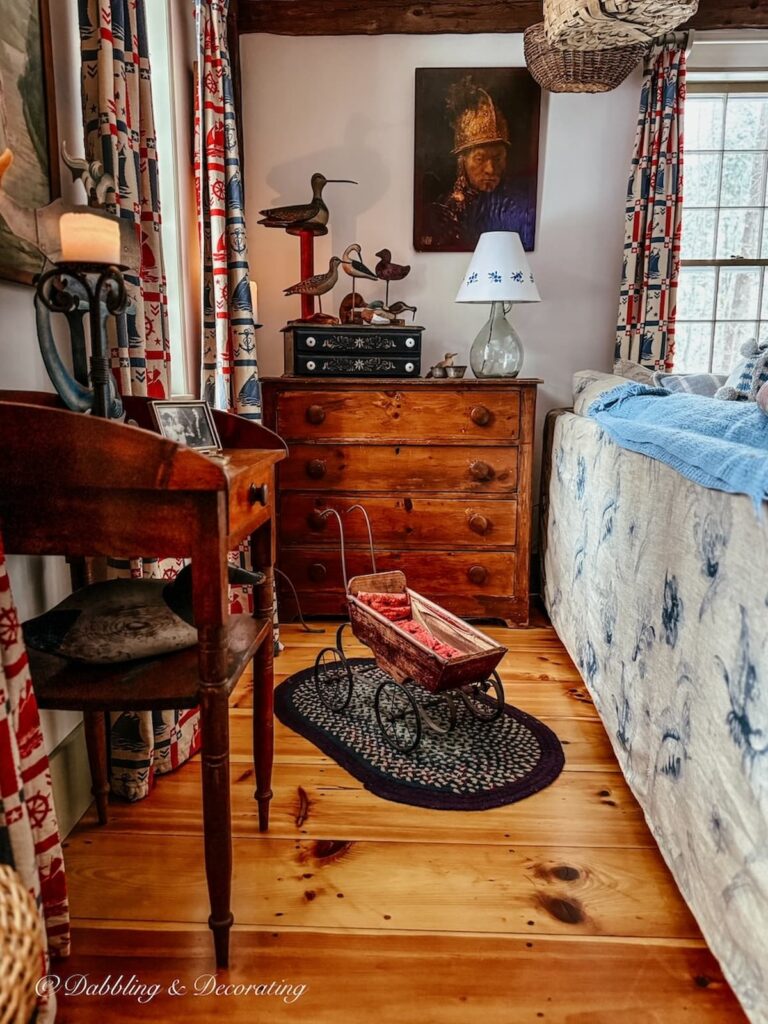
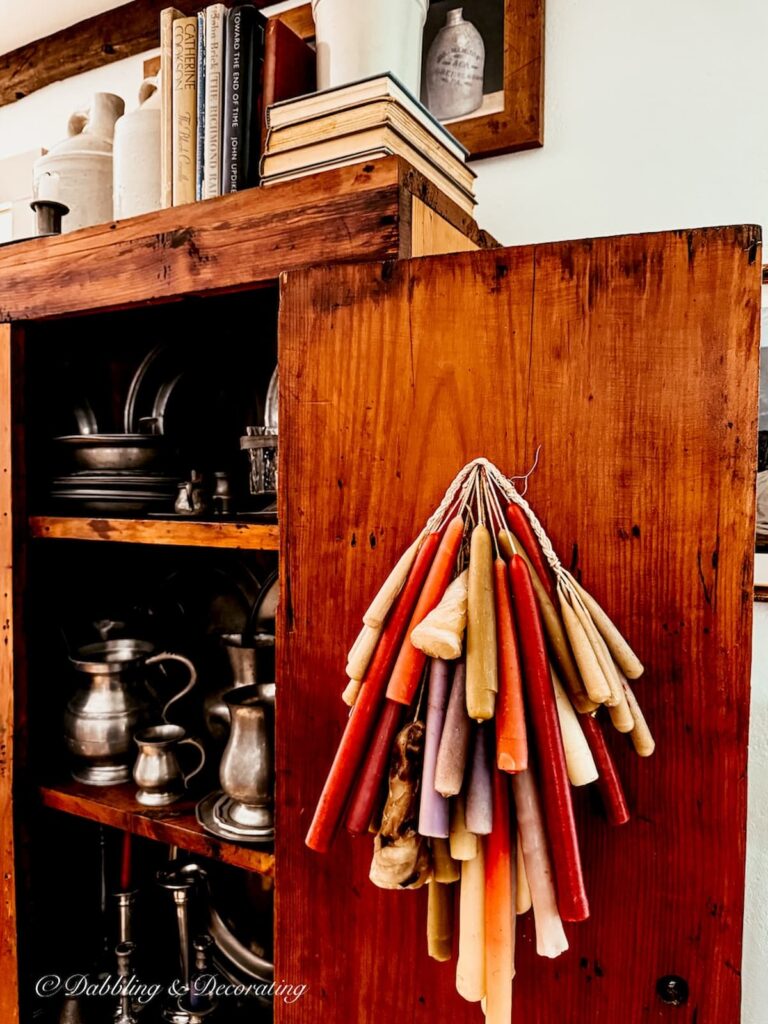
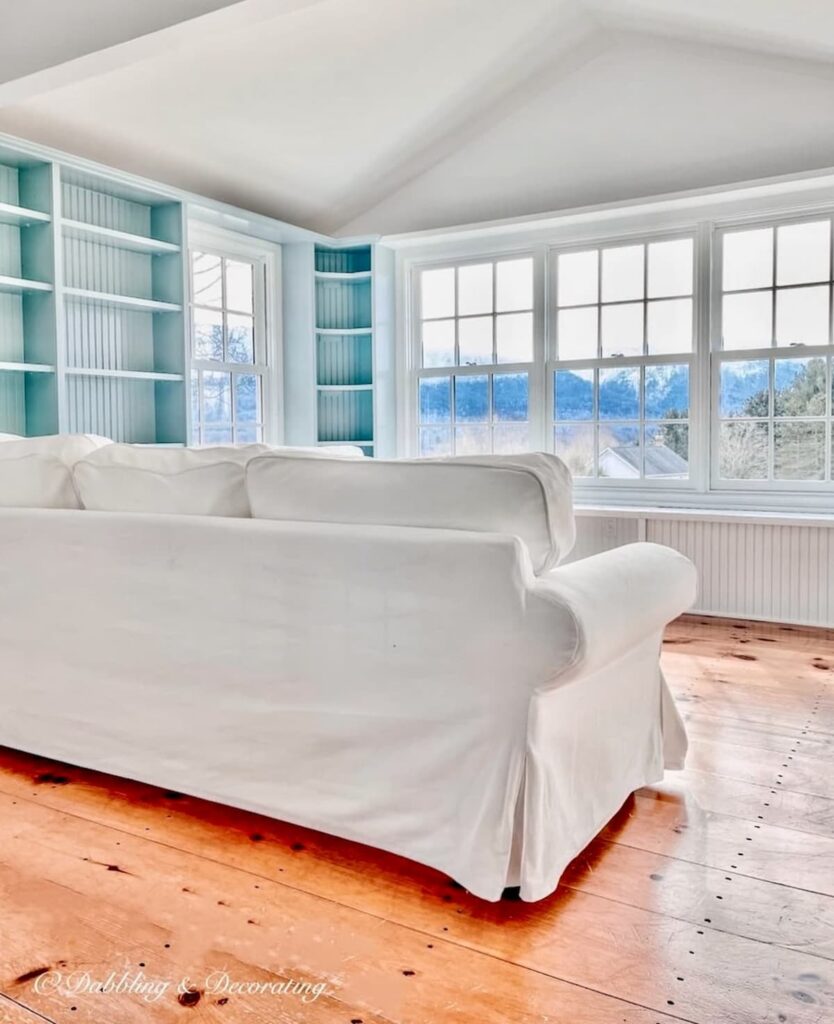
In our Vermont home, we’ve also used Chantilly Lace on both the walls and trim, which is a great example of how versatile this white can be. In our sunroom, Chantilly Lace creates a clean, bright backdrop against the Wedgwood Gray built-in bookshelves, a beautiful blue-green that brings color and character to the space. We chose an eggshell finish for the walls and a glossier finish for the trim, allowing the same white paint color to create subtle contrast through sheen rather than color. Paired with the blue-green bookshelves, warm wood floors, and vintage furnishings, Chantilly Lace feels fresh and crisp without making the room feel overly modern.
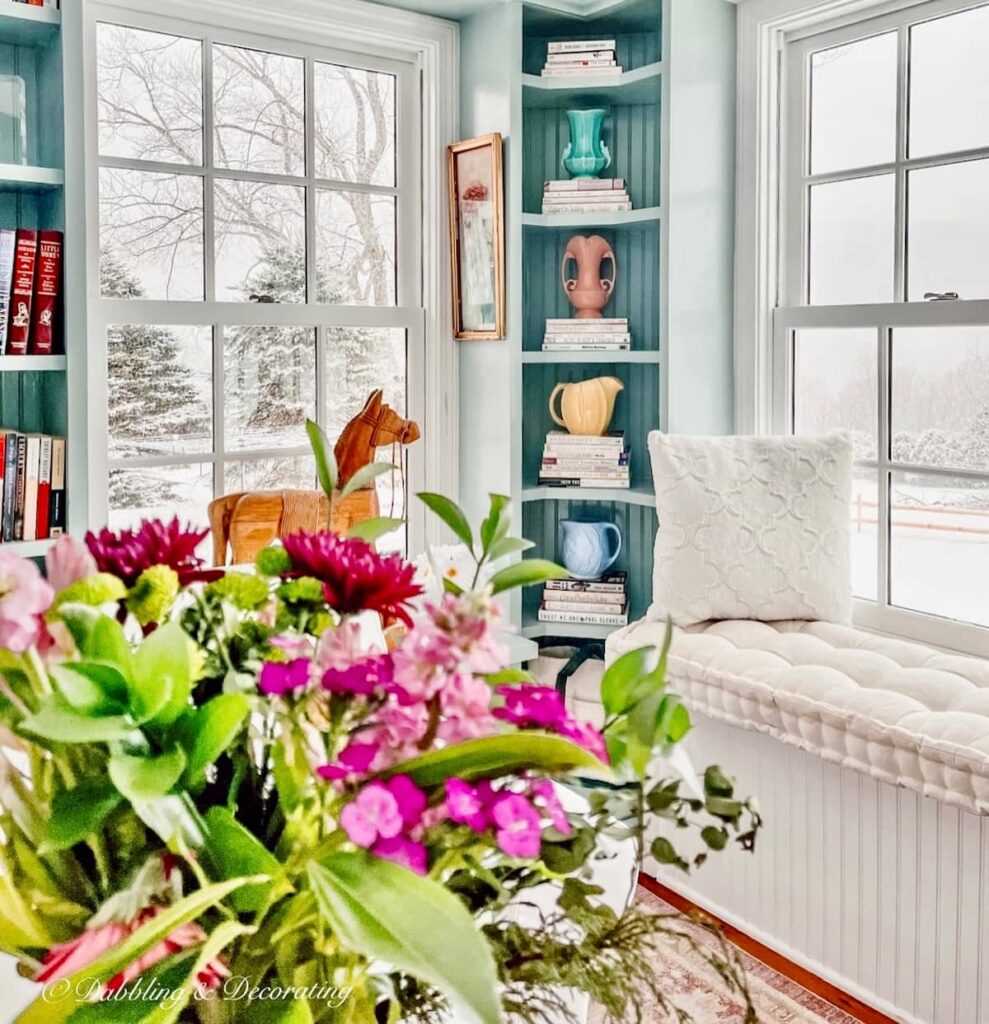
If you’re deciding between the two, I wouldn’t automatically think of Simply White as a wall color and Chantilly Lace as a trim color; both can work beautifully for walls, trim, doors, cabinetry, and built-ins. Instead, consider the look you’re trying to create.
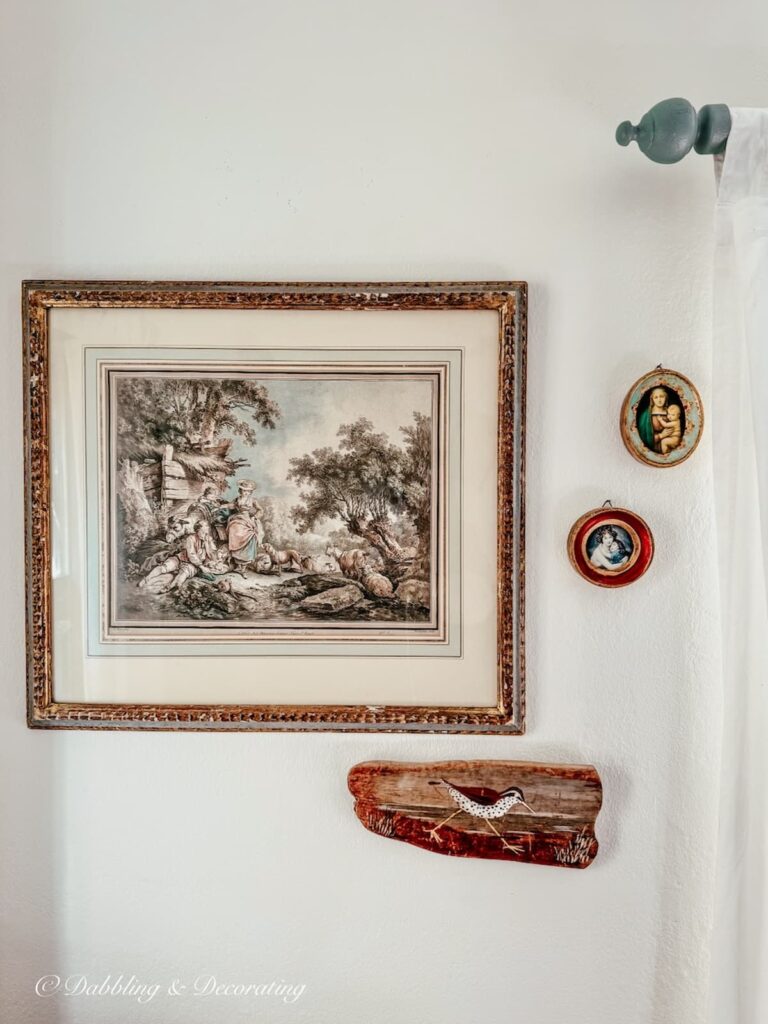
Choose Simply White when you want a clean white with just a little softness and warmth; choose Chantilly Lace when you’re looking for a brighter, crisper white with very little noticeable warmth. And before committing, always sample your white paint directly in the room and look at it throughout the day. White paint can change considerably depending on natural and artificial light and the colors surrounding it.
The Vintage Posts Readers Love Most
Start with the posts readers come back to again and again. These vintage decorating ideas are rooted in New England, styled with thrifted and antique finds, and filled with real-life tips you can use in your own home. Familiar Finds, Styled Your Way.
How to Start a Vintage Booth: Tips, Display Ideas, and Lessons Learned
Eclectic Decorating Style Guide: How to Layer Vintage, Antique, and Thrifted Decor
9 Vintage Booth Displays That Made Me Stop (And What You Can Learn From Them)
Scandinavian Spring Homes: 10 Light and Airy Cottage Tours to Inspire
Antique Oil Lamps: How to Repurpose Them Into Unique Flower Vases
My Vintage Decorating Tip
After living with both whites, I think of Simply White and Chantilly Lace almost as two different vintage personalities. If your home leans toward antique, primitive, Early American, or traditional New England style, I’d reach for Simply White. Its subtle softness feels beautiful with old wood, exposed beams, pine floors, and timeworn antiques without making the room feel yellow or dated. If your style is more vintage cottage, cottagecore, farmhouse, or colorful coastal, I’d lean toward Chantilly Lace. Its cleaner, crisper white gives vintage pieces a fresh backdrop and looks especially beautiful paired with blues, blue-greens, florals, and painted furniture. There are certainly no rules when it comes to white paint, but if I were choosing between Simply White vs. Chantilly Lace for a vintage-style home today, that’s where I’d start.
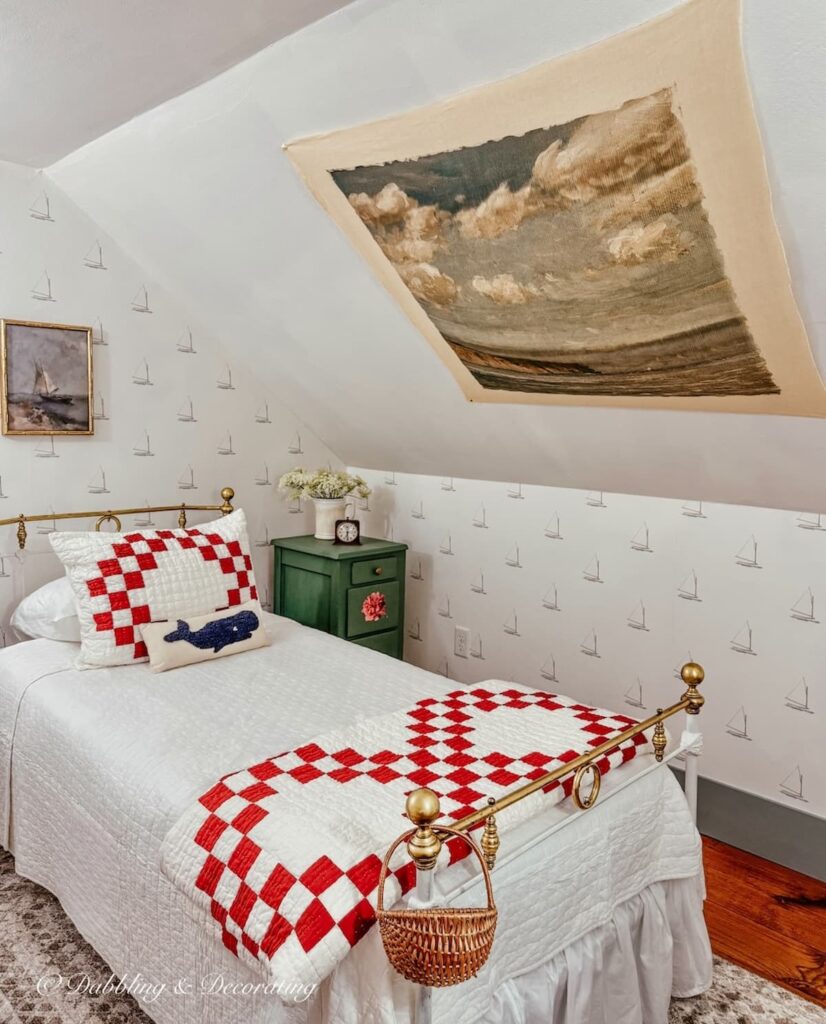
If you’re choosing paint colors for a vintage or older home, explore more of the Benjamin Moore and Sherwin-Williams paint colors we actually live with in our New England homes. From soft neutrals and historic-inspired blues to blue-grays and greens, these are the colors we’ve chosen to complement antique furnishings, warm wood floors, and rooms with plenty of character.
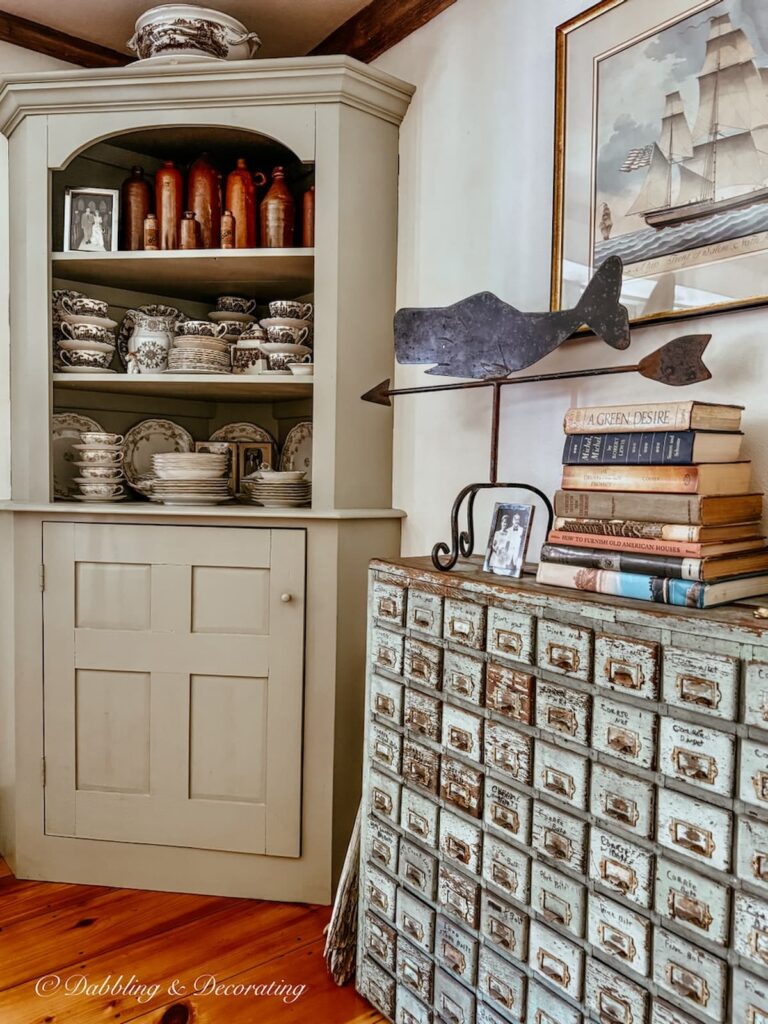
Frequently Asked Questions About Simply White vs. Chantilly Lace
The biggest difference between Simply White vs. Chantilly Lace is warmth. Benjamin Moore Simply White is slightly softer and warmer, while Chantilly Lace is a cleaner, crisper white with very little noticeable warmth.
Chantilly Lace is slightly brighter, with an LRV of 90.04 compared with Simply White at 89.52. In real rooms, however, lighting, flooring, surrounding colors, and paint finish can make a bigger visual difference than the small gap in LRV.
Simply White has subtle warm undertones, but it does not necessarily read yellow. In our Maine home, it stays clean and bright even alongside pine floors, exposed wood beams, and antique furnishings.
Not necessarily. We use Chantilly Lace throughout our vintage-style Vermont home, where it pairs beautifully with wood floors, blue and blue-green paint colors, and antique furnishings. The surrounding materials help keep the crisp white from feeling overly modern.
Both can work beautifully on walls. We chose Simply White in an eggshell finish for the plaster walls in our Maine home because we wanted a slightly softer white. In Vermont, we also use Chantilly Lace in eggshell on hallway and sunroom walls for a brighter, crisper look.
Chantilly Lace is an excellent choice when you want bright, crisp trim with noticeable contrast against a wall color. We use it in a glossier finish on trim, doors, and architectural details throughout our Vermont home. Simply White can also be used for trim when a softer white is preferred.
Yes. Using Chantilly Lace on both walls and trim can create a cohesive look while different paint finishes provide subtle contrast. In our Vermont sunroom, we use eggshell Chantilly Lace on the walls and a glossier finish on the trim alongside Wedgwood Gray built-in bookshelves.
Should I sample Simply White and Chantilly Lace before choosing?
Yes. Always test Simply White and Chantilly Lace in the actual room before making your final decision. White paint colors can change throughout the day depending on natural light, artificial lighting, flooring, furniture, and nearby paint colors.
Join the Vintage Circle — Familiar Finds, Styled Your Way™
Love vintage treasures, thrifted gems, and a home that tells your story? Leave a comment, share this post with a kindred spirit, or head to my Start Here page to explore more. Want fresh prompts and timeless ideas? Subscribe to join our Seasonal Vintage Decor Styling Challenge for weekly inspiration and behind-the-scenes peeks.
Pin it for later!