
The story of an unbelievable antique find
plus five simple ways I’m styling it in my unfitted kitchen scullery
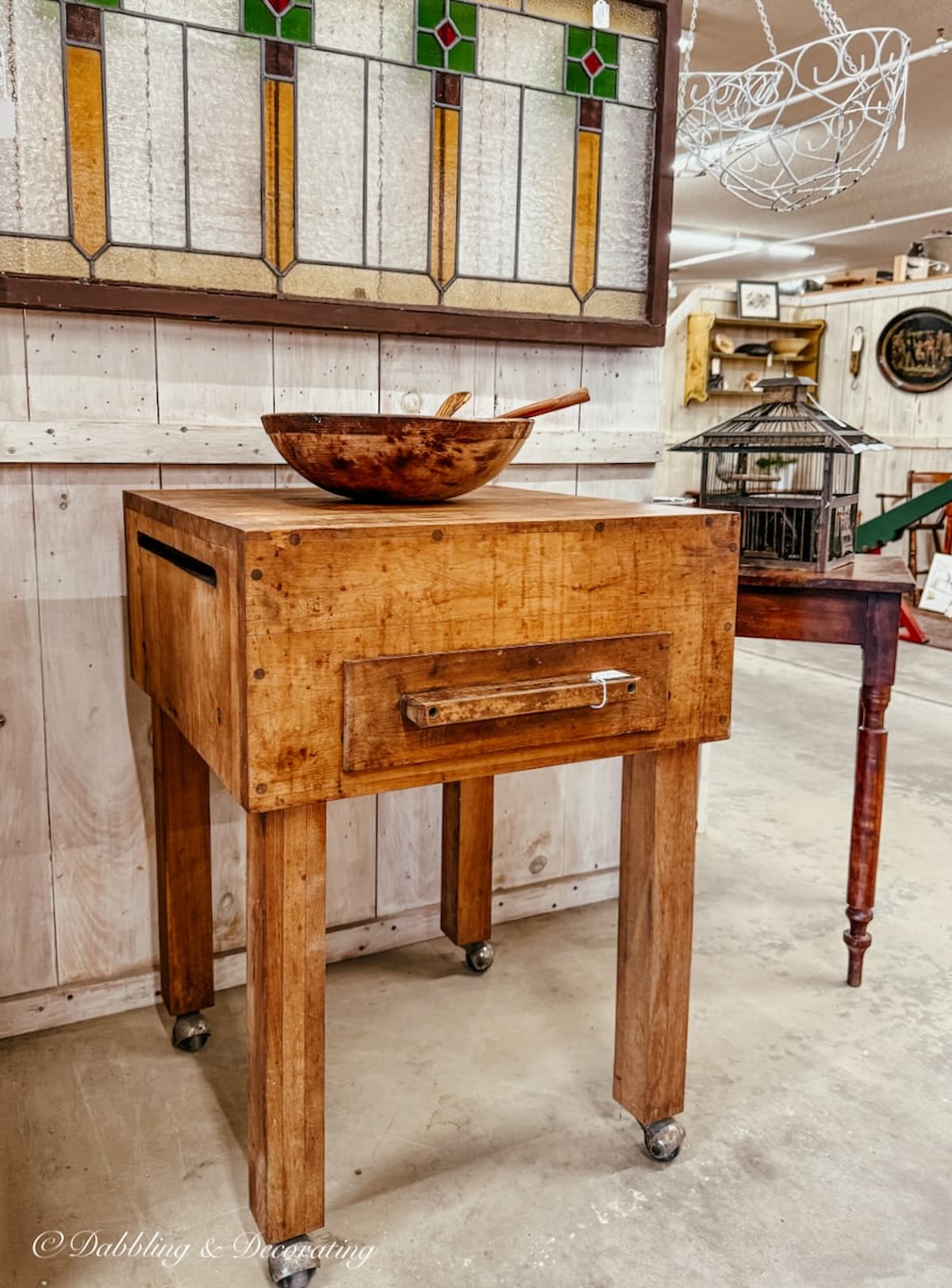
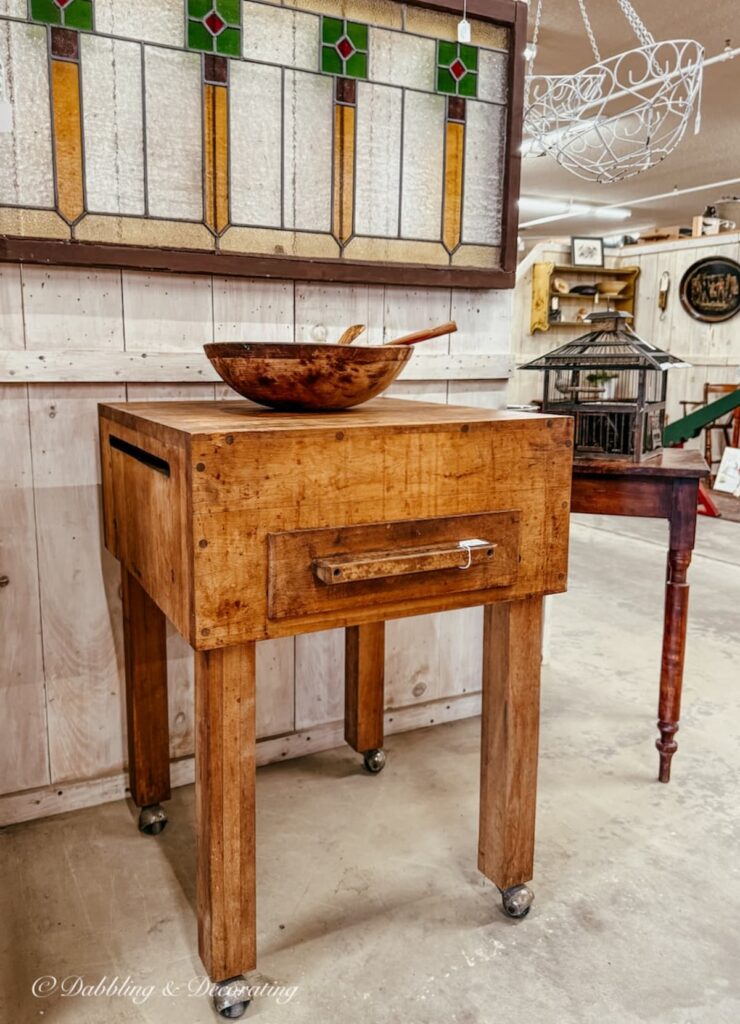
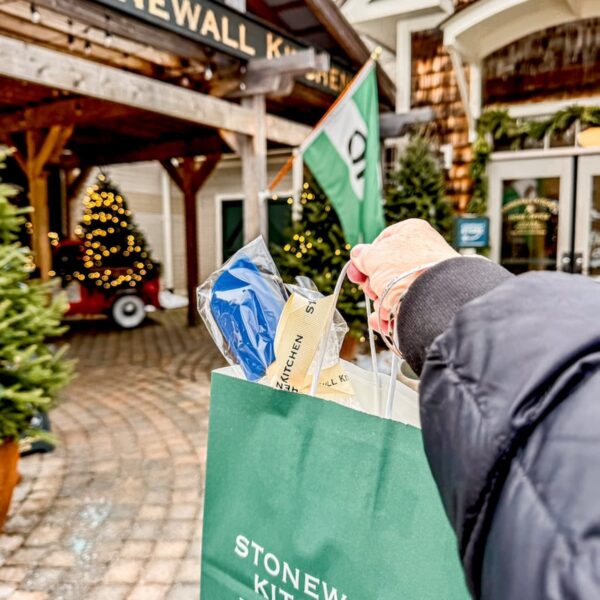
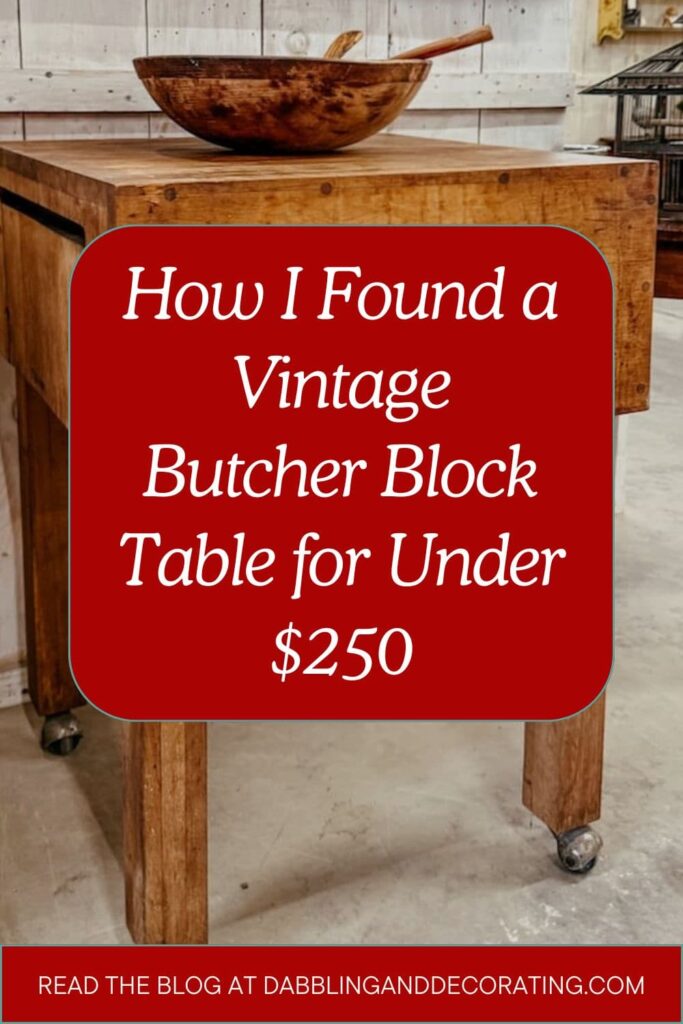
It was a Monday, and I had Heritage Americana decor on my mind when I headed into Stonehouse Antique Center in Vermont, hoping to find a few classic pieces to photograph for a new post. I hadn’t even made it ten minutes down the aisles when this vintage butcher block table stopped me in my tracks. I’ve seen butcher blocks for years at antique shops, online, everywhere, but they’re always just a little off. And almost always too expensive. But this one? I kept circling back to it. And then I saw the price. Under $250. I actually stood there for a second thinking, “What’s the catch? ” Because if you’ve ever looked for a vintage butcher block table, you know they usually start around $800 and go up from there. So why was this one sitting here… and still available?
Antiquing & Thrifting New England Shopping Guides: Vintage Stores, Markets & Must-Visit Stops
Join me as I explore the best antique and thrift stores from Maine to Vermont, and even Paris and Canada. It’s your go-to guide for planning your next treasure-hunting adventure.
Why This Vintage Butcher Block Table Was Still Sitting There (And Priced So Low)
I kept circling back to it, honestly, a little confused. It felt like one of those pieces that should’ve been gone already. So when the gals at the counter came over to say hello, they knew me well by now. I finally just asked, “Is this really the price?”
I think they thought I was questioning it the other way around, but I meant it as in… why is this such a good price?
Because it was charming. Really charming.
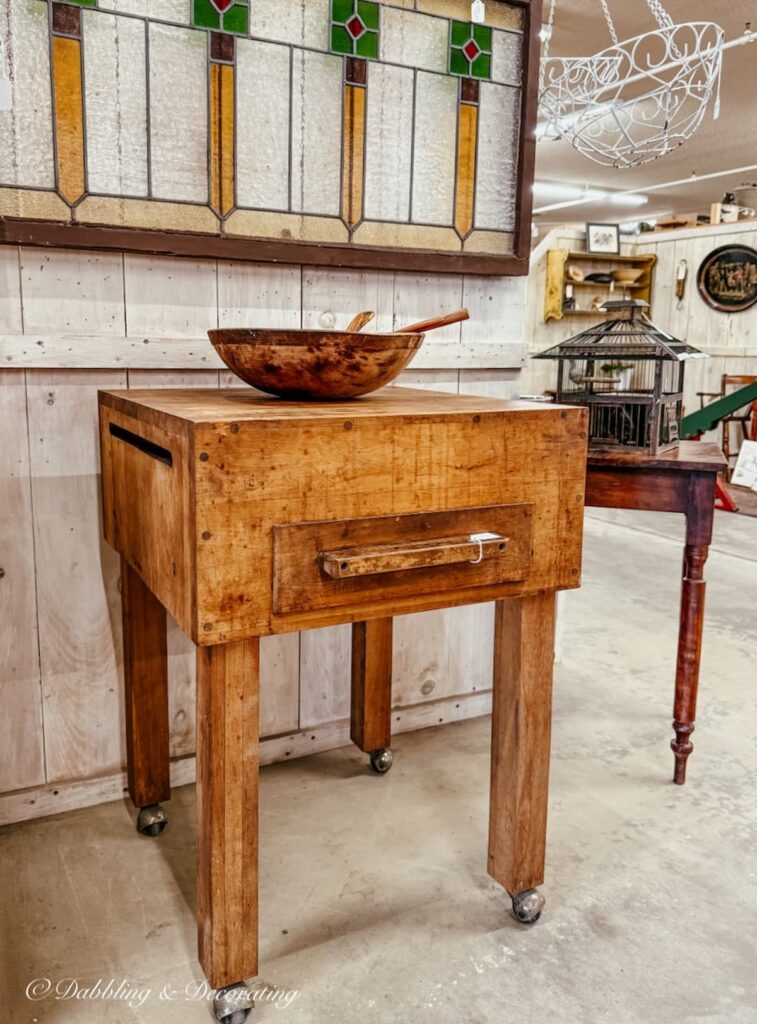
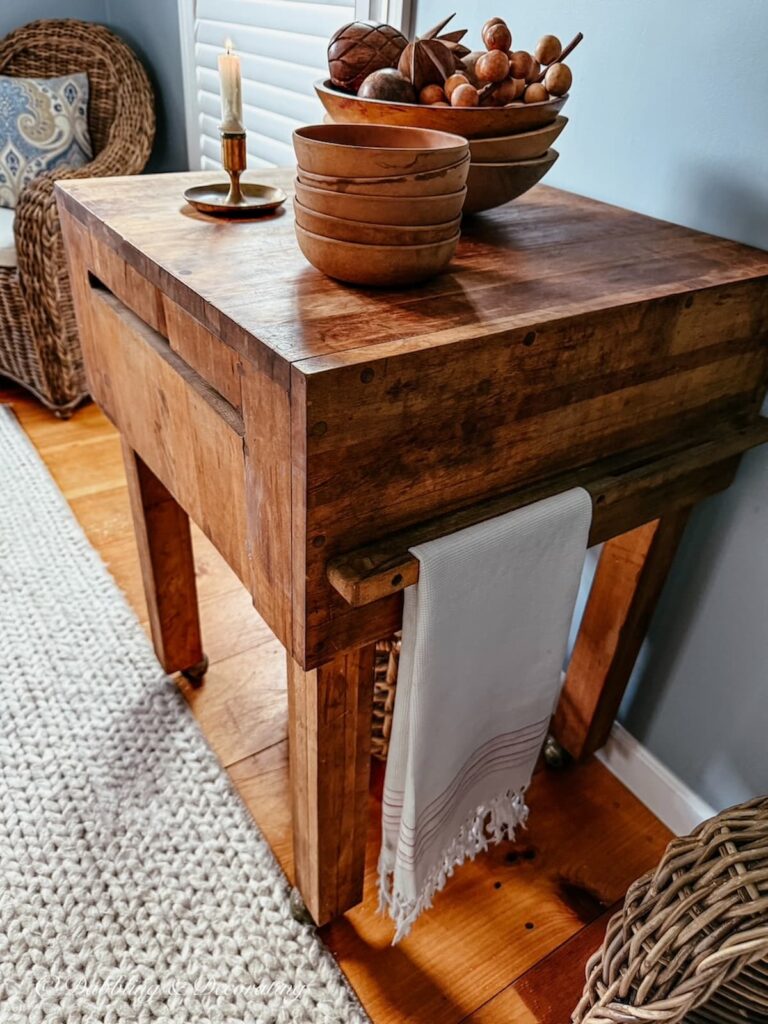
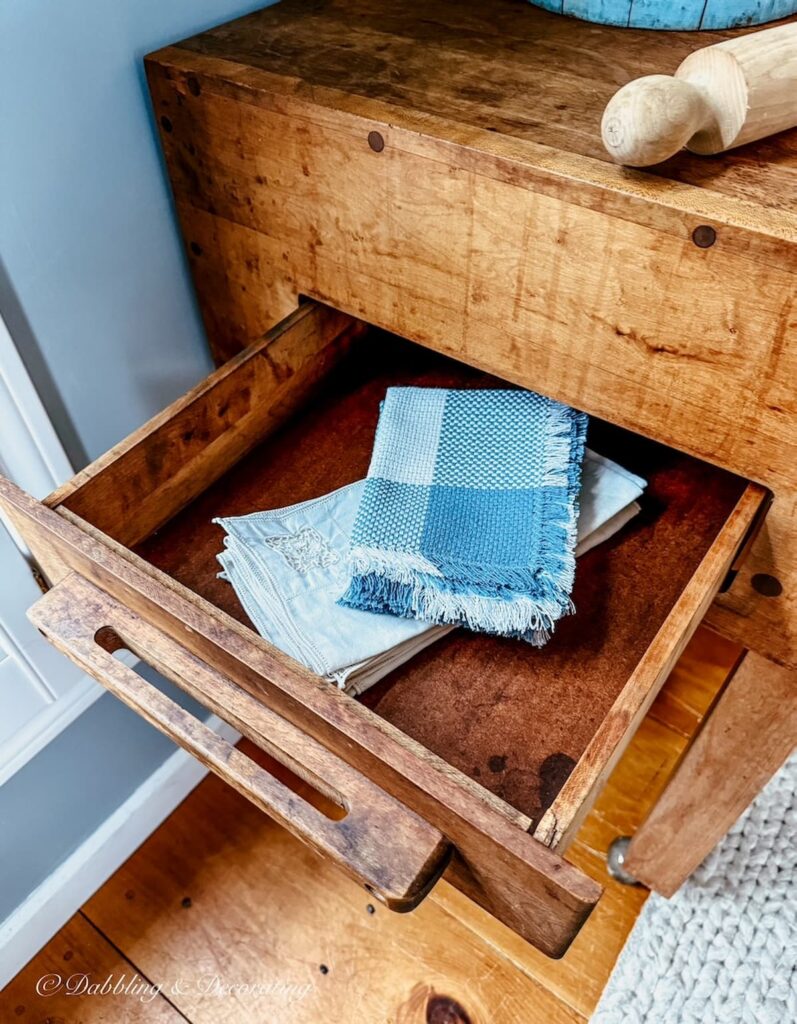
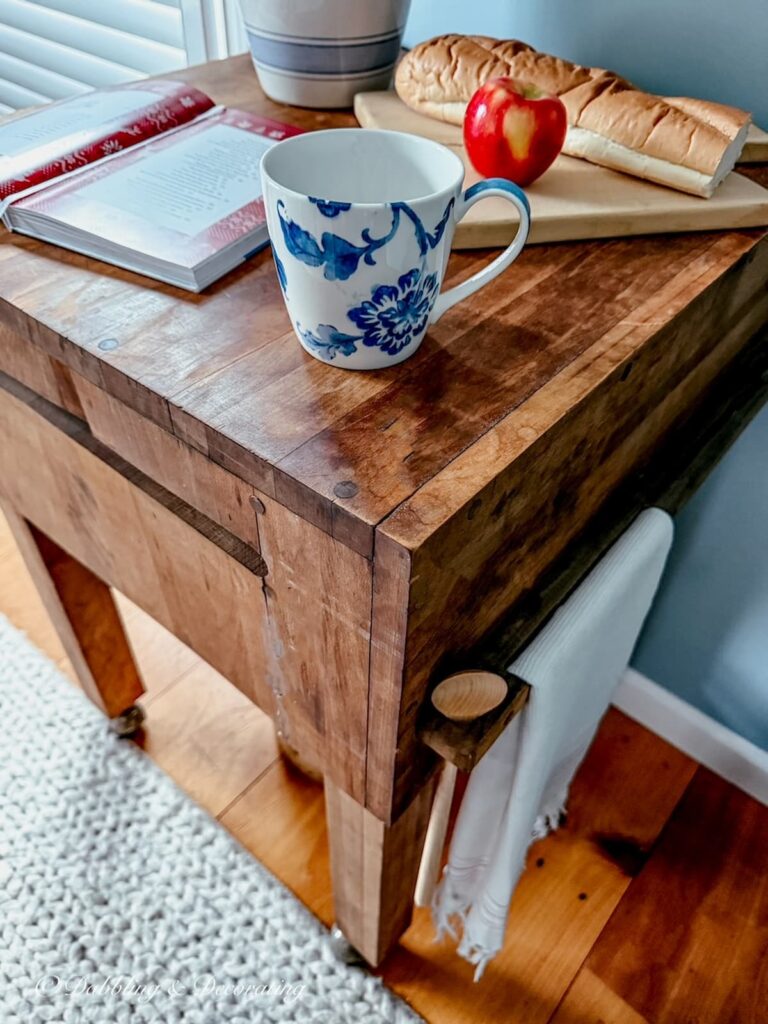
It had the sweetest drawer built right into the front, and everything matched; it wasn’t pieced together or makeshift in any way. There was an opening along the side that I couldn’t quite figure out at first, and she explained that it was meant for a breadboard you could slide in to expand the surface. I mean, how great is that? A little hidden function built right into it.
And then there were the casters, fully working, smooth, and sturdy. I wheeled it around a bit (because of course I did), and it just felt right. Not overly heavy, not clunky, just solid and easy to move. The wood had that warm, worn patina I’m always drawn to, not too new, not overly distressed, just naturally aged in the best way.
I kept thinking, “Why hasn’t someone grabbed this already? “
And that’s when she said it.
“It’s not a solid butcher block.”
And honestly? That didn’t bother me one bit.
Because everything else about it worked. It had the look, the charm, the functionality, and the scale that actually made sense for a real home, especially for the kitchen-inspired scullery I’ve been creating. And for $238 (plus the little 10% off we always seem to find a way into), it just felt like one of those once-in-a-while finds you don’t overthink.
I got it into the car easily, brought it into the house on my own without a struggle, and the whole way home, I kept thinking the same thing: I still can’t believe this was just sitting there. Just like when I found that brand-new KitchenAid mixer at Goodwill NNE, I was so giddy.
What Is a Vintage Butcher Block Table (And Why People Love Them)
A butcher block table is a sturdy wood work surface originally designed for serious kitchen prep, dating back to old butcher shops and early home kitchens where durability mattered most. Traditionally, these tops were made by joining thick pieces of hardwood, often maple, into a dense, end-grain surface that could handle years of chopping and heavy use. Vintage butcher block tables you’ll find today range from those classic, heavy solid blocks to lighter, more functional versions with plank tops, drawers, shelves, or even clever additions like slide-out breadboards. Many were built as true working pieces of furniture, not just decorative accents, which is exactly what makes them so appealing now.
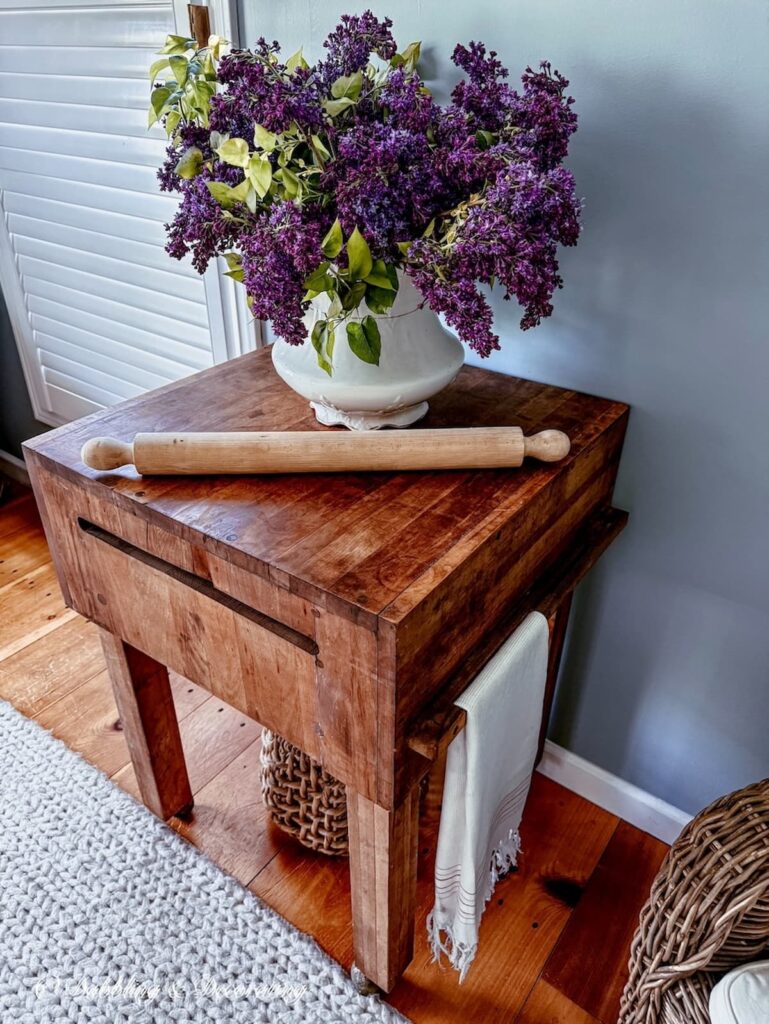
What I’ve come to love about vintage butcher block tables is that they don’t all follow one rule. Yes, the solid blocks are beautiful, but they’re also incredibly heavy, often oversized, and not always practical for everyday use in a real home. The more “not quite perfect” versions, like the one I found, are often the hidden gems. They’re easier to move, more versatile, and usually come with extra features that make them even more functional. And then there’s the patina, the worn wood, the softened edges, the history you can’t replicate. That’s what really draws people in. A vintage butcher block table doesn’t just sit in a room; it brings a sense of purpose, warmth, and that collected, lived-in feeling we’re all trying to create.
Ready to Embrace Vintage Decorating?
New to vintage collecting? This beginner’s guide will walk you through how to start collecting vintage home decor, what to look for, where to shop, and how to style your favorite finds with confidence.
Already have a collection you love? Don’t miss my favorite decorating with vintage collections ideas with stylish, creative ways to decorate with what you’ve found.
How I’m Styling This Vintage Butcher Block Table in Our Kitchen-Inspired Scullery
This is actually my first time styling a vintage butcher block table, and I have to say, I’ve been having so much fun experimenting with it. It’s one of those pieces that feels effortless, like you can move things around, try something new, and it just works every time. I’d love to know which look ends up being your favorite, because I already know this is going to be one of those pieces I’ll keep styling and restyling through the seasons.
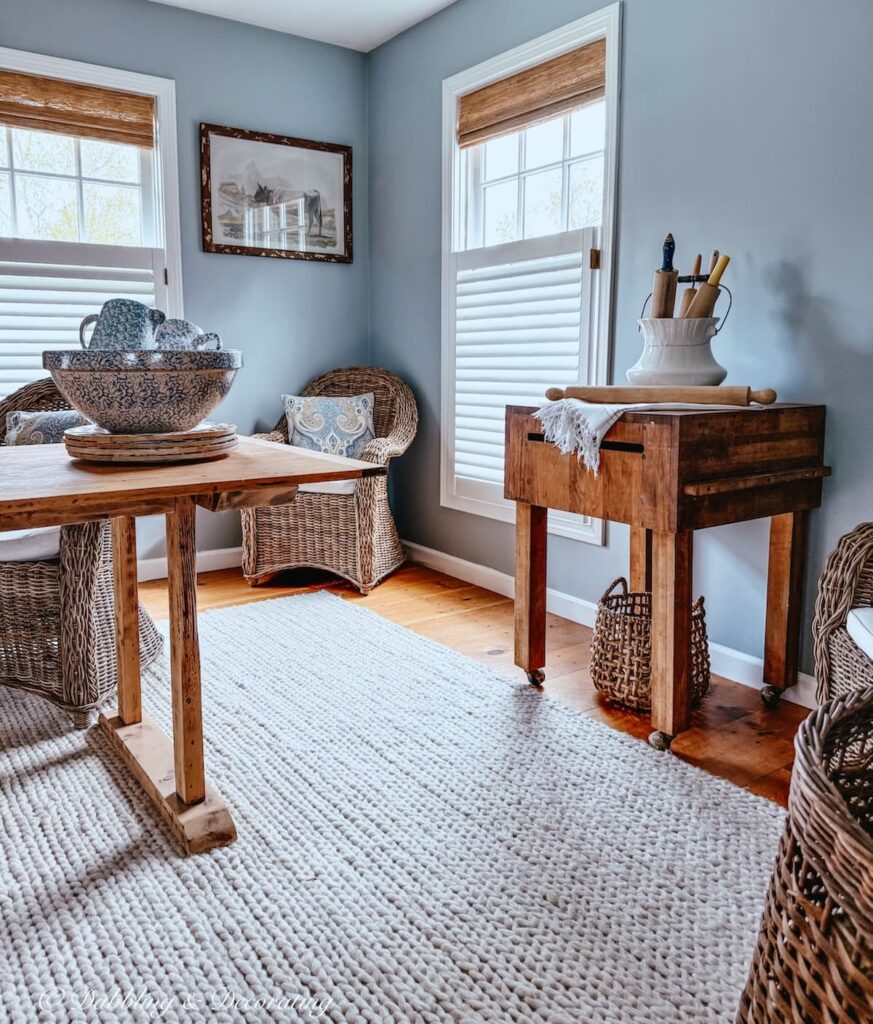
What I’m loving most is how incredibly versatile it is. The warm wood pairs with everything I own: yellowware, blue spongeware, ironstone, wooden bowls, vintage silver, and even a simple stack of books. It doesn’t compete with anything; it just grounds it all. So I thought it would be fun to try a few different styling ideas here, from simple and functional to a little more layered and collected, and see how this piece really comes to life in the scullery.
Let’s start by opening the cupboard doors and see what we can find to style this new piece.
⟶ Open the Cupboard Doors to a Prettier Way to Store and Use Antique Finds
⟶ The Secret Cupboard: Vintage Decorating Ideas Readers Love Most
⟶ 11 Things I Always Pull From My Antique Closet When a Room Feels Flat
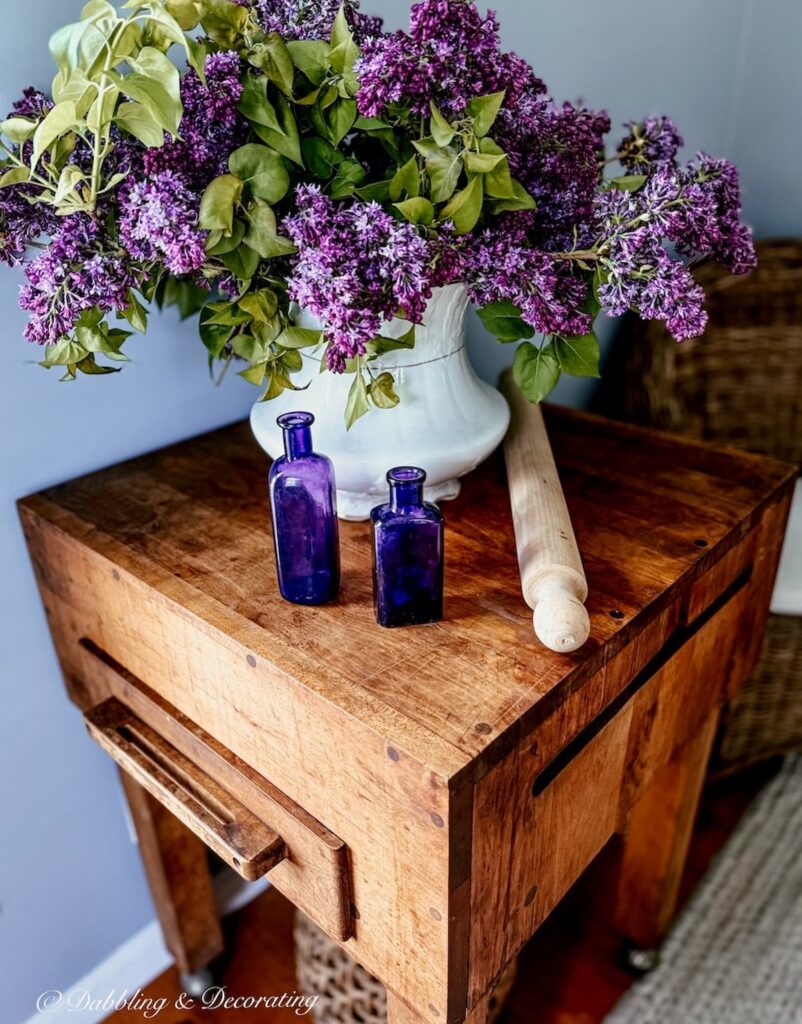
Pairing Fresh Lilacs in a Grub Pot with Amethyst Accents
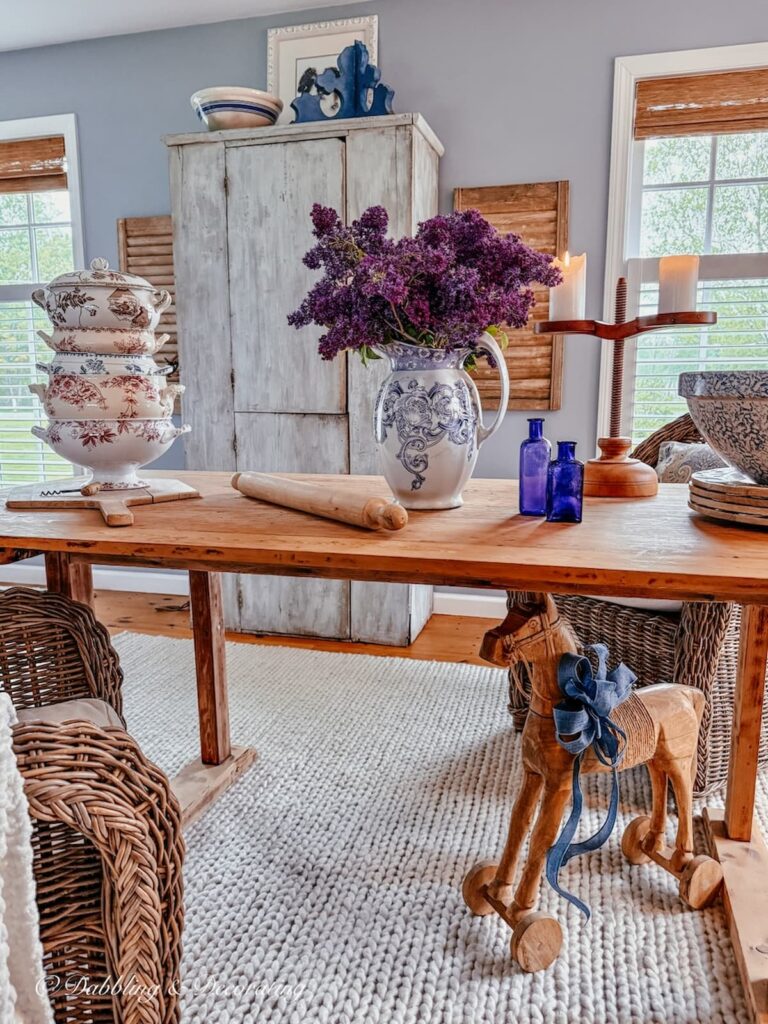
This first look came together on a spring drive past my neighbor’s blooming lilac bushes. I couldn’t resist cutting a few stems to bring home. I’ve always loved the combination of soft purples against darker woods, and the butcher block was the perfect backdrop. I tucked the lilacs into a vintage white grub pot, added a couple of amethyst bottles and a large rolling pin, and let the flowers do all the talking, simple, seasonal, and one of my favorite ways to style it so far.
⟶ More Lilac Inspiration: Lilac Flower Bouquet Ideas Using Vintage and Antique Vessels
Vintage Flower Arrangements: A Guide for Vintage Lovers
Looking for inspiration in every season? Don’t miss this full guide packed with creative floral styling ideas using antique vessels, thrifted finds, and seasonal blooms to bring vintage charm into your home all year long.
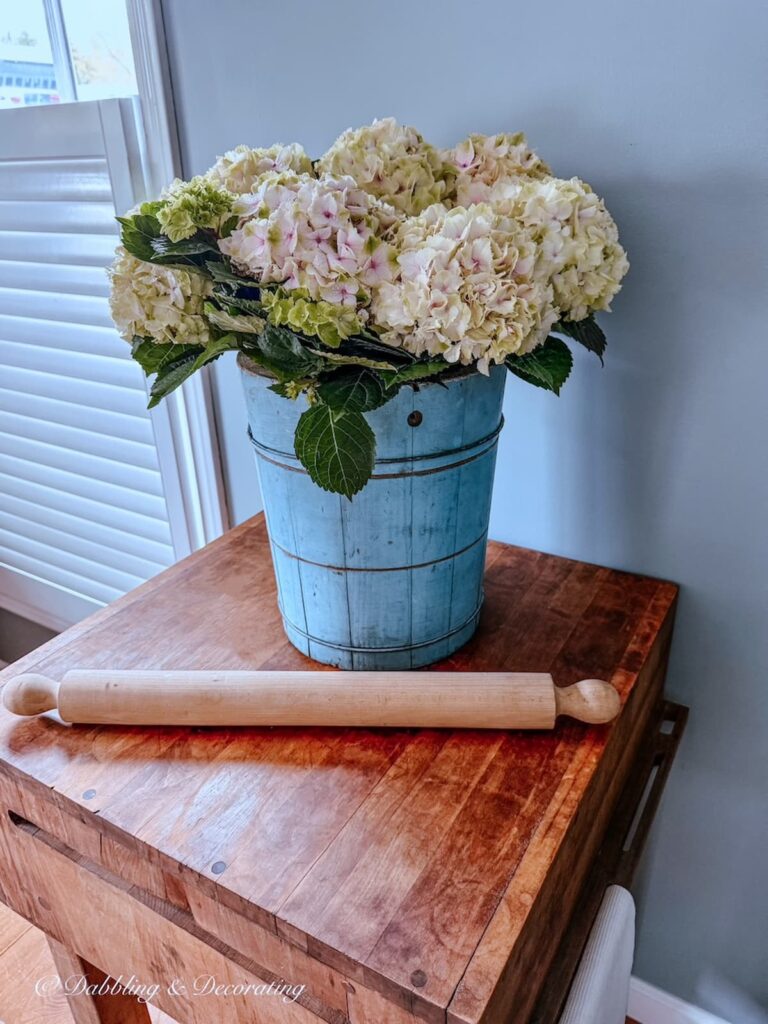
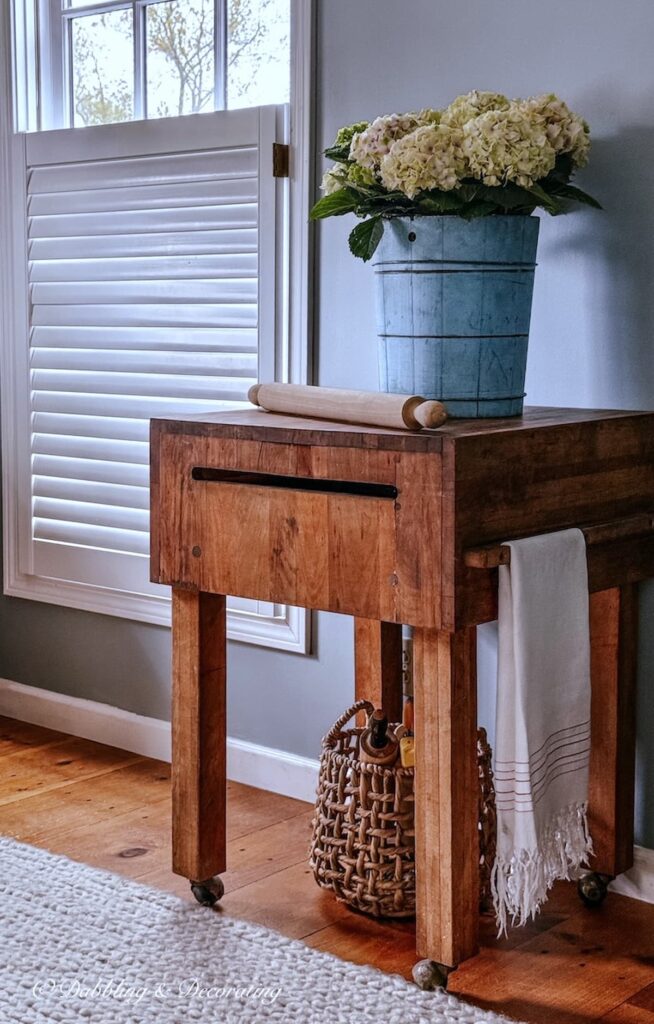
Styling with a Vintage Ice Cream Bucket and Seasonal Flowers
For this look, I brought in a blue antique ice cream bucket, one of those old hand-crank styles I recently found on a solo antiquing date, and filled it with hydrangeas I had been using for my front porch flower planters, just to see how it would feel indoors on the butcher block. I was surprised how much I loved the contrast of the worn blue against the warm wood and how something so rustic can still feel soft and seasonal with fresh flowers; I added a long thrifted rolling pin across the top for that subtle scullery touch and tucked a simple basket of vintage rolling pins underneath to keep it grounded, simple, and not overly styled, exactly how I think this piece works best.
⟶ More Old Bucket Inspiration: Vintage Wooden Bucket Flower Arrangement: A New England Way To Style White Tulips
Explore Vintage Kitchen Decorating Ideas
Love the look of a warm, lived-in vintage kitchen? Explore my Vintage Kitchen Decorating Guide for easy decorating ideas, thrifted finds, and simple styling tricks that add instant character.
Styling a Vintage Butcher Block Table with Warm Woods and Soft Whites
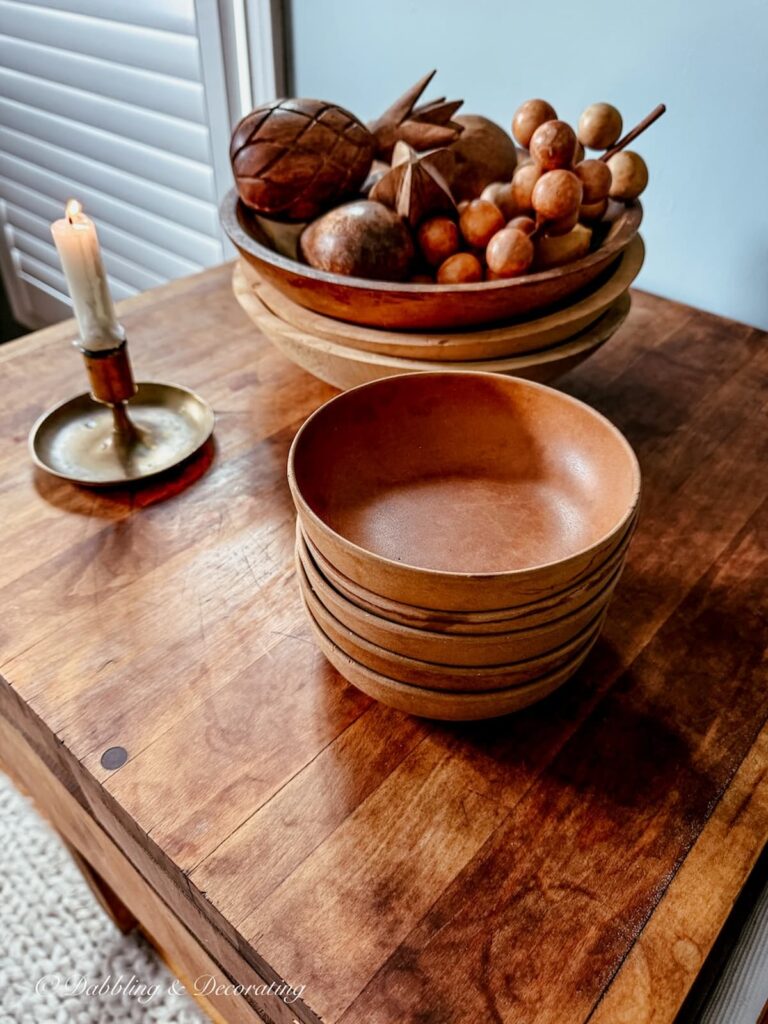
For this look, I leaned into an all-wood palette, stacking vintage wooden bowls and filling the top one with carved wooden fruit: grapes, pineapples, and a few other pieces I’ve collected over time. I added a smaller stack of wooden salad bowls beside it and kept the contrast subtle with a single brass candlestick and a white taper, along with a French tea towel draped along the side for just a touch of softness. It’s simple, a little bit moody, and lets the warmth of the butcher block and the layers of wood do most of the work, especially in that early evening light.
Sunday Home Style
Inspired by homes that feel like Sunday—quiet, layered, and filled with familiar finds. These styling tips share the vintage touches, everyday rituals, and warm moments that make a home feel like you.
Styling a Vintage Butcher Block Table with a Single Oversized Bowl
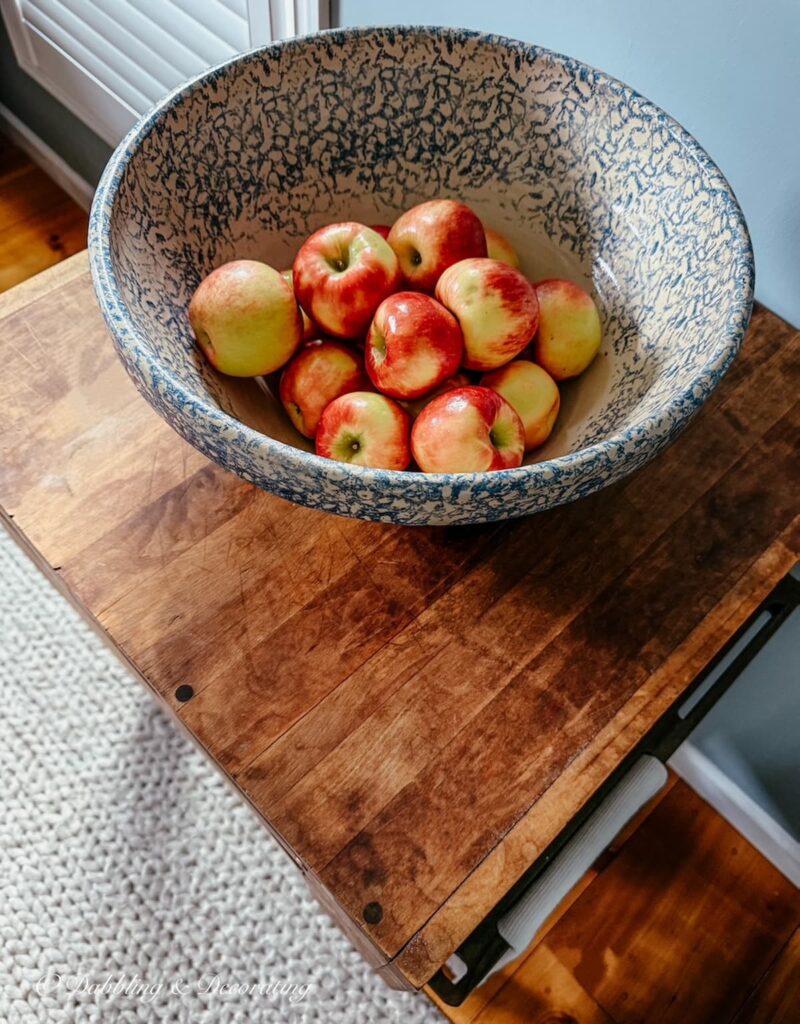
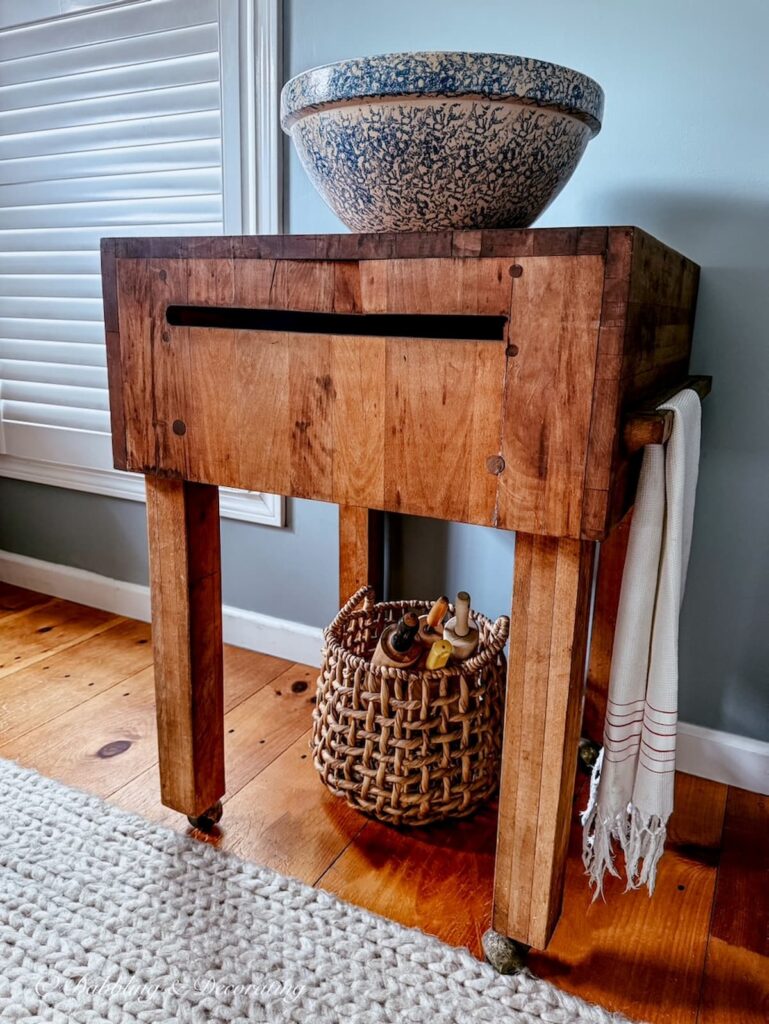
For this look, I kept it as simple as it gets and let one oversized piece do all the work. I used a vintage blue and white spongeware bowl I found at an estate sale here in Vermont and filled it with apples, letting it sit front and center on the butcher block. With just a French tea towel, I found antiquing in Paris draped on the side and a basket of rolling pins tucked underneath; it feels grounded, functional, and perfectly suited for a kitchen-inspired scullery. I love how this idea can shift with whatever you have on hand: a large brown bowl, a classic ironstone piece, or even a full vintage salad set, making it one of the easiest ways to style this kind of table.
Styling a Vintage Butcher Block Table as a Cozy Scullery Station
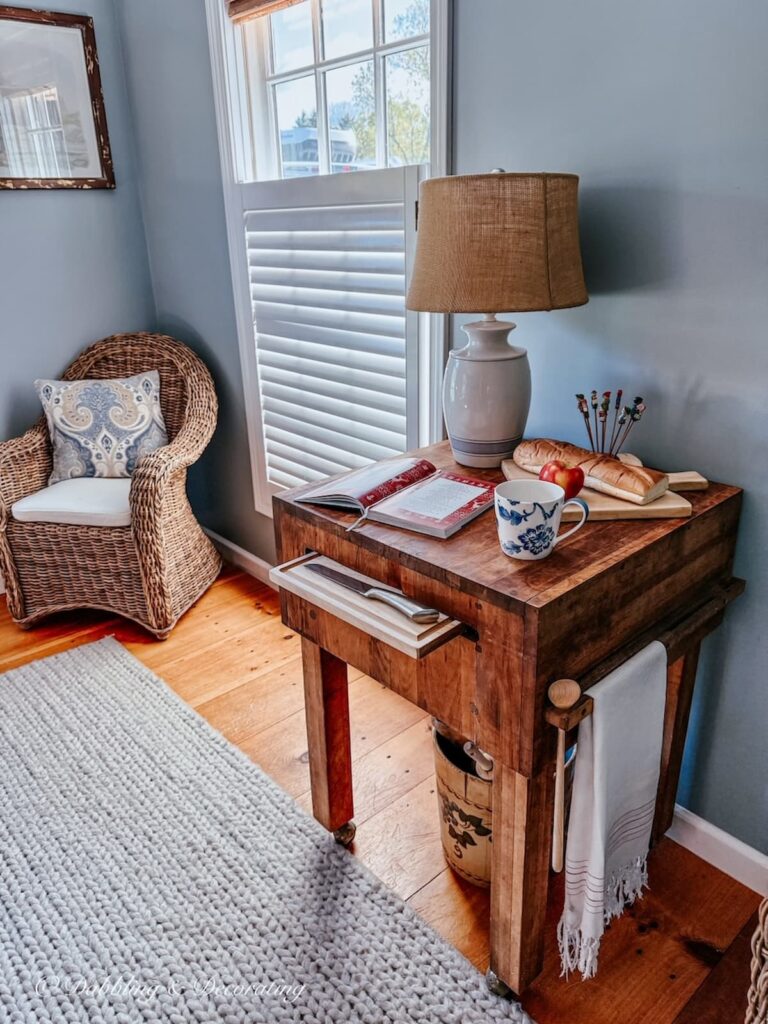
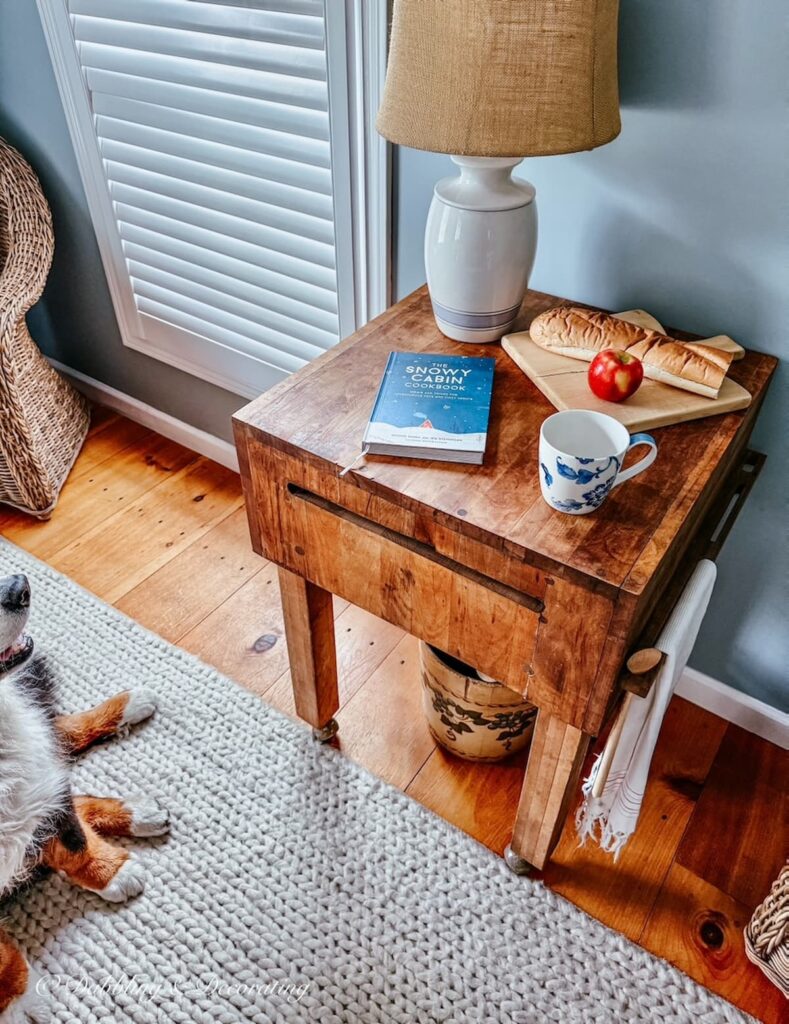
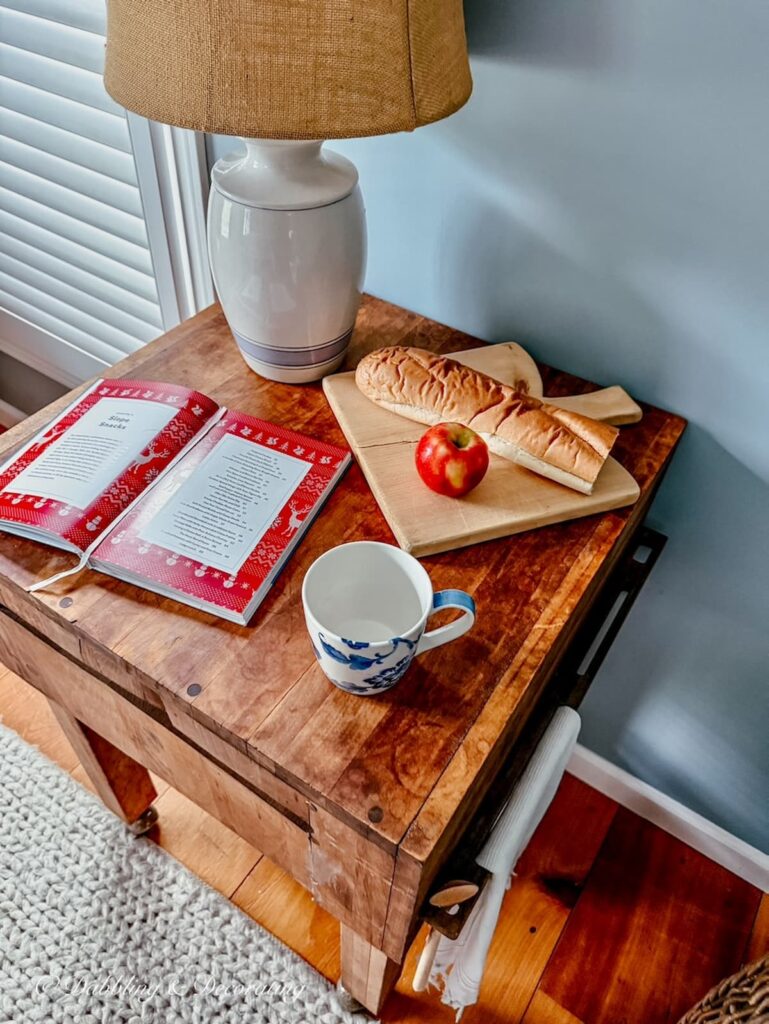
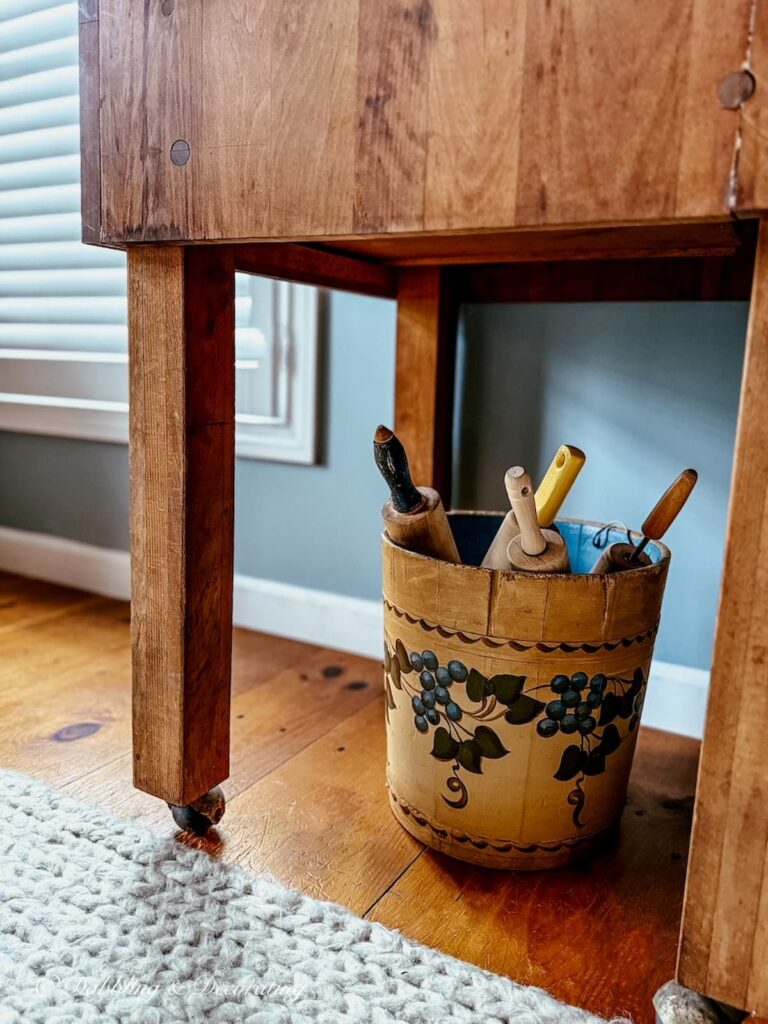
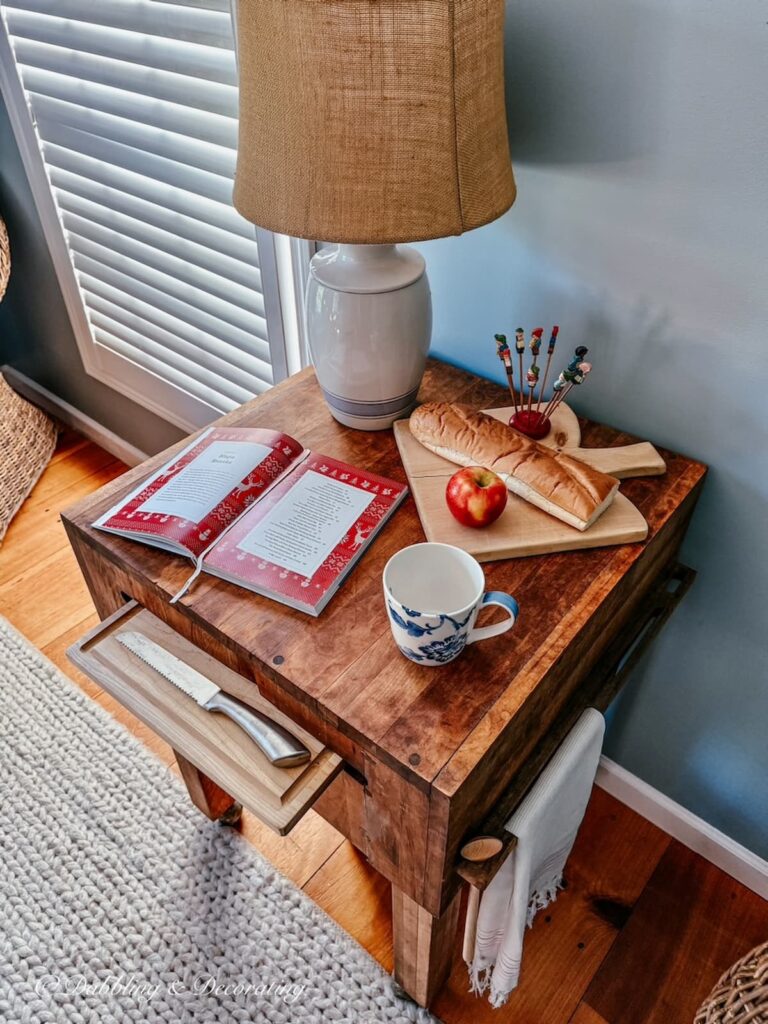
For this final look, and the one I think I’ll keep for a while, I styled the butcher block as a warm, cozy little scullery station with a small thrifted lamp gifted to me by my friend Bernadette (from B Home with Bernadette on Instagram), topped with a shade I found in our basement. I added my favorite cookbook, The Snowy Cabin Cookbook (I’ll link it—it’s full of cozy, après-ski recipes), along with a simple breadboard with an apple, French bread, and a mug of coffee to give it that lived-in, everyday feel. Underneath, I tucked a vintage New England sap bucket from a Vermont estate sale filled with rolling pins, and finished it with a French tea towel I found while antiquing in Paris and a handmade tasting spoon from Kittery, Maine. It’s simple, personal, and feels like a little corner I’ll actually use and enjoy every day.
Vintage Home Decorating Guides and Styling Inspiration
Are you curious about vintage decor but don’t know where to start? These cornerstone guides are packed with seasonal styling tips, how-tos, and inspiration to help you confidently decorate with charm and character.
Why This Butcher Block Works So Well in a Scullery
In my vintage-inspired scullery, this piece just makes sense, and it’s largely because it brings in that “unfitted kitchen” feel I’ve become so fond of. If you aren’t familiar with the term, an unfitted kitchen is all about moving away from permanent, built-in cabinetry and instead using freestanding, movable furniture that can evolve with you. This butcher block is the poster child for that aesthetic. It’s not another heavy, fixed hutch or a stationary cabinet; it’s a breathing, working surface that adds instant character without the commitment of a full island.
What I appreciate most is the incredible versatility it brings to the room’s harder surfaces. Sculleries can sometimes feel a bit clinical with all the stone and utility, but the warm, honeyed patina of this wood softens everything immediately. And because it’s on casters, the functionality is unmatched. It provides that essential extra prep space right where I need it in the scullery, but it’s light enough that I can easily roll it into the kitchen or even out onto the porch for a summer gathering. It feels collected rather than “designed,” acting as a dedicated workspace and a place to style my favorite finds all at once. It’s the piece my scullery didn’t know it was missing, proving that the best homes aren’t just built; they are gathered over time.

Tip: A New England Sap Bucket Moment
On this rainy Vermont day, right in the heart of mud season, I tucked a vintage sap bucket underneath the butcher block for both storage and a little local history. These buckets were traditionally used to collect maple sap before it was boiled into syrup, and you’ll still see them hanging from trees throughout early spring here in New England. I love using one indoors to hold rolling pins or utensils; it’s practical, a little nostalgic, and adds that layered, collected feel I’m always after. ⟶ See how I decorate with vintage sap buckets and the luxury estate sale I found it at.
What to Look for When Buying a Vintage Butcher Block Table
Finding this piece felt like a bit of antique-store magic, but it also reminded me that “perfect” is often the enemy of “perfect for your home.” For years, I bypassed butcher blocks because they felt like immovable monuments; too heavy, too hulking, or just too precious. This score changed my perspective on what actually matters when you’re hunting for heritage pieces. If you’re on the lookout for your own scullery gem, here is how I’ve learned to spot the winners:
- Trade the “Solid” Myth for Daily Utility— While those massive, three-hundred-pound end-grain blocks are impressive, don’t let a “not-solid” construction deter you. If a piece is sturdy and well-crafted, a lighter frame is often a blessing. It allows for those charming extras, like my hidden drawer and the slide-out breadboard option, that a solid hunk of wood can’t offer.
- The Magic of Mobility— In a New England home with an open floor plan, casters are a total game-changer. These pieces are meant to be workhorses, not statues. I love the idea of my scullery island having “legs”; I can already see myself rolling it into the dining room for a gathering or out onto the porch for a summer cookout, piled high with platters of hamburgers and corn on the cob. If it doesn’t move, it’s a piece of furniture; if it has casters, it’s an experience.
- Scale for the Soul of the Room— Most vintage butcher blocks you find are simply too big for a standard scullery or pantry. They were built for commercial shops, not cozy corners. Look for a piece with a smaller footprint that doesn’t overwhelm your space. The versatility of this table comes from the fact that it fits everywhere, from the scullery to the kitchen, without a struggle.
- Functional Details— Keep an eye out for the “hidden” details that tell a story. A side rack for linens, a drawer that actually glides, or a slot for an expansion board; these aren’t just conveniences; they are the details that give a scullery that “kitchen-inspired” authenticity.
- Fall for the Patina, Not the Polish— A butcher block should look like it has lived a thousand lives before it reached your door. Look for that warm, honeyed glow and the softened edges that only decades of use can provide. You want a piece that feels “collected,” not manufactured.
The Vintage Posts Readers Love Most
Start with the posts readers come back to again and again. These vintage decorating ideas are rooted in New England, styled with thrifted and antique finds, and filled with real-life tips you can use in your own home. Familiar Finds, Styled Your Way.
How to Start a Vintage Booth: Tips, Display Ideas, and Lessons Learned
Eclectic Decorating Style Guide: How to Layer Vintage, Antique, and Thrifted Decor
9 Vintage Booth Displays That Made Me Stop (And What You Can Learn From Them)
Scandinavian Spring Homes: 10 Light and Airy Cottage Tours to Inspire
Antique Oil Lamps: How to Repurpose Them Into Unique Flower Vases
Where This Vintage Butcher Block Is Headed Next
I’m so glad I didn’t talk myself out of this find, because it truly has breathed new life into this corner of our home. I can already see it becoming the center of our summer gatherings; I’m actually planning to roll it right out onto the porch to style it for our next cookout! Whether it’s acting as a mobile prep station or a beautiful anchor for my favorite seasonal finds, this vintage butcher block table has officially found its forever home.
If you’re as obsessed with the “unfitted kitchen” look as I am, be sure to check out the rest of my scullery journey. You can see how I started turning this awkward open floor plan corner into a scullery-inspired kitchen workroom, or join me as I open the cupboard doors to a prettier way to store and use antique finds. There is so much more to come as this space evolves, and I can’t wait to share every collected detail with you.
Looking for more vintage-inspired scullery or kitchen decorating ideas? Browse a few of these reader favorites:
Frequently Asked Questions About Vintage Butcher Block Table
A vintage butcher block table is a freestanding wooden work table traditionally used for food preparation. Older versions were often made from thick hardwoods like maple and designed for durability, while others include features like drawers, shelves, or slide-out breadboards for added function.
No, not all vintage butcher block tables are solid end-grain wood. While some are made from thick, heavy butcher blocks, others have plank-style tops or mixed construction. These lighter versions are often more practical for everyday use and easier to move.
Many vintage butcher block tables are highly valued because of their craftsmanship, solid wood construction, and history. Large, solid pieces can be especially expensive due to their weight and durability, but smaller or less traditional versions can often be found at more affordable prices.
Affordable vintage butcher block tables can often be found at antique shops, estate sales, flea markets, and local marketplaces. Pieces that are not solid wood or have more wear are often priced lower but can still offer great character and function.
Yes, many vintage butcher block tables work beautifully as kitchen islands, especially in smaller kitchens or sculleries. Those with casters are particularly useful, as they can be moved easily for prep work or entertaining.
Join the Vintage Circle — Familiar Finds, Styled Your Way™
Love vintage treasures, thrifted gems, and a home that tells your story? Leave a comment, share this post with a kindred spirit, or head to my Start Here page to explore more. Want fresh prompts and timeless ideas? Subscribe to join our Seasonal Vintage Decor Styling Challenge for weekly inspiration and behind-the-scenes peeks.
Pin it for later!



I love, love love this find! I collect old phones. Maybe a phone table with an old phone book, pad and pencil and small lamp? Our new home is almost furnished entirely of antiques, thrifted finds, donations and a tufted chair with matching ottoman on wheels I found on a curb. Enjoy your column very much. I am a collector from Canada.
Thanks so much Jackie, and I love your idea of an old phone, I love old phone’s too! Oh, and we love Canada, we’re heading up there the end of the month for vacation. Thanks so much for your sweet note!
Hi Ann — What a great find! And you sure had fun dabbling and decorating it! I love all the different styles!
Thanks so much Molly!