


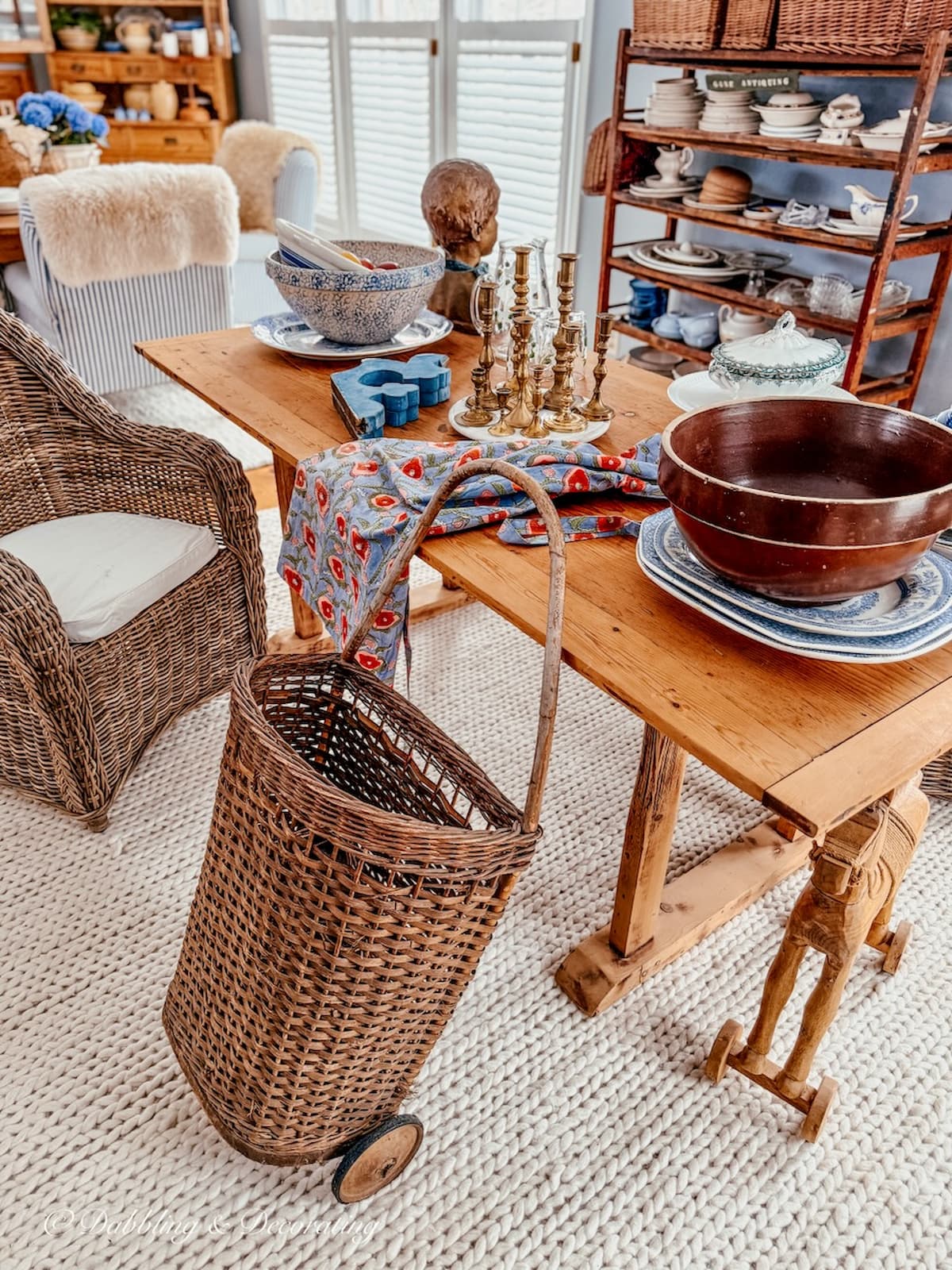
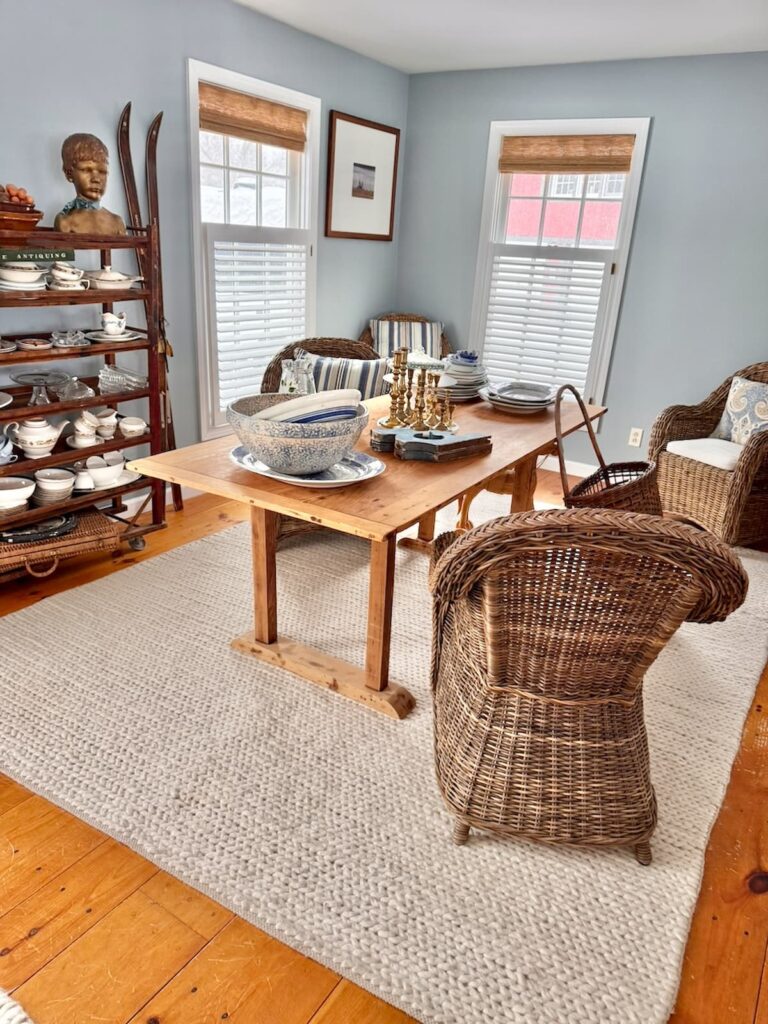
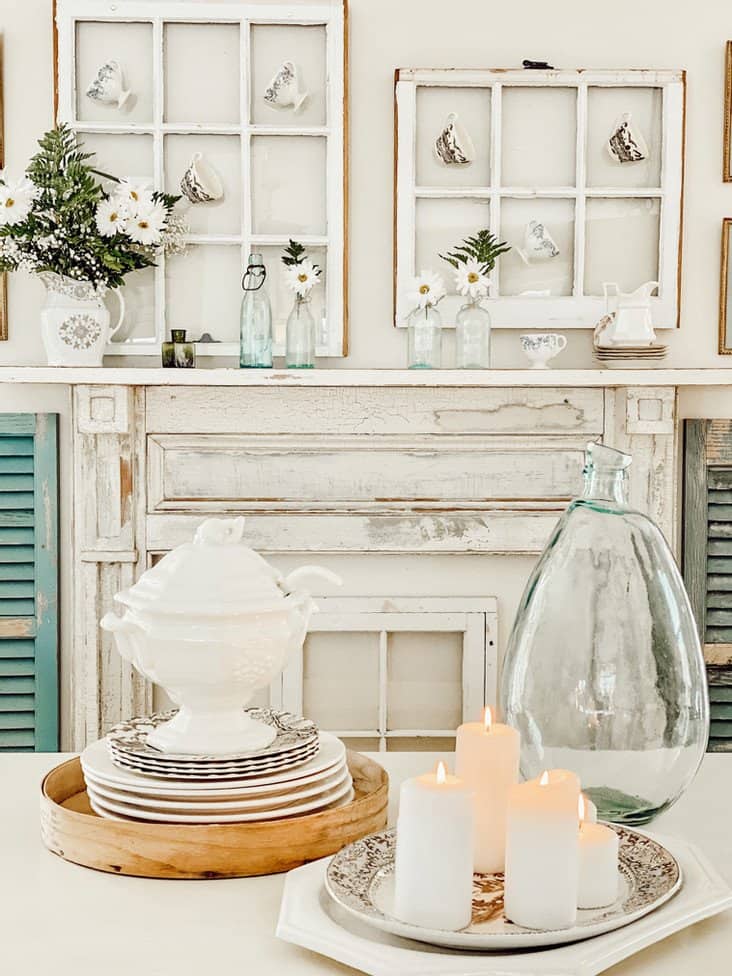
For years, this corner of our open floor plan has been the space I never quite knew what to do with. Technically, it was meant to be our Vermont dining room, and for a long time, I tried to make it one. I hung a faux mantel on the back wall, styled salvaged windows and a vintage plate wall above it, and did my best to give the room purpose. Some days, I loved it. Other days, it just felt like one of those spaces that looked pretty enough but never fully worked.
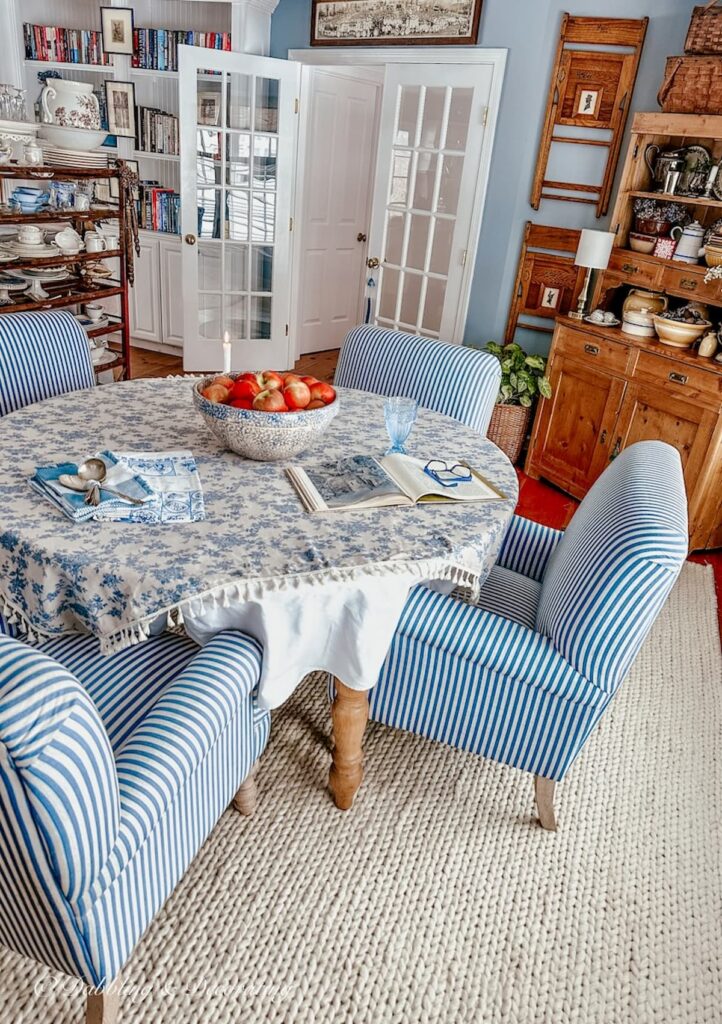
Part of the problem was the layout itself. The ceiling light was never centered quite right for a dining table, and once I noticed it, I was forever trying to decorate around it. No matter how I arranged the room, it always felt just a little off. When we painted our home Stardew Blue and moved our dining area to another side of the open floor plan, everything clicked over there in a way it never had here. It felt more natural, more centered, and more like the kind of Sunday home gathering space we actually use.
Explore Vintage Kitchen Decorating Ideas
Love the look of a warm, lived-in vintage kitchen? Explore my Vintage Kitchen Decorating Guide for easy decorating ideas, thrifted finds, and simple styling tricks that add instant character.
But that left this corner behind.
I tried turning it into a sitting room. I tried making it feel like a breakfast nook. I tried styling it in ways that looked nice in photos but didn’t make much sense for the way we live. And that, I think, was the real issue all along. We don’t need another table to sit at, and we don’t need a room full of extra seating like it’s waiting for a party. What I really need is a space that feels useful, collected, and easy, a room with purpose, familiar finds, and a little breathing room to create.
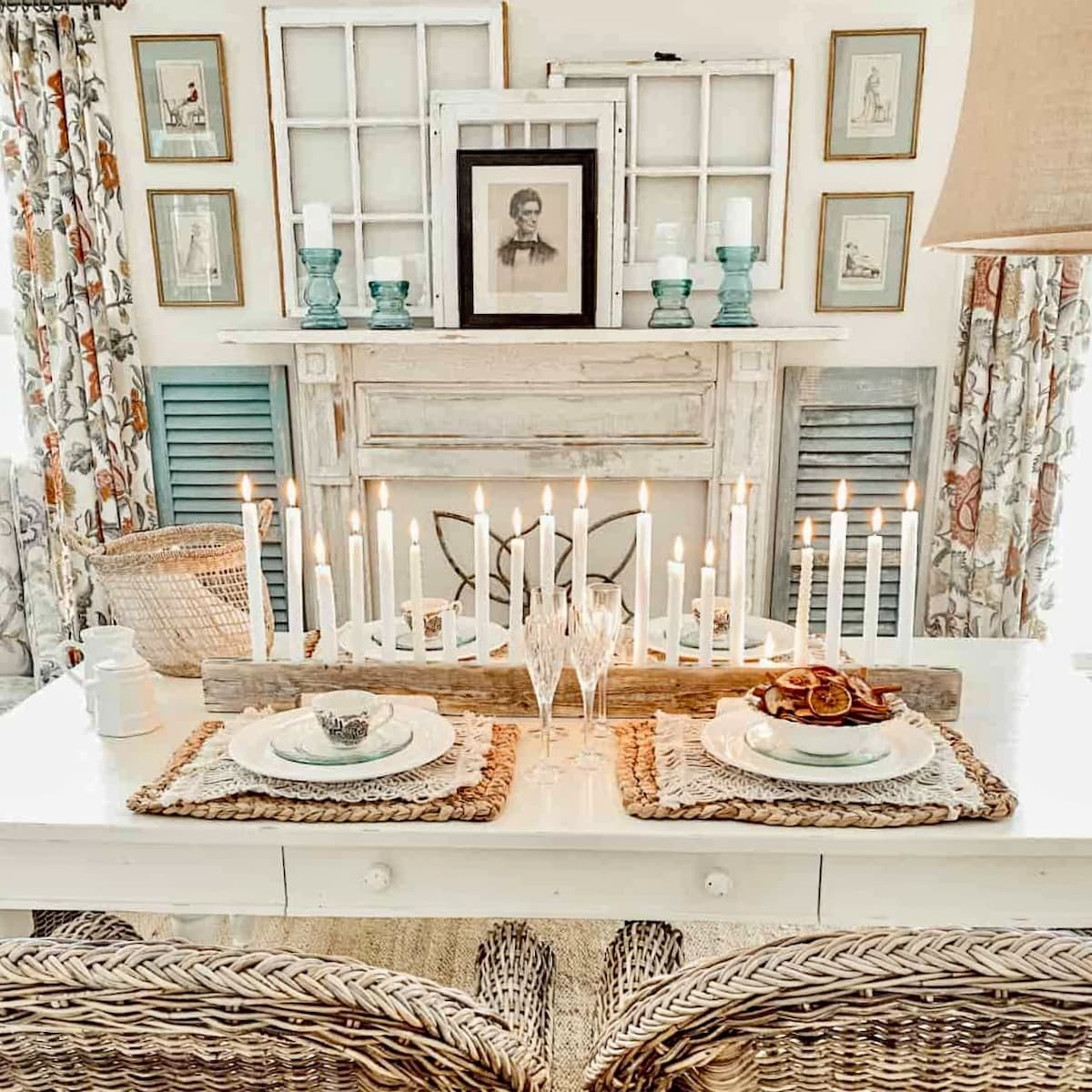
So this time, I’m trying something different.

A little behind-the-scenes moment 😉 📷
These photos are not the pretty, finished kind I usually share, but this post was never meant to be a perfect reveal. It’s an invitation into the messy middle, the collecting, shifting, rethinking, and slow transformation as this room finds its purpose.
Why I’m Creating a Scullery-Inspired Kitchen Workroom
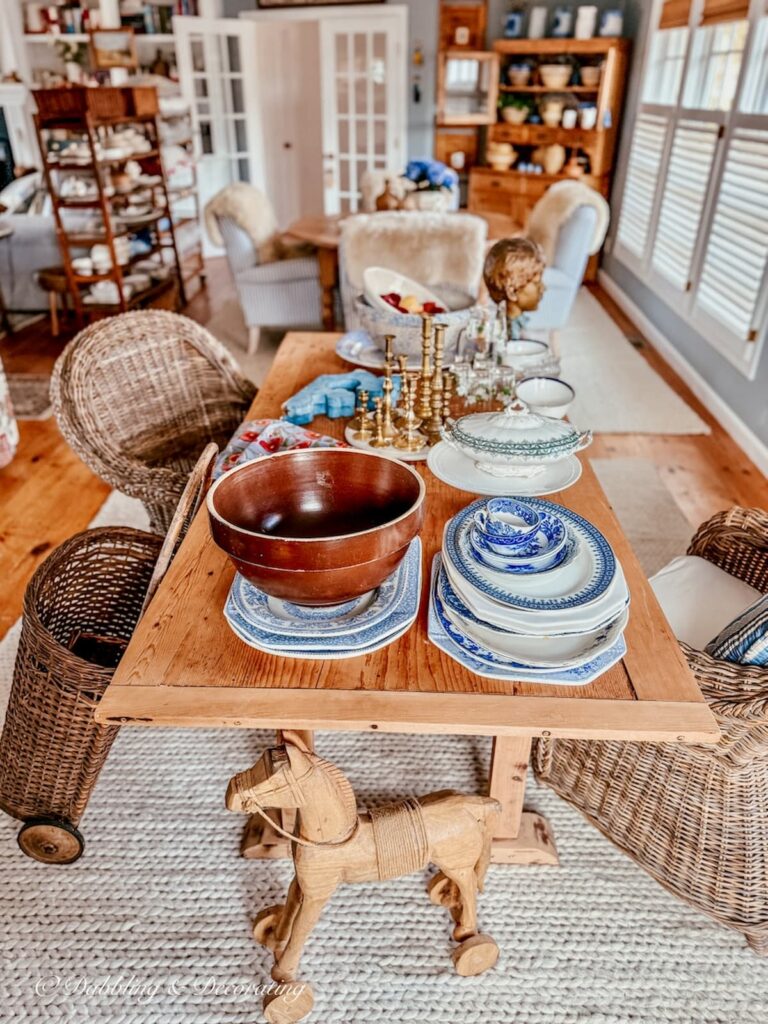
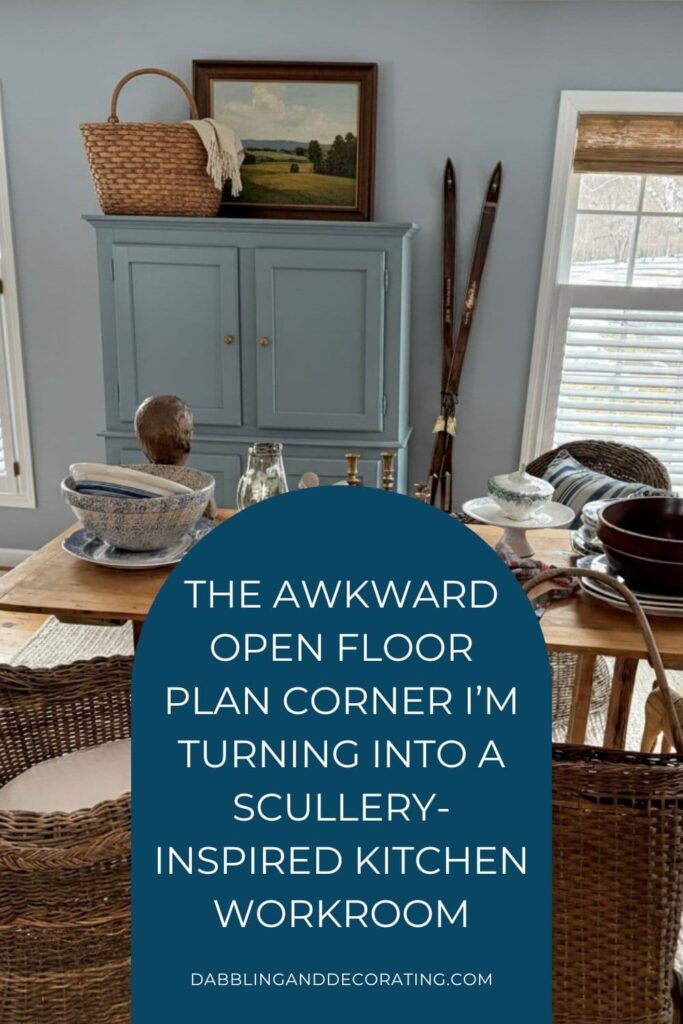
Instead of forcing this awkward corner to be a dining room or sitting area, I’m turning it into a scullery-inspired kitchen workroom, the kind of old-fashioned, hardworking space that feels right at home in a house with vintage character. A place for storage, styling, gathering my dishes and pottery, and pulling things together when a room in the house needs a little life. I already have the old pine table that I found one Christmas at Sage Farm Antiques. Now I’m on the hunt for the right antique hutch or cabinet to anchor the wall and make the whole space finally make sense.
What Is a Scullery-Inspired Kitchen Workroom, Exactly?
As I started thinking through this space, I kept coming back to the idea of an old-fashioned scullery, not in the formal modern sense with a sink, built-ins, and a hidden cleanup kitchen, but in the looser, more practical way Country Living describes these rooms today: hardworking spaces off the kitchen used for storage, prep, and everyday function. That idea really clicked for me. I’m not creating a true scullery, but rather my own vintage-inspired version of one, a scullery-inspired kitchen workroom filled with familiar finds, closed storage, and Sunday home charm. It will be an extension of our kitchen, a place for dishes, serving pieces, styling, and the kind of old-house usefulness I’ve been craving in this awkward corner.
And since this one won’t happen overnight, I thought I’d bring you along with me.
Tip: Pinterest Has Been My Best Starting Point for This Room
As I’ve been figuring out this scullery-inspired kitchen workroom idea, Pinterest has been one of the best places to gather inspiration. I’ve been saving images of authentic old Vermont farmhouse workrooms, French country spaces, and charming English homes that use this kind of room so well. It’s helped me see how a kitchen workroom can feel collected, useful, and full of quiet character without looking overly decorated. I’ll link my old-fashioned Kitchen Scullery-Inspired Pinterest board here in case you’d like to follow along with the ideas I’m saving for this space, too.
Stripping the Room Back to See If a Scullery-Inspired Kitchen Workroom Would Work
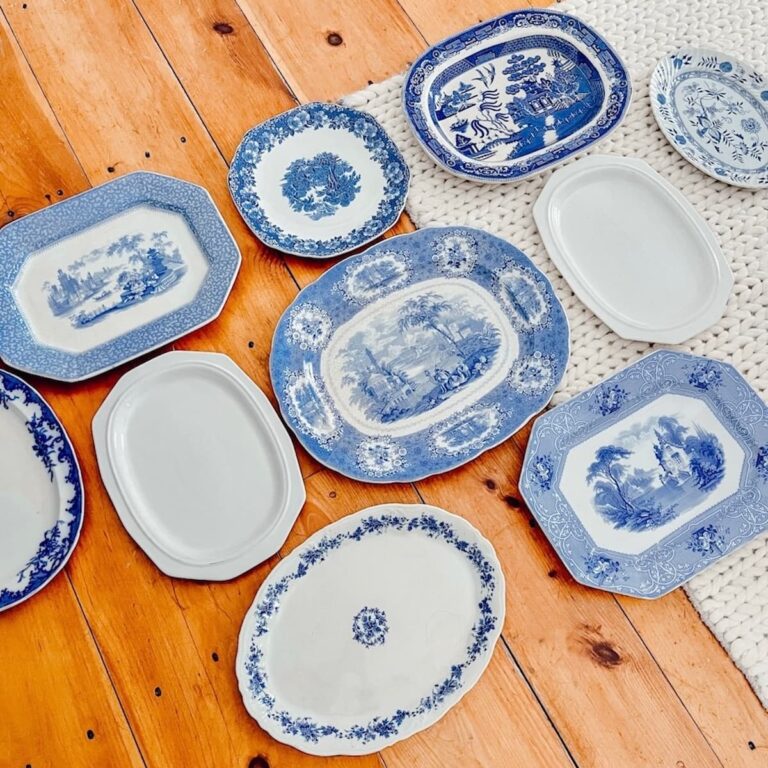
Before I committed to anything, I wanted to see if this scullery-inspired kitchen workroom idea would even work in this awkward corner, so one day I just started taking the whole room apart. I pulled the faux mantel off the back wall, took down the blue and white platter wall, rolled up the rug, moved out the wicker chairs, and cleared away the cobbler racks and clutter until all that was left was the old pine table. And honestly, seeing it stripped back like that told me a lot.
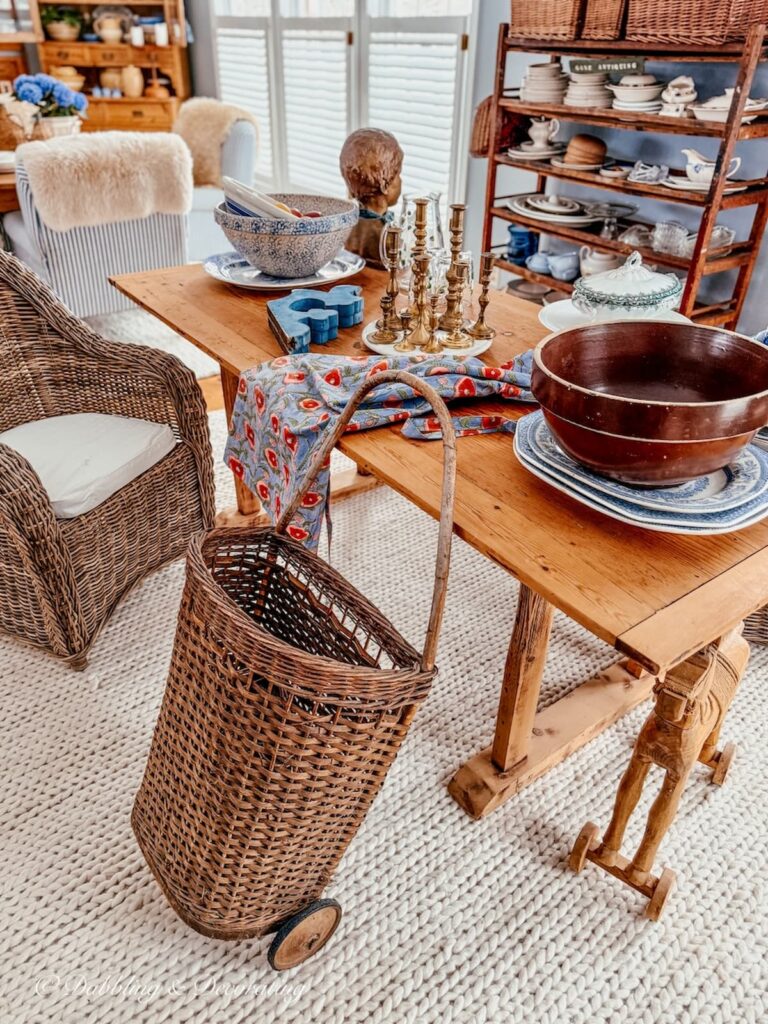
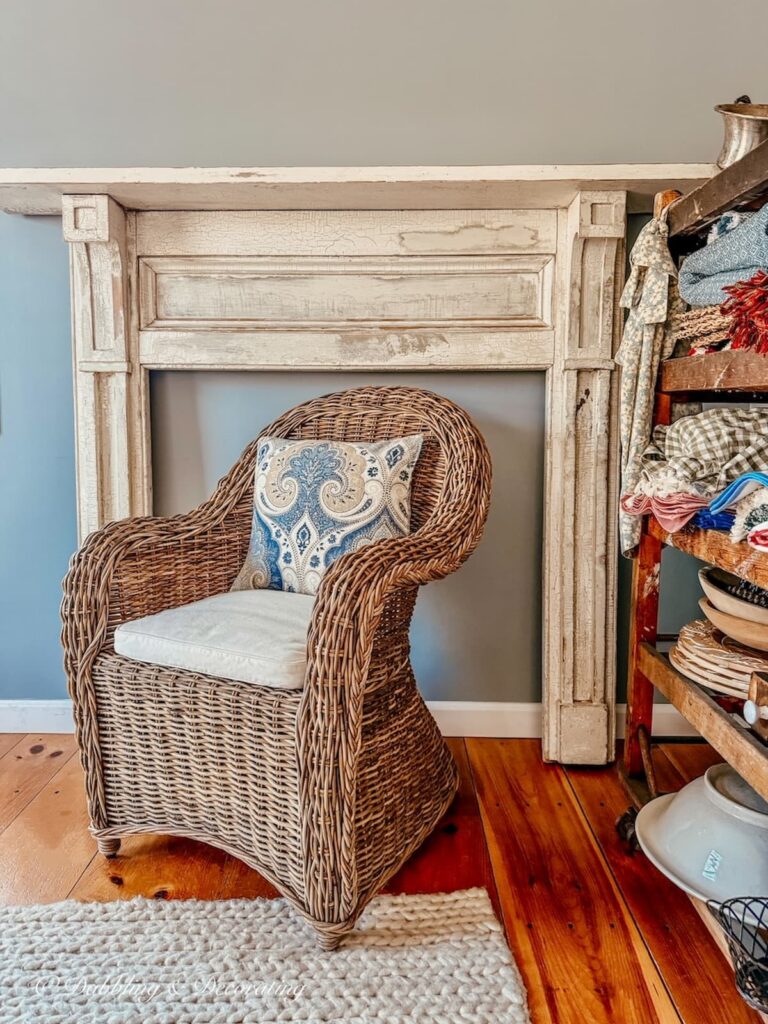
For a minute, I thought I might leave the rug out and keep everything bare and simple, but without it, the room felt too hard and too wood-heavy. It lost the softness I love, so the white braided rug went right back down, and the old pine table stayed exactly where it was. I’m planning to keep the wicker chairs too, just not gathered around the table like a dining room. I’d rather scatter them in the corners so the space feels more relaxed and lived-in.
And yes, there are a lot of cobbler racks in these photos.
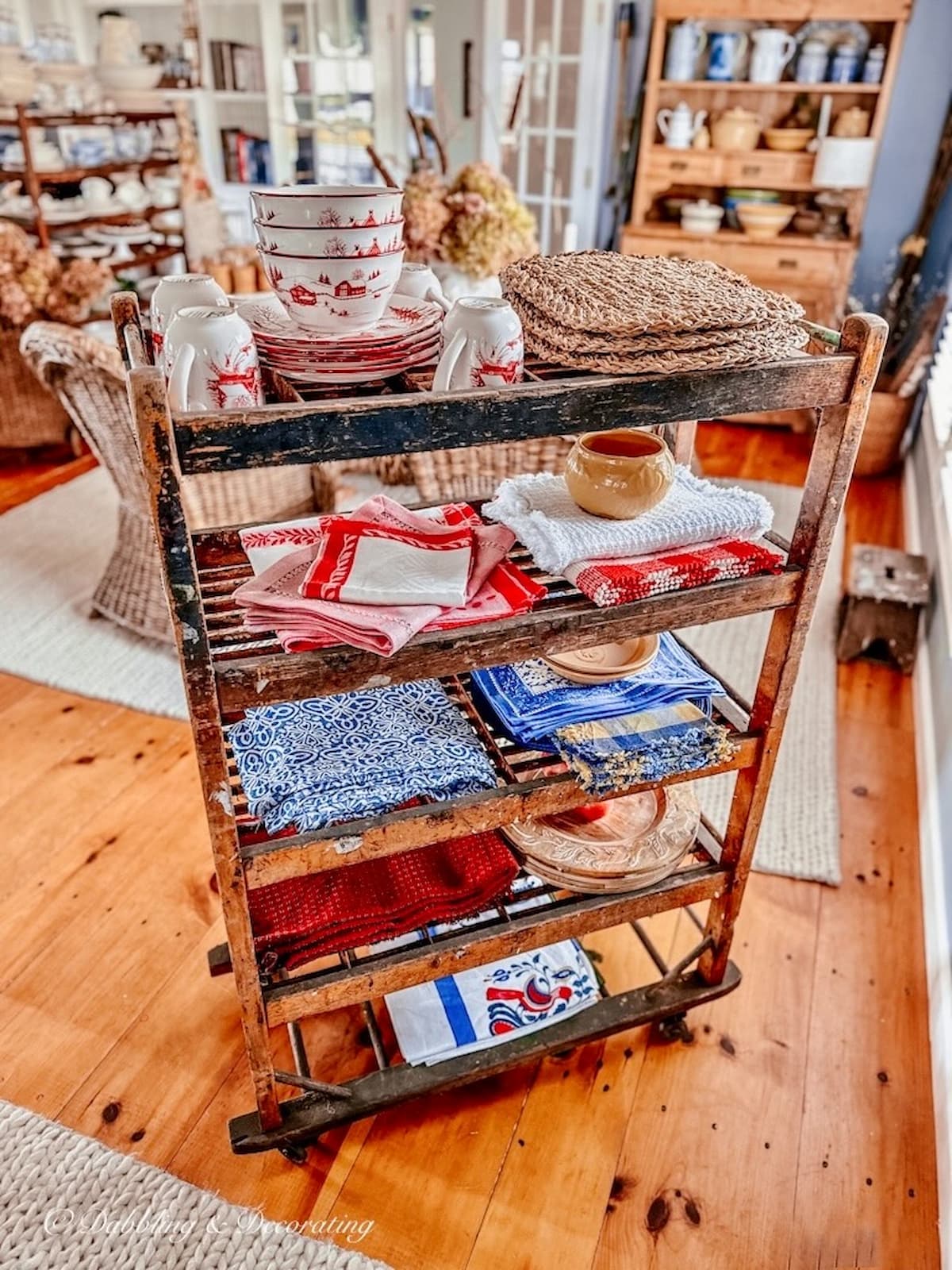
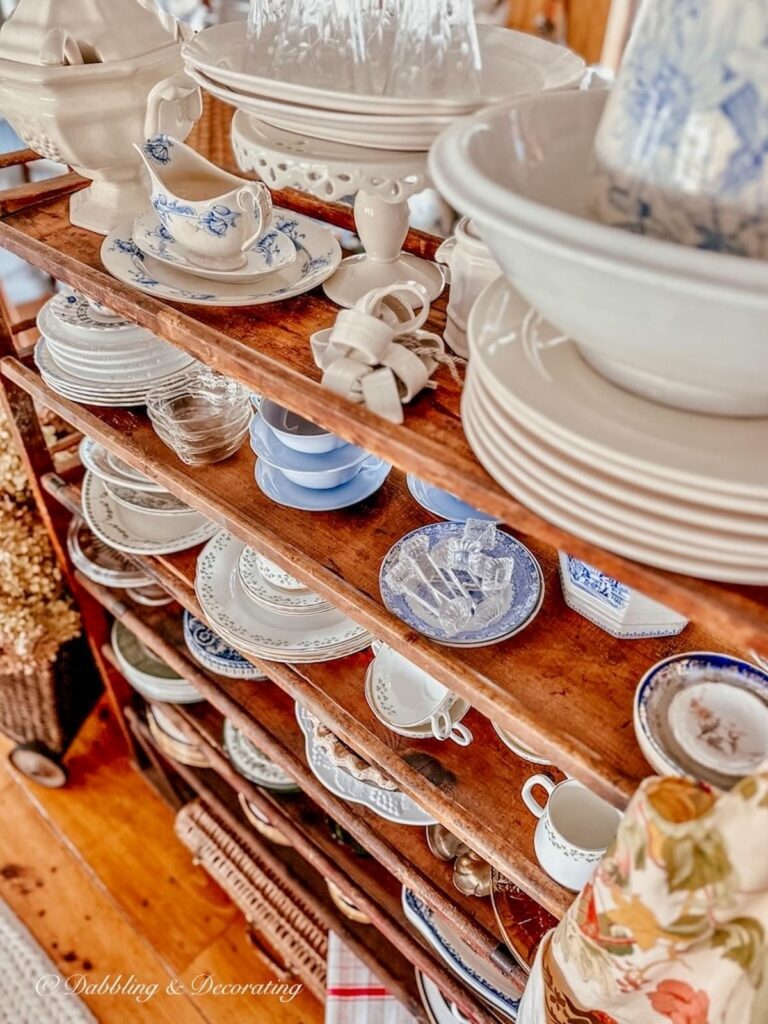
I’ve loved decorating with vintage cobbler racks for years, and I ended up with several of them when I was using them as display pieces in my vintage booth. Since closing the booth, they’ve been hanging around the house a little longer than they probably should have, and while I still love them, I definitely do not need three of them in one open floor plan. Most of them will be going, and I’ll likely keep just one because I still love the charm and storage they offer, and they make great room dividers in open floor plan homes. More than anything, clearing everything out helped me stop looking at the room for what it had been and start imagining what it could become.
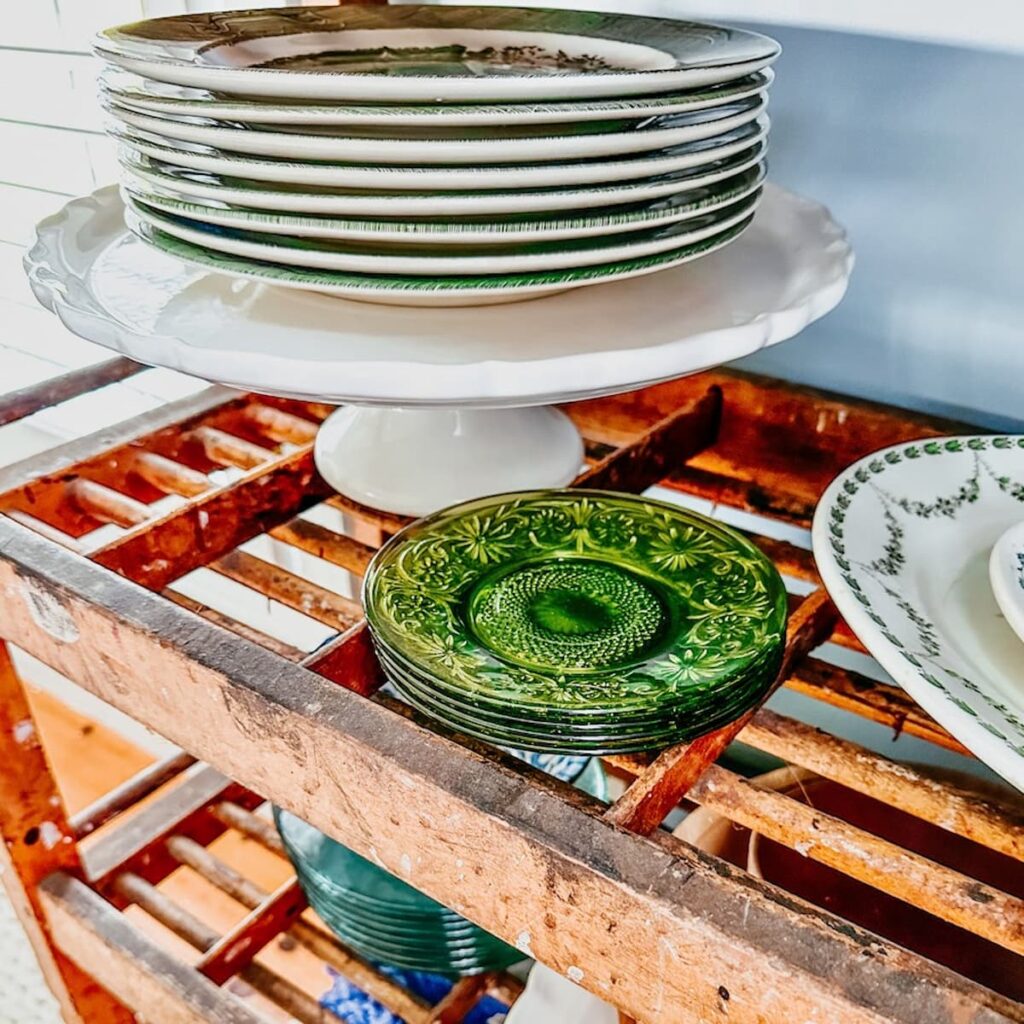
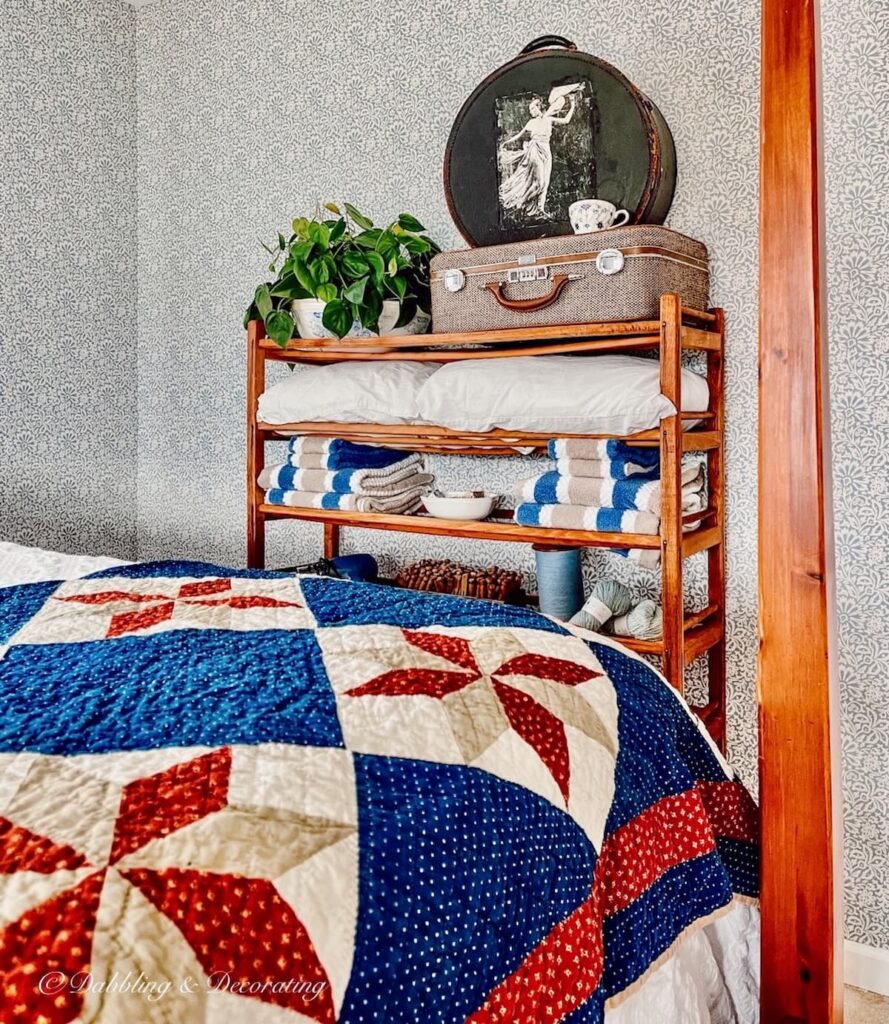
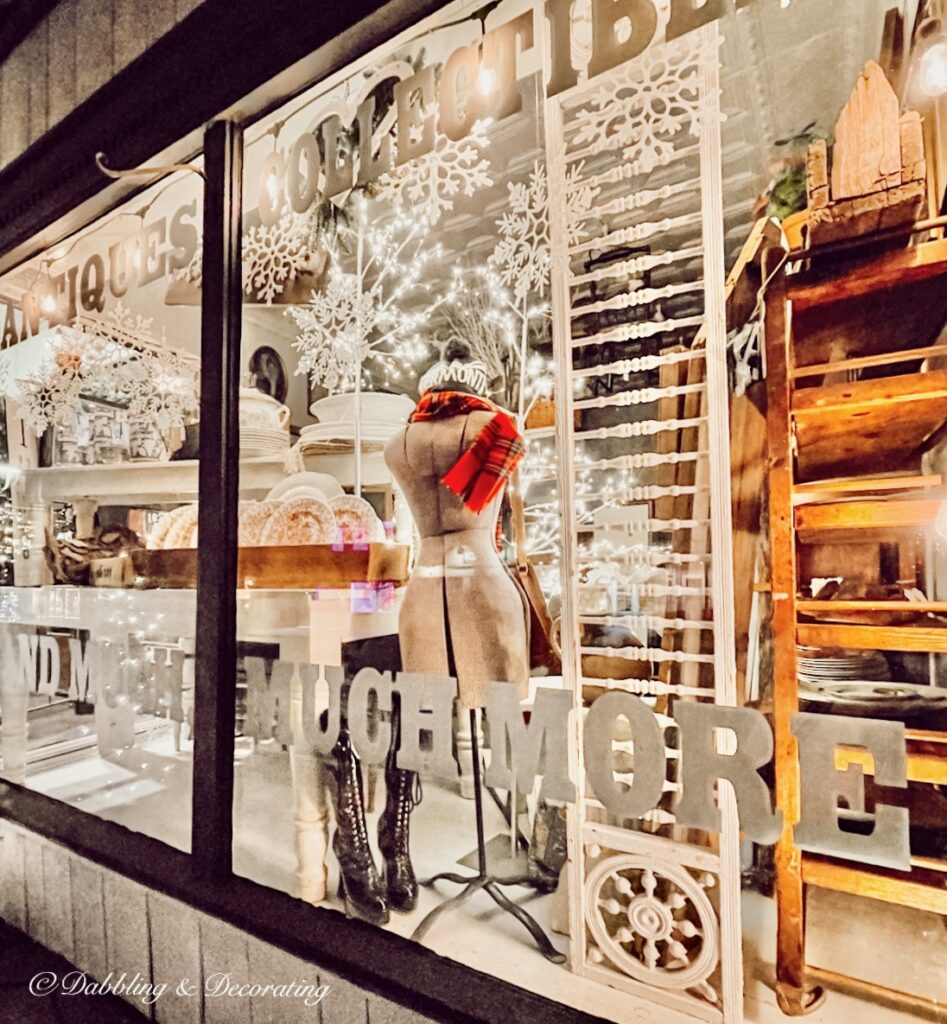
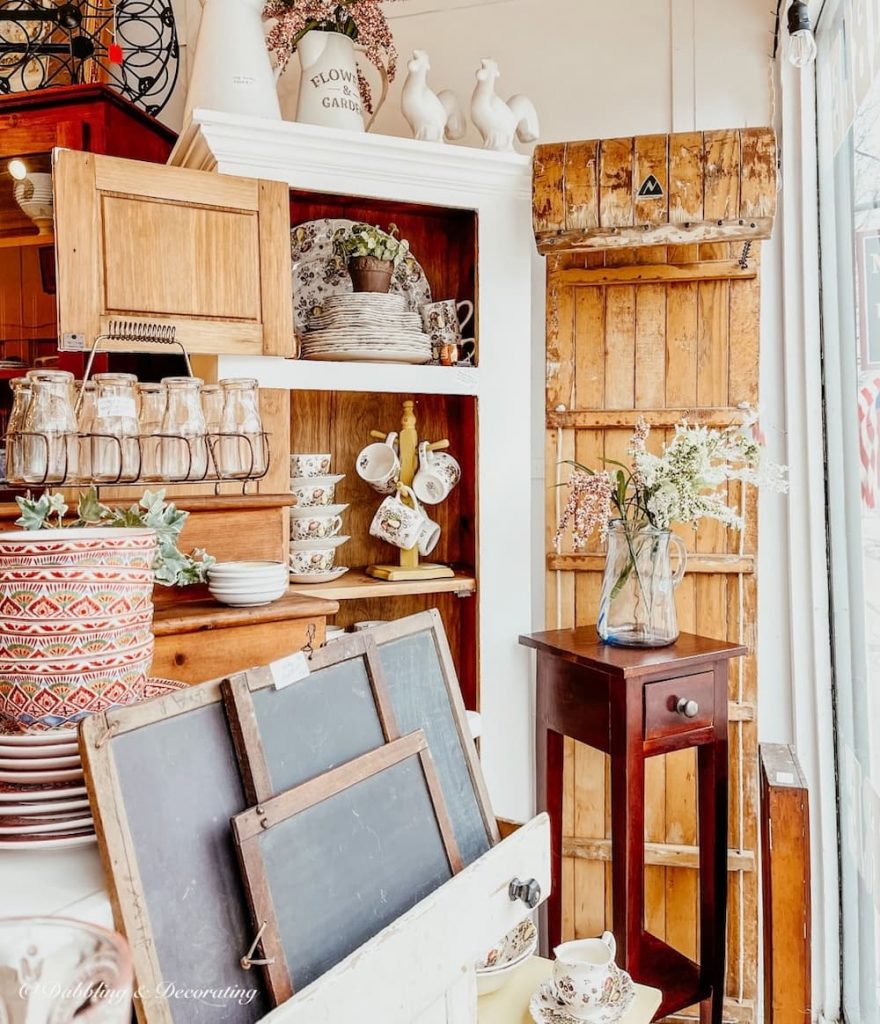
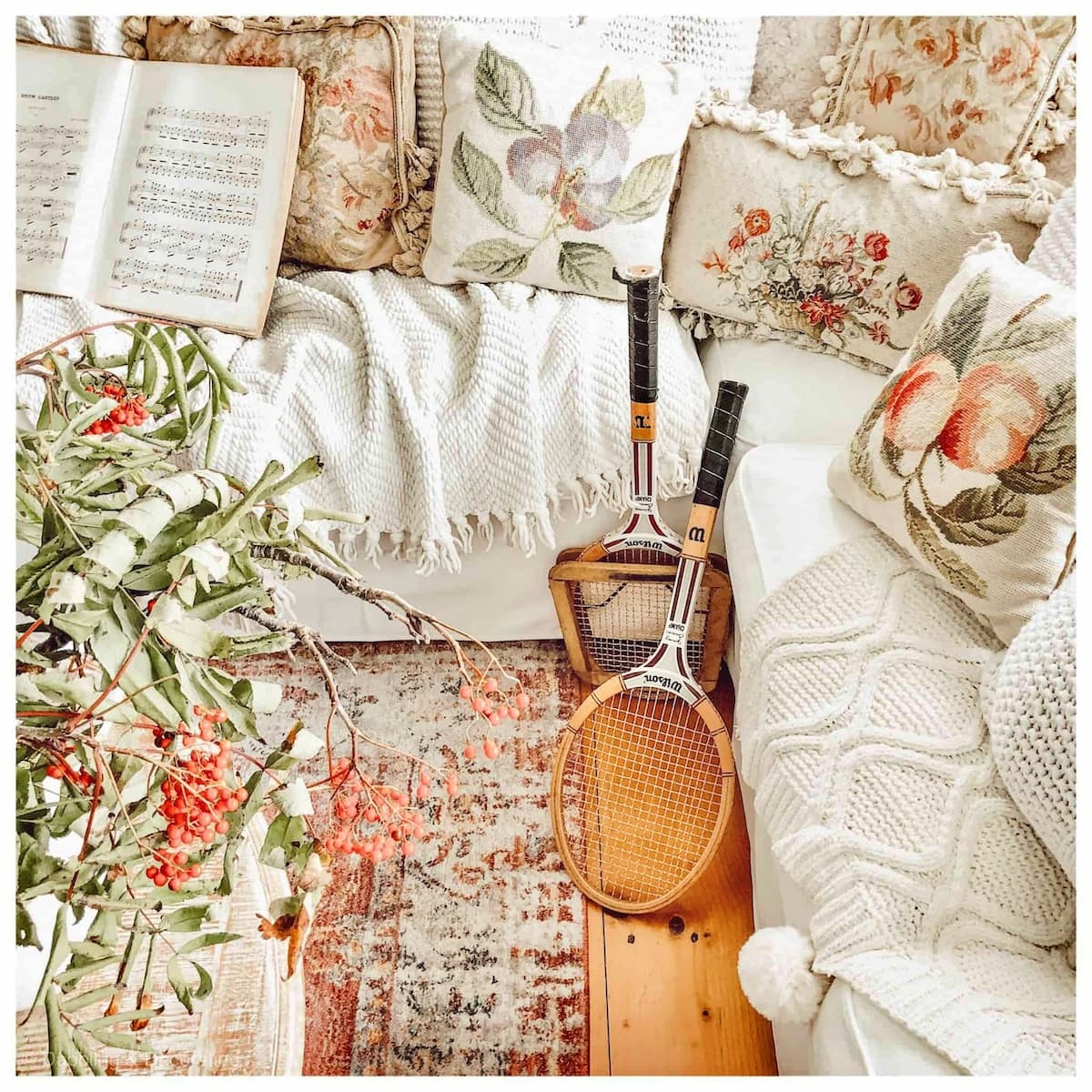
If you’ve ever wondered why I still love a good cobbler rack, here are a few of the ways I’ve decorated with them over the years.
Vintage Home Decorating Guides and Styling Inspiration
Are you curious about vintage decor but don’t know where to start? These cornerstone guides are packed with seasonal styling tips, how-tos, and inspiration to help you confidently decorate with charm and character.
Rearranging Furniture Is One of the Best Decorating Tools I Know
One of the first things I do when a room isn’t feeling right is stop shopping and start rearranging. I’m always surprised by how many people think a piece of furniture has one permanent home, as if once the couch lands in a corner or a table gets placed under a light fixture, that’s where it has to stay forever. But some of the best decorating decisions I’ve made have come from moving things around, emptying a room, trying pieces in new places, and looking at what I already own with fresh eyes. That’s exactly what I’m doing here. The faux mantel will live on another wall, the chairs may shift again, and the old pine table has already helped me see this room differently. For me, that kind of rearranging is part of eclectic decorating, too. It’s how a home starts to feel layered, personal, and a little more collected over time.
Eclectic Decorating Style Guide
Want to create a home that feels cozy, collected, and completely you? This guide dives into how to layer vintage, antique, and thrifted pieces effortlessly, sharing easy tips to help you embrace an eclectic vintage style that tells your story, one thrifted find at a time.
The Hutch Hunt for My Scullery-Inspired Kitchen Workroom
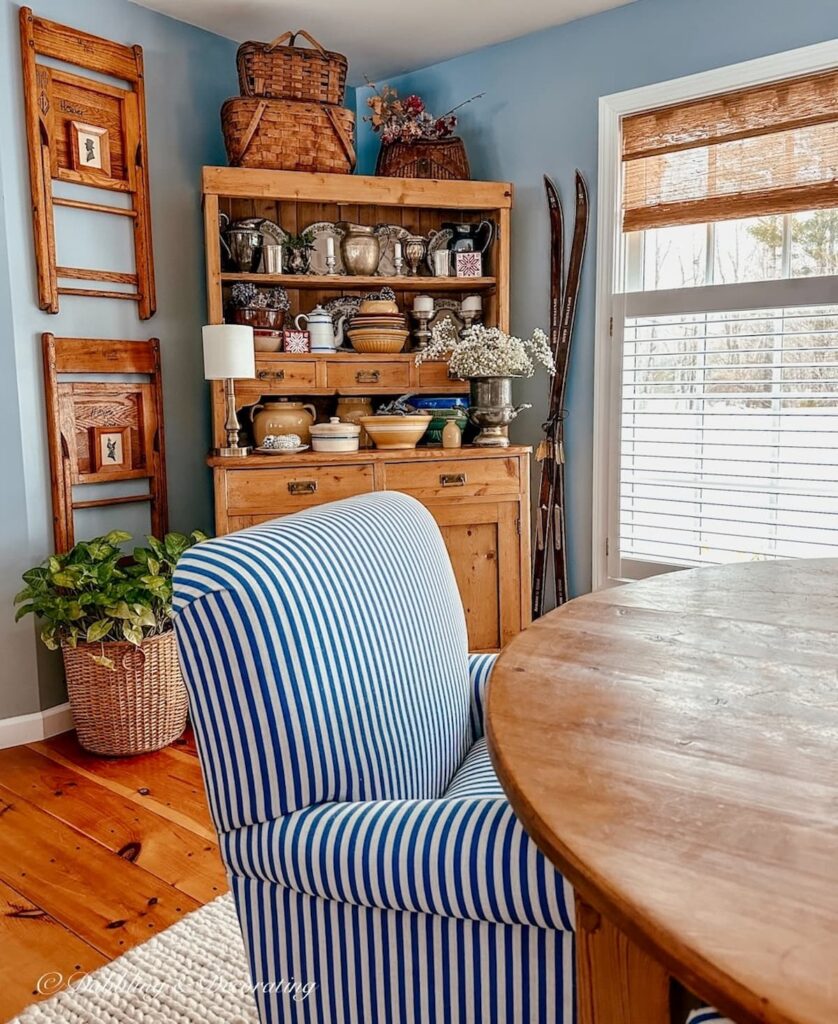
If you’ve followed me for any length of time, you know I love to collect. Dishes, bowls, platters, pottery, cake stands, and candlesticks somehow always find their way into my home, and I love pulling them out whenever a room needs a little life. So one of the first things I knew this scullery-inspired kitchen workroom needed was closed storage. Not more open shelves to style, but one hardworking antique piece where I could tuck things away and keep this end of our open floor plan from feeling too busy. We already have built-ins, bookshelves, open kitchen shelving, and another pine hutch nearby, which all add to the collected look I love, but they also make me crave one piece in this room that can quietly hold a lot.
Vintage Bookshelf Decor Ideas You’ll Love
Looking for creative ways to style your shelves through the seasons? From cozy neutral built-ins to colorful spring styling and vintage collections, this guide is full of inspiration for every decorating style.
Over the years, I’ve styled quite a few vintage hutches throughout our homes, and each one has taught me something a little different about storage, display, and how to make an old piece feel both beautiful and useful. This time, though, I knew I wanted something simpler and more practical. I kept coming back to the idea of closed doors, good storage, and a piece with enough age and charm to feel truly antique. I looked at pine hutches, glass-front cabinets, darker-painted pieces, and various old cupboards along the way, but the more I looked, the more I realized I wanted something primitive, functional, and painted.
Come along on my antique hutch hunt through Vermont as I search for the right piece for this scullery-inspired kitchen workroom.
And then, after all that looking, I found it.
The Blue Hutch I Found for My Scullery-Inspired Kitchen Workroom
I had started to picture an old blue hutch with the right kind of worn paint, not too perfect, not too chippy, just soft, timeworn, and full of character. I honestly thought I might be hunting for quite a while before I found one that felt right, but there it was at Windham Antique Center in Bellows Falls, Vermont. It had been taken from an old Vermont farmhouse and stripped back to its original blue paint, with beautiful white porcelain knobs, ample storage, and exactly the rustic charm I had been hoping for in this space.
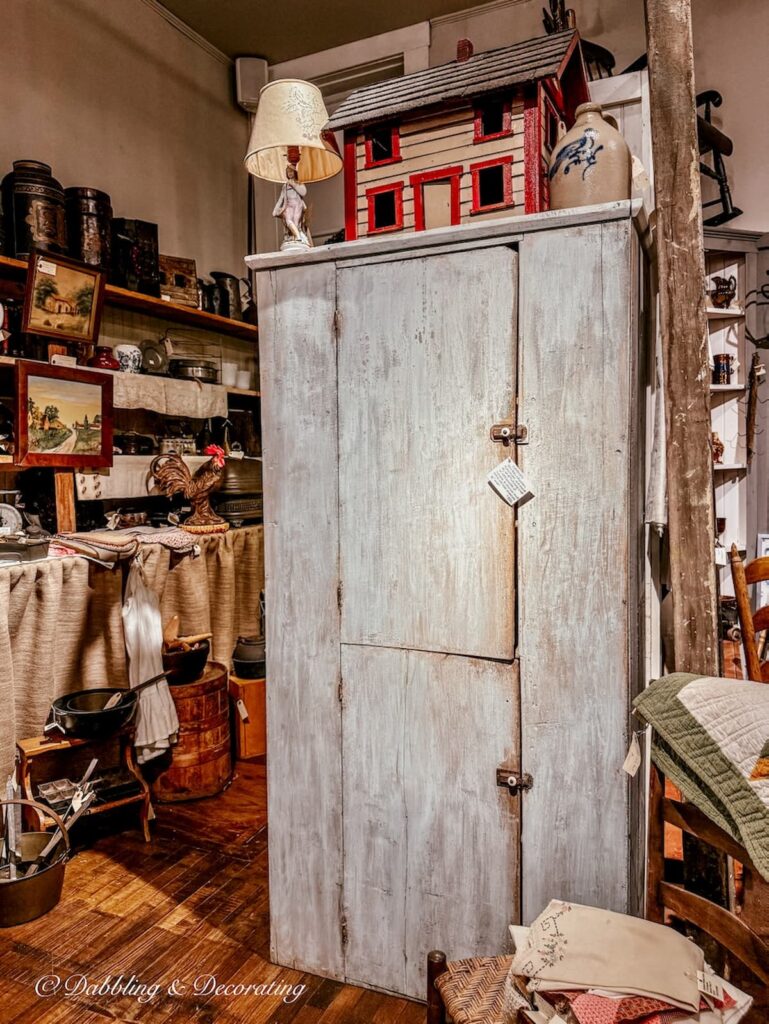
Standing about 76″ tall and 36′ wide, this hutch is definitely on the narrower side for our room’s main wall, but I could tell right away it would still work. It has good height, plenty of storage, and it isn’t so deep that it will stick out too far into the room, which really matters in an open floor plan. It may not fill the entire wall on its own, but the minute I saw it, I knew it had the right proportions and character to get this space moving in the right direction.
Ann was recently quoted in Homes and Gardens in their All of the most stylish rustic kitchens I am seeing right now have this one feature in common – it’s easy to replicate, and you probably already own everything you need article (2025)
I ended up bringing the hutch home the very next morning, and I’m so glad I did. At first, I assumed delivery would be the easier route, especially for a big antique piece, but when I got the quote, it was far more than I expected. So lesson learned: never assume delivery is the simplest option. After getting the measurements from the antique dealer, I realized the hutch would fit just fine in my SUV, and sure enough, it came home much more easily than I had imagined.
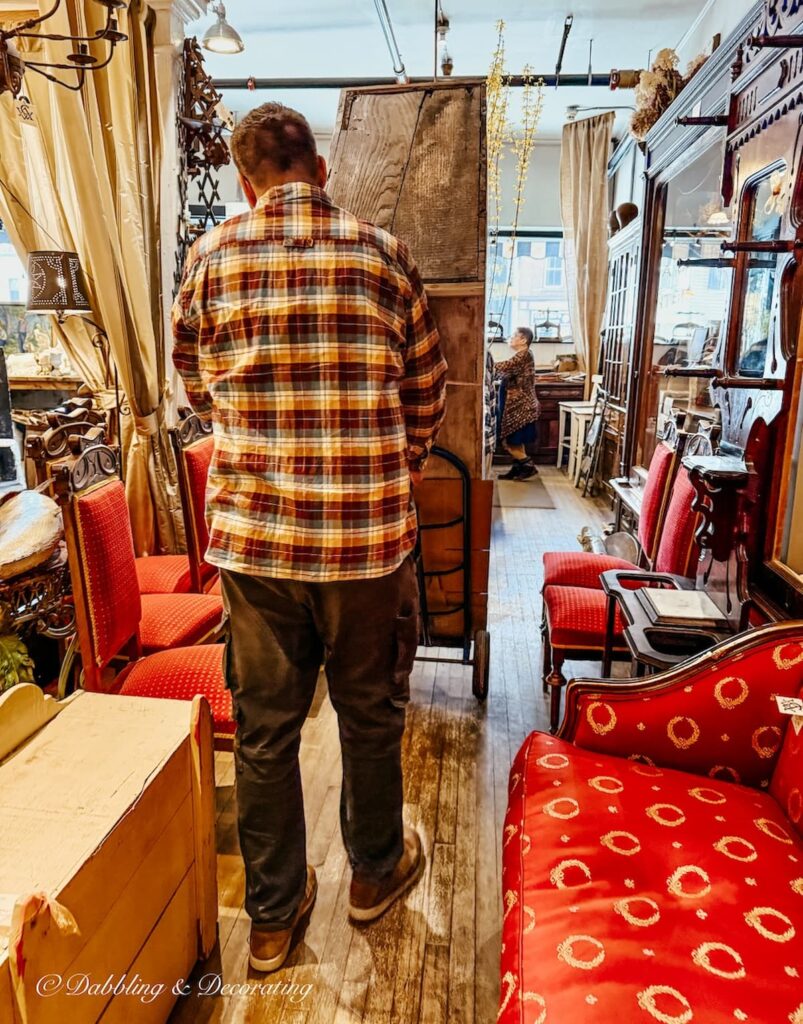
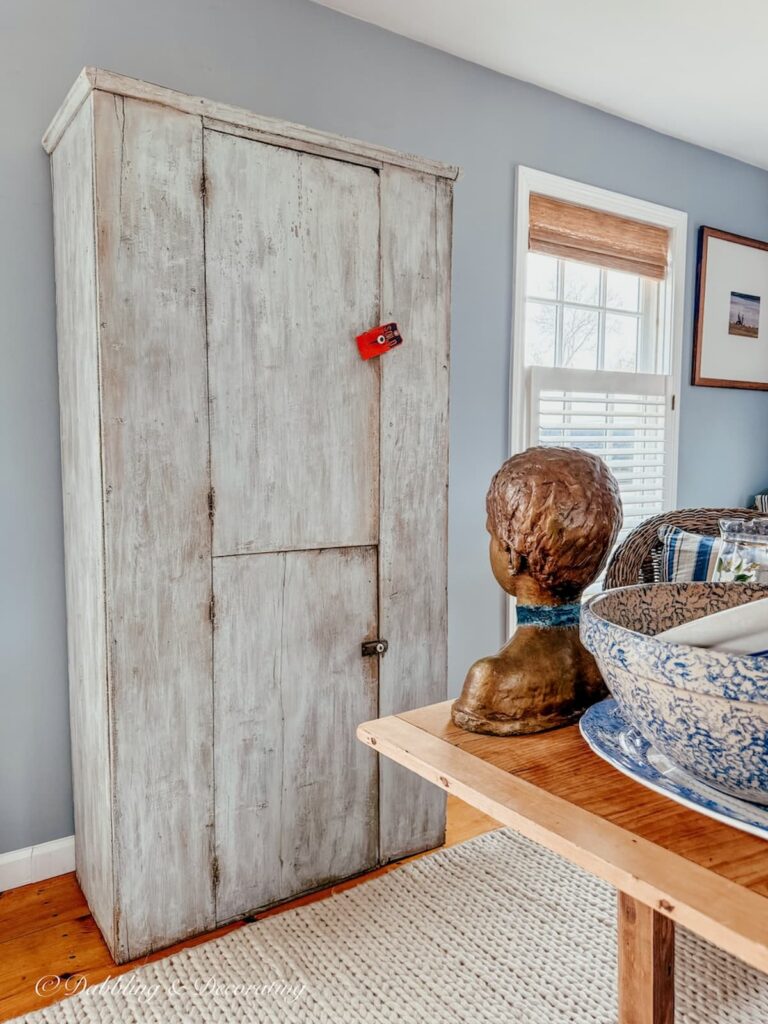
Now that it’s here, the next step is seeing how it fits in the room, figuring out what may need to shift around it, and deciding how I want to style the top while letting all that wonderful closed storage do the hard work below.
How I Narrowed Down the Right Hutch
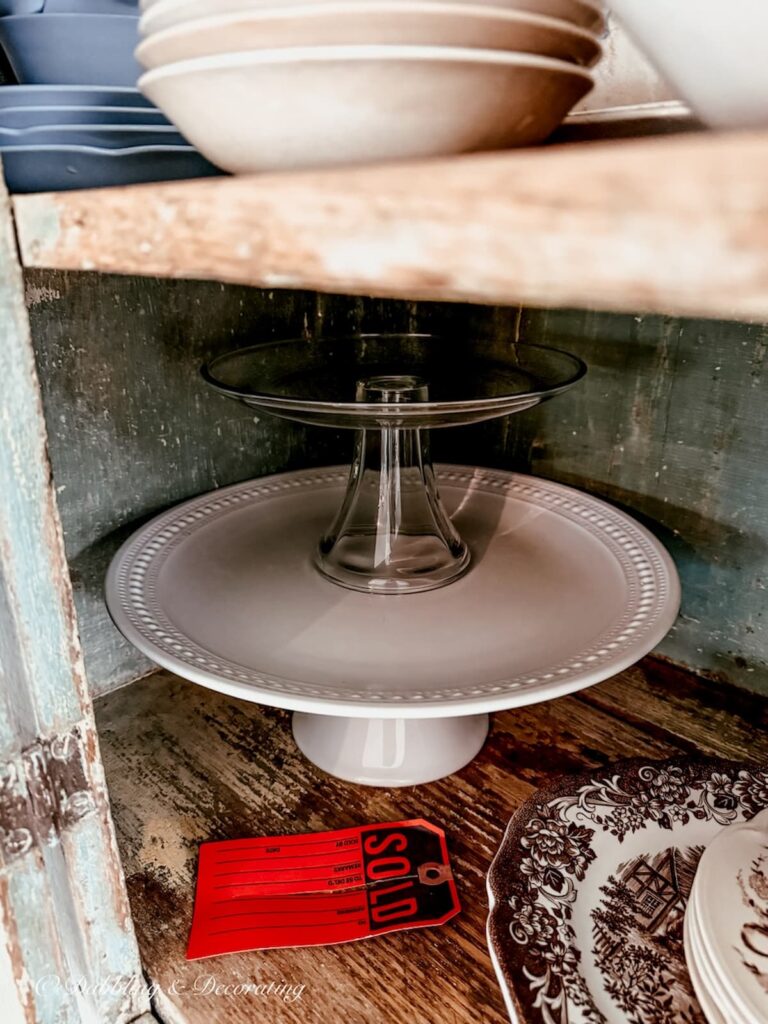
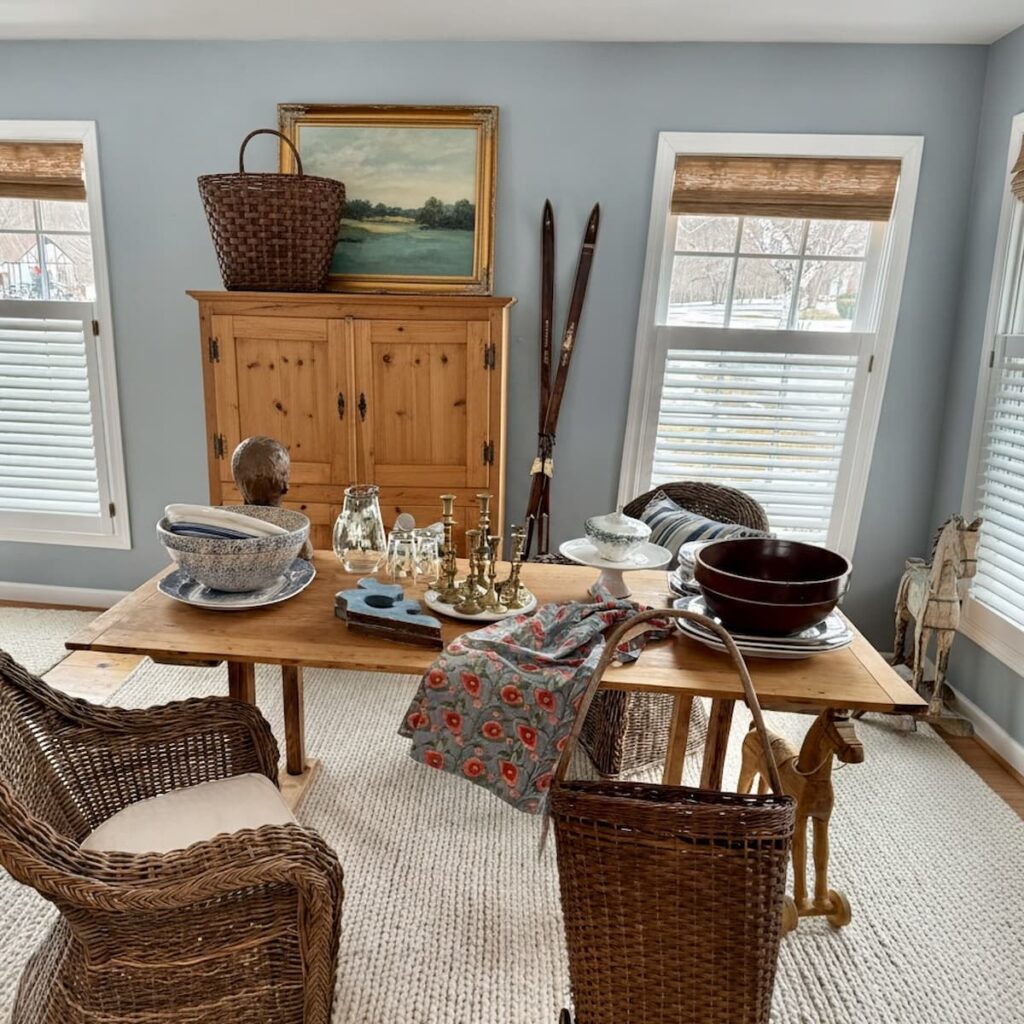
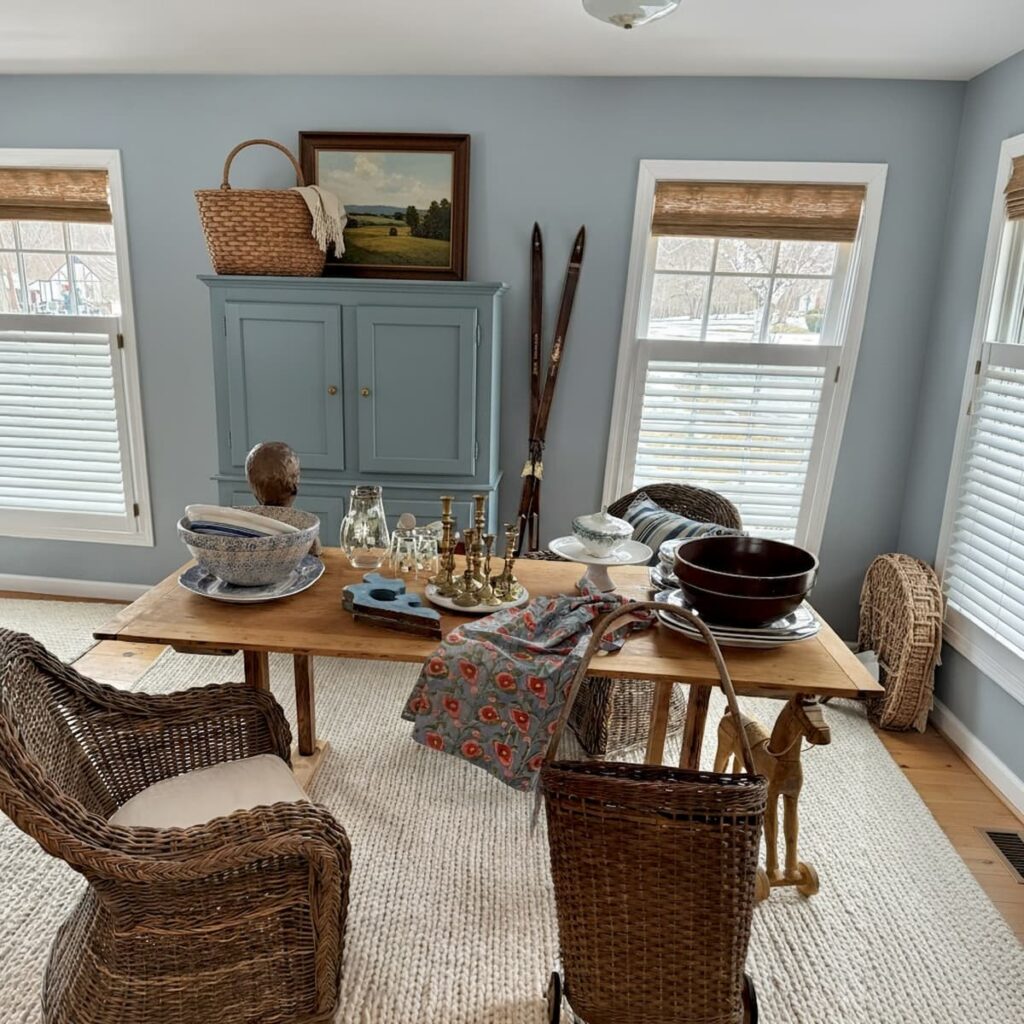
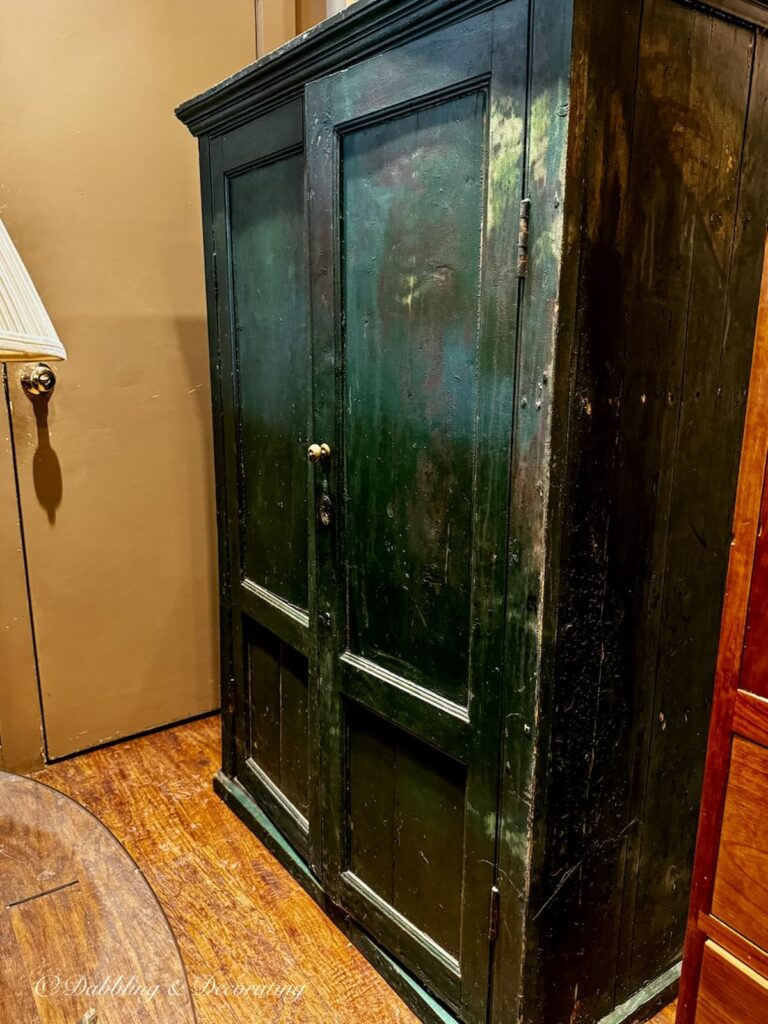
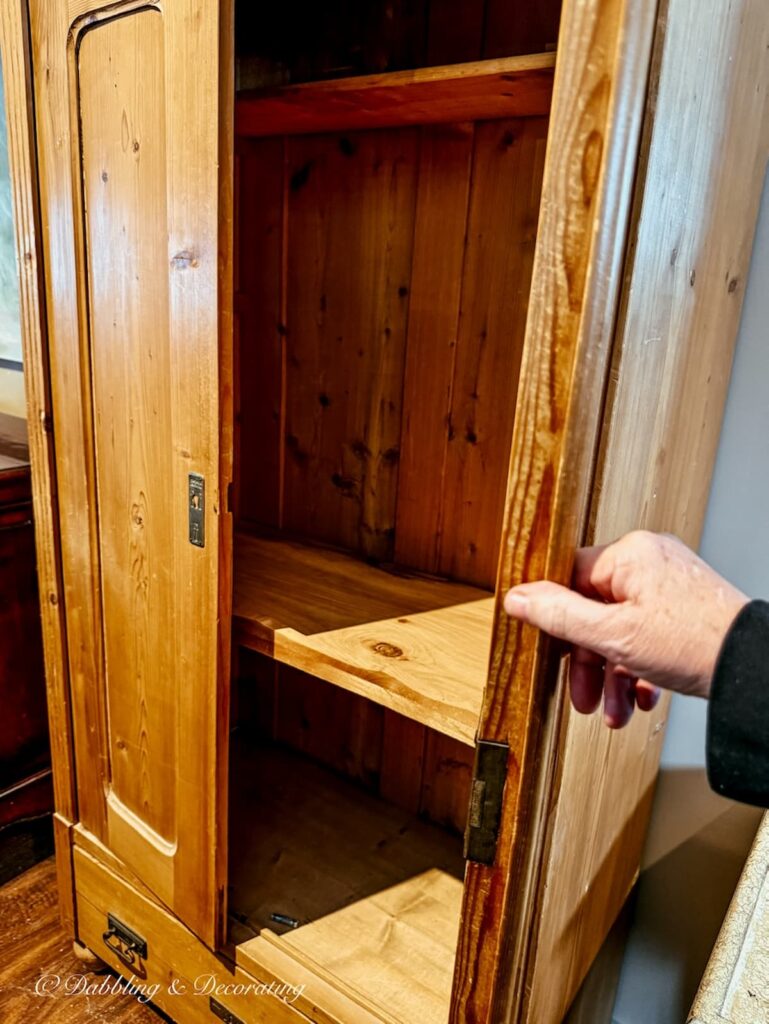
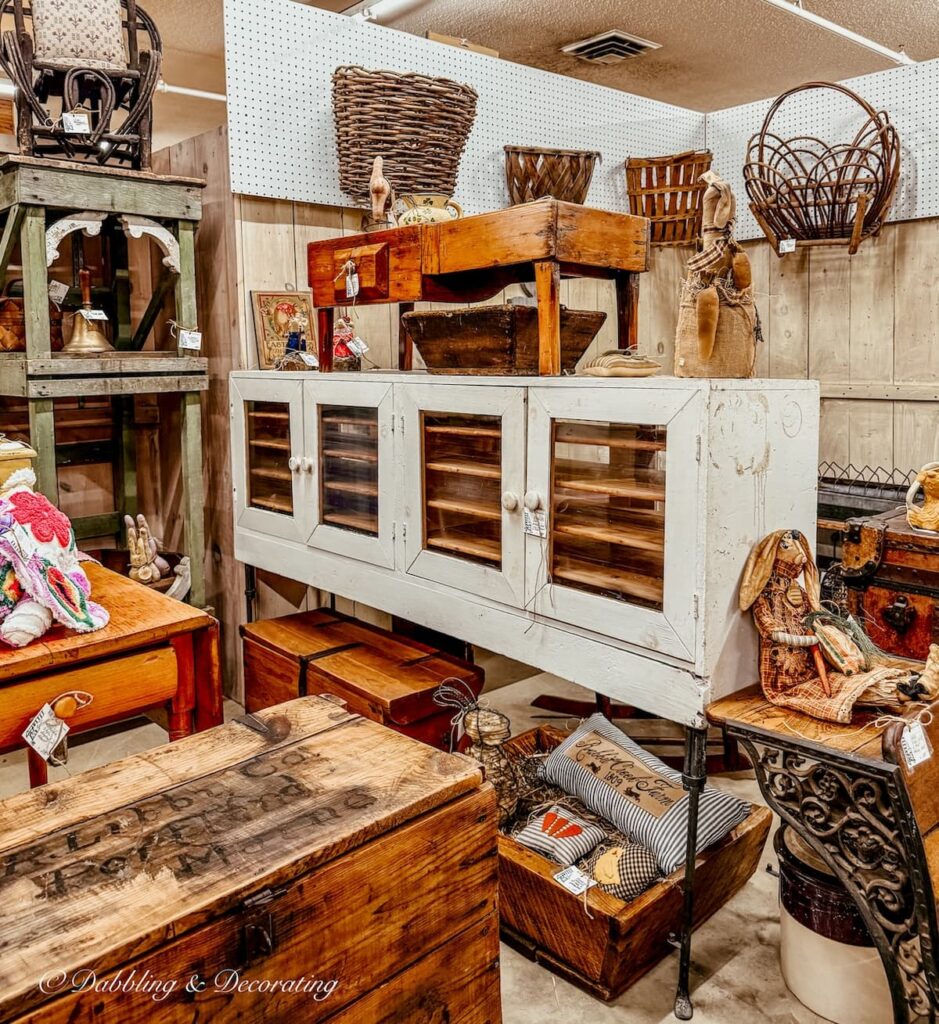
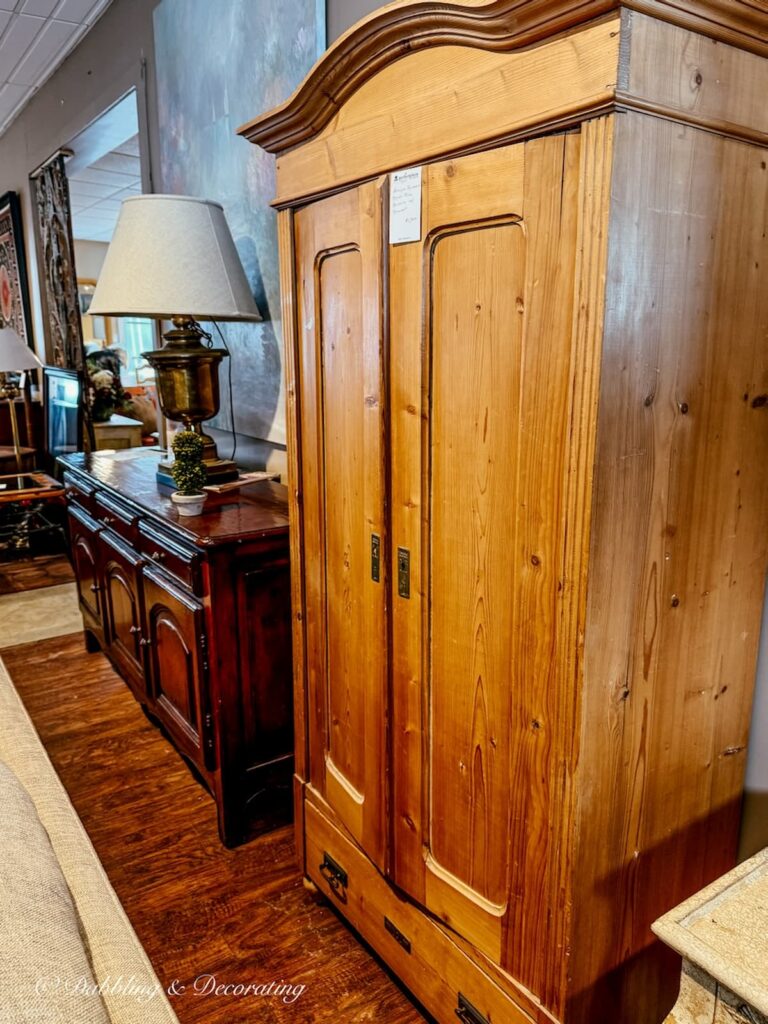
Before I found the right hutch, I spent a lot of time thinking through the kind of piece this room really needed. These AI mock-ups and antique store photos helped me compare warm wood versus painted color, closed storage versus glass doors, and all the little details that finally led me to the blue hutch now sitting in this room.
To help me picture the possibilities, I created two simple AI mock-ups for this wall, one with a pine hutch and one with a painted blue hutch. They weren’t exact designs, just a quick way to compare warm wood versus painted color, especially since I already have a pine table here and another pine hutch off to the left.
I looked at so many different hutches along the way, and each one helped me narrow down what I wanted most: closed storage, good scale, and enough character to feel truly antique.
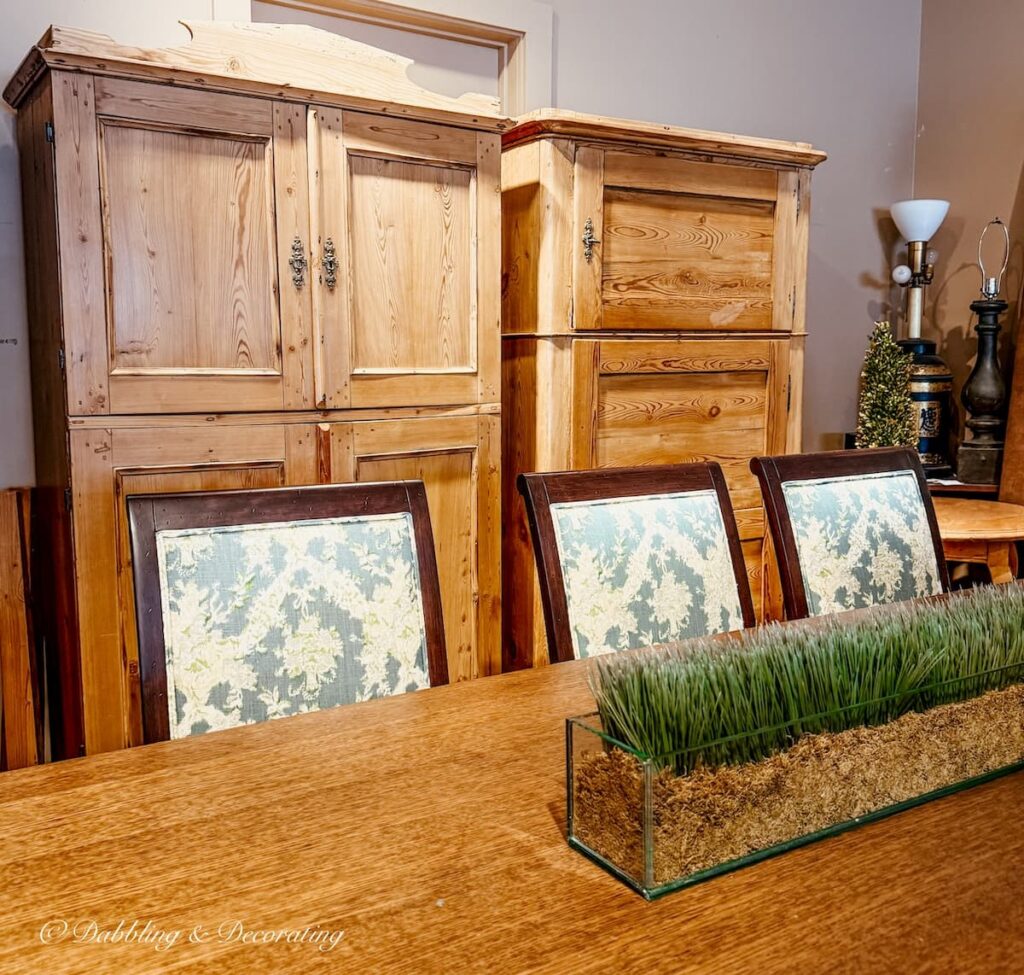
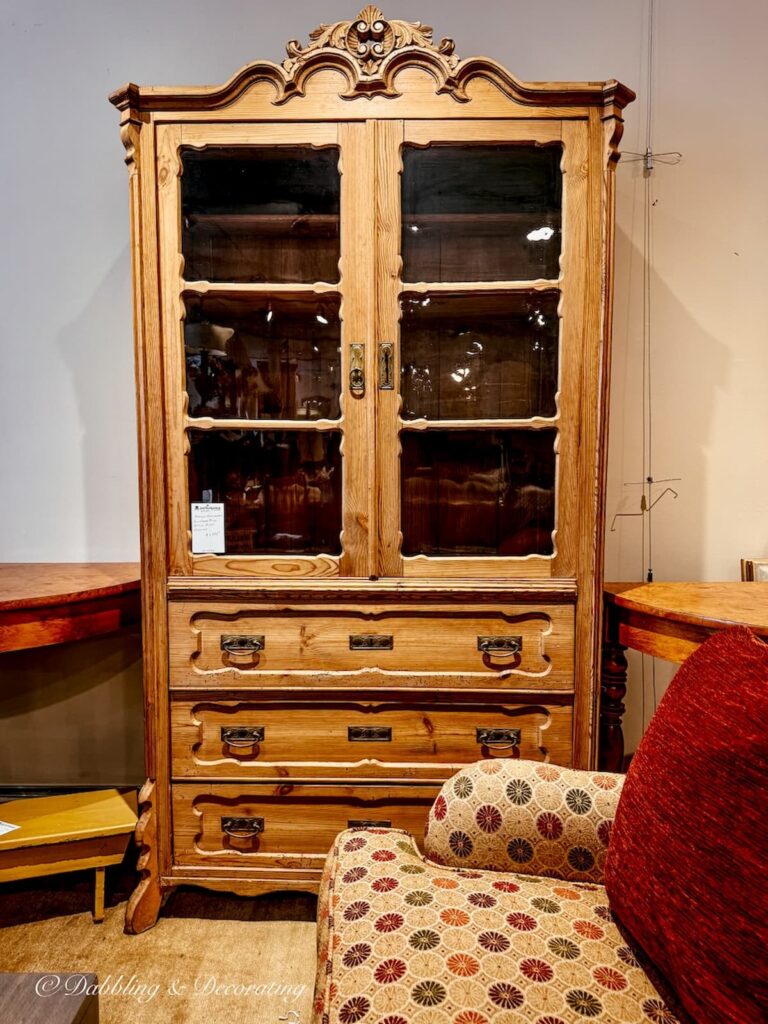
Would you have chosen pine or blue for this space?
So that’s where things stand for now. The hutch is home, the room is still very much a work in progress, and for the first time in a long time, this awkward corner feels like it has a real direction. I’ll keep sharing the next steps as they happen, from settling the hutch into place to styling the top and figuring out how this scullery-inspired kitchen workroom takes shape over time. Follow along as I keep updating this space, one old piece at a time.
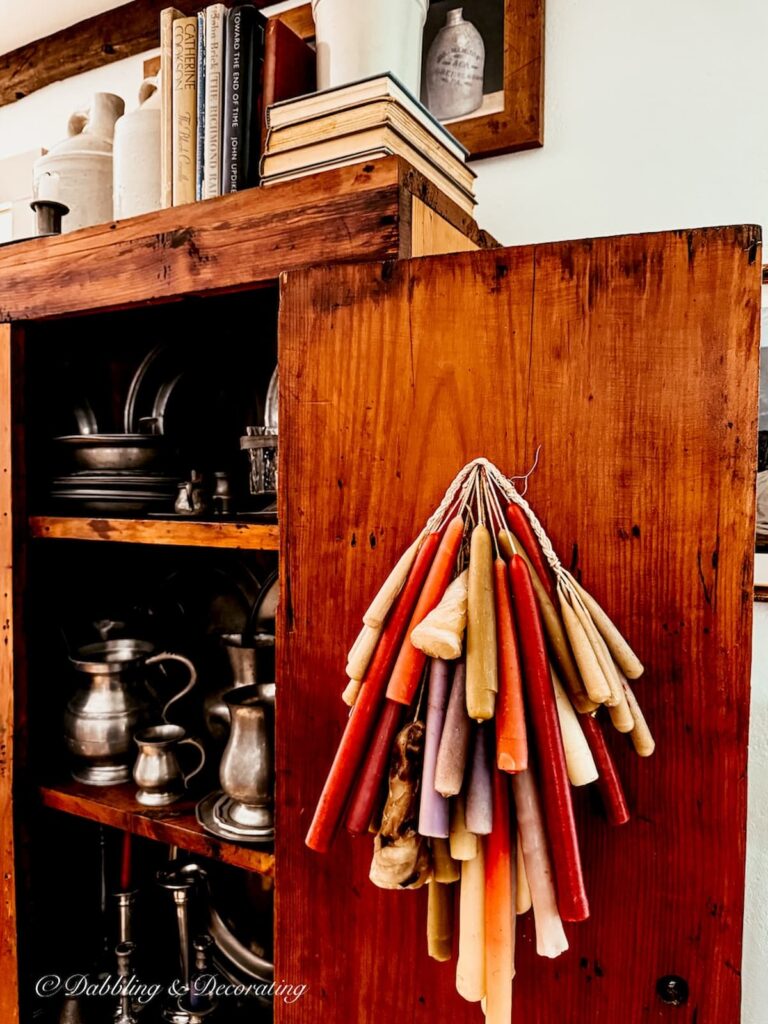
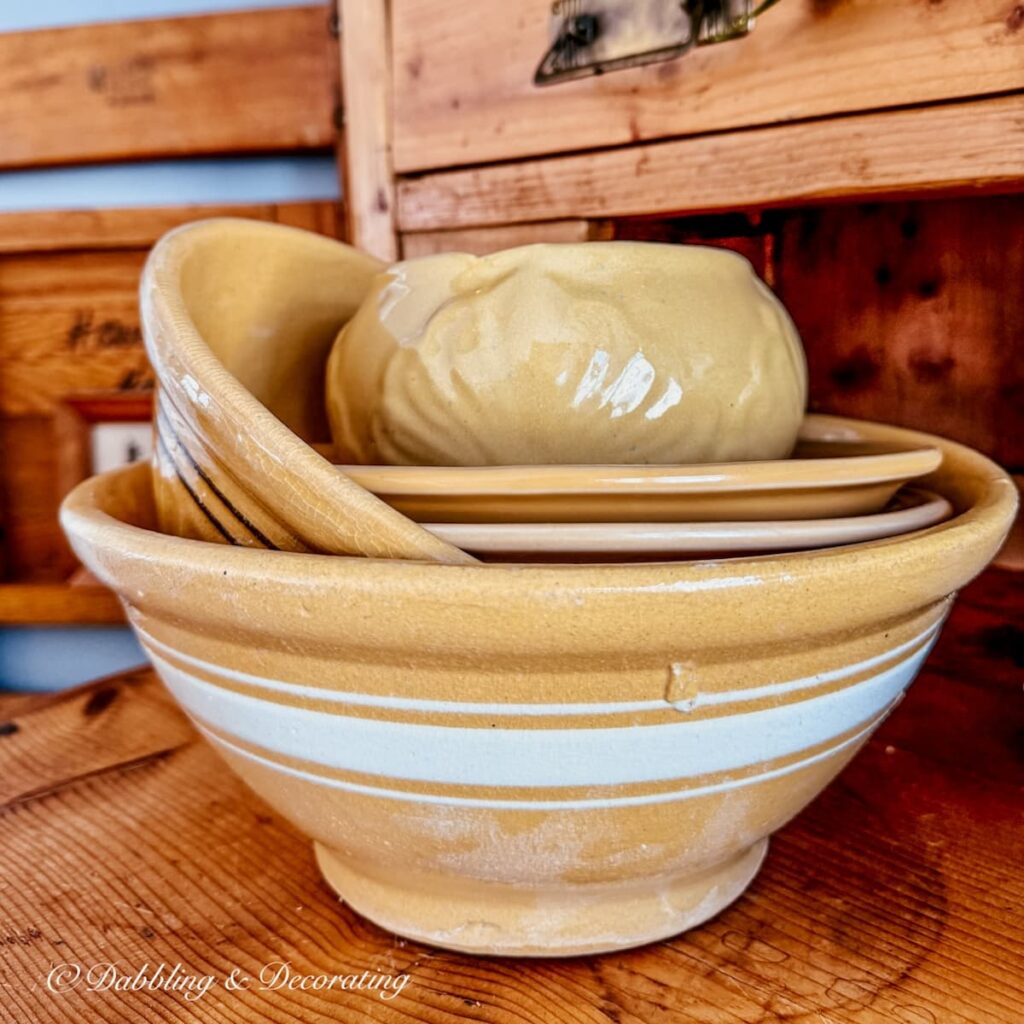
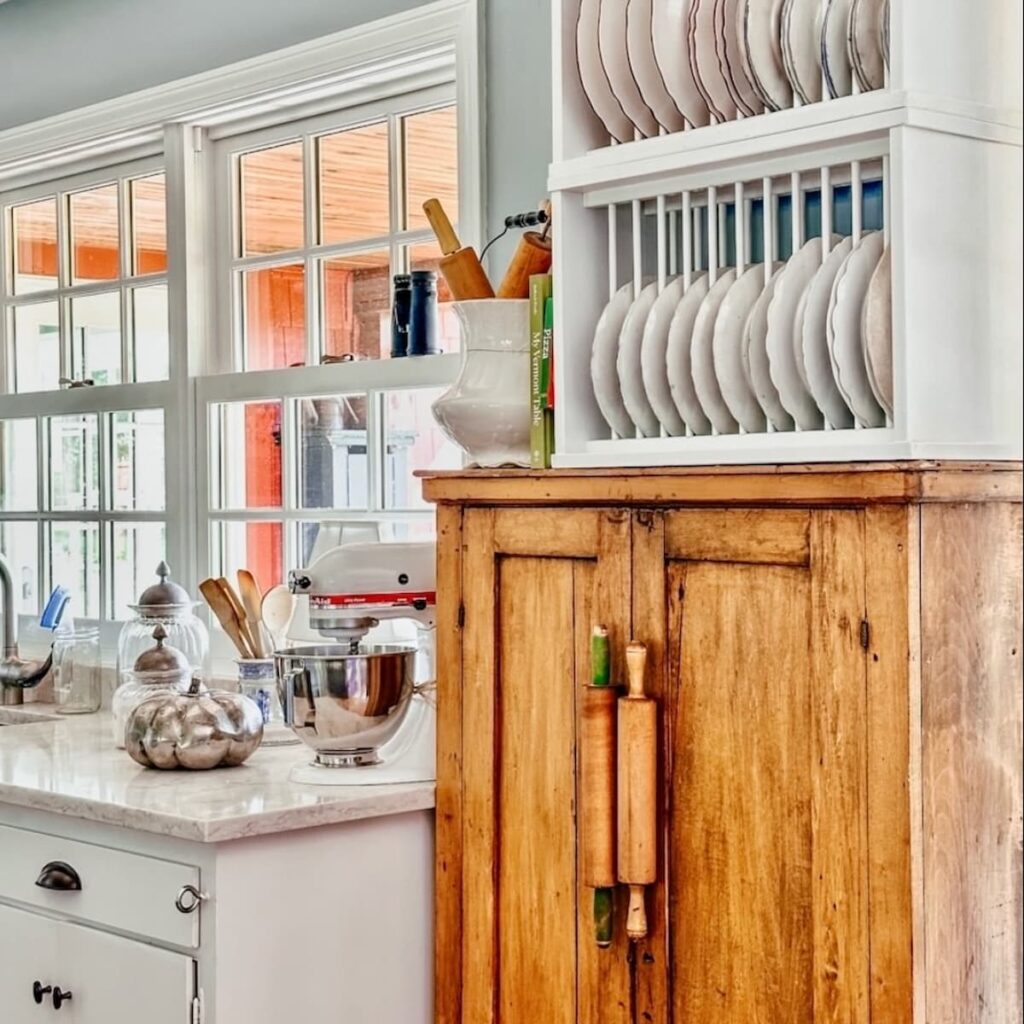
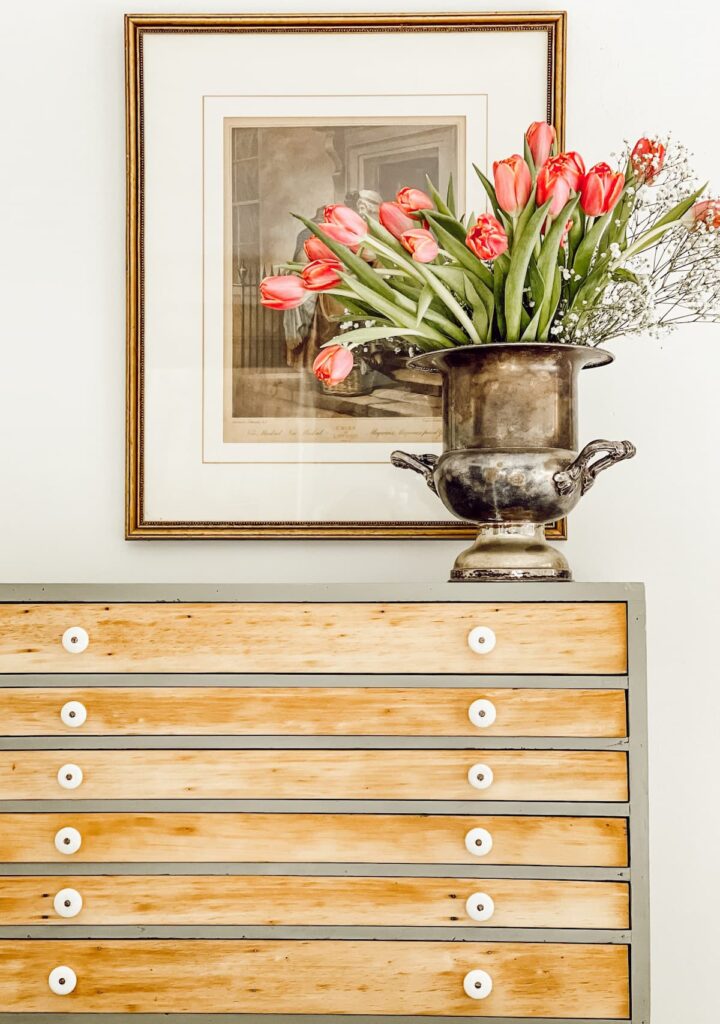
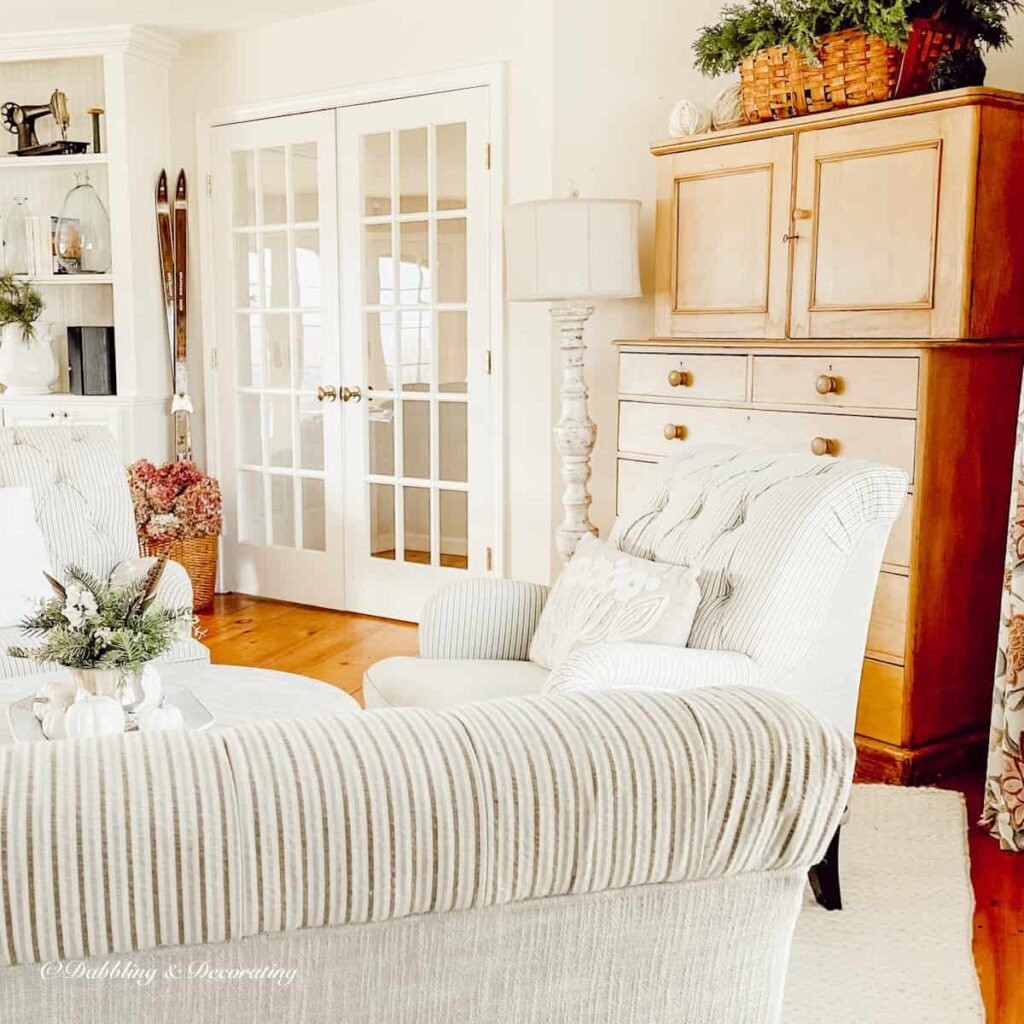
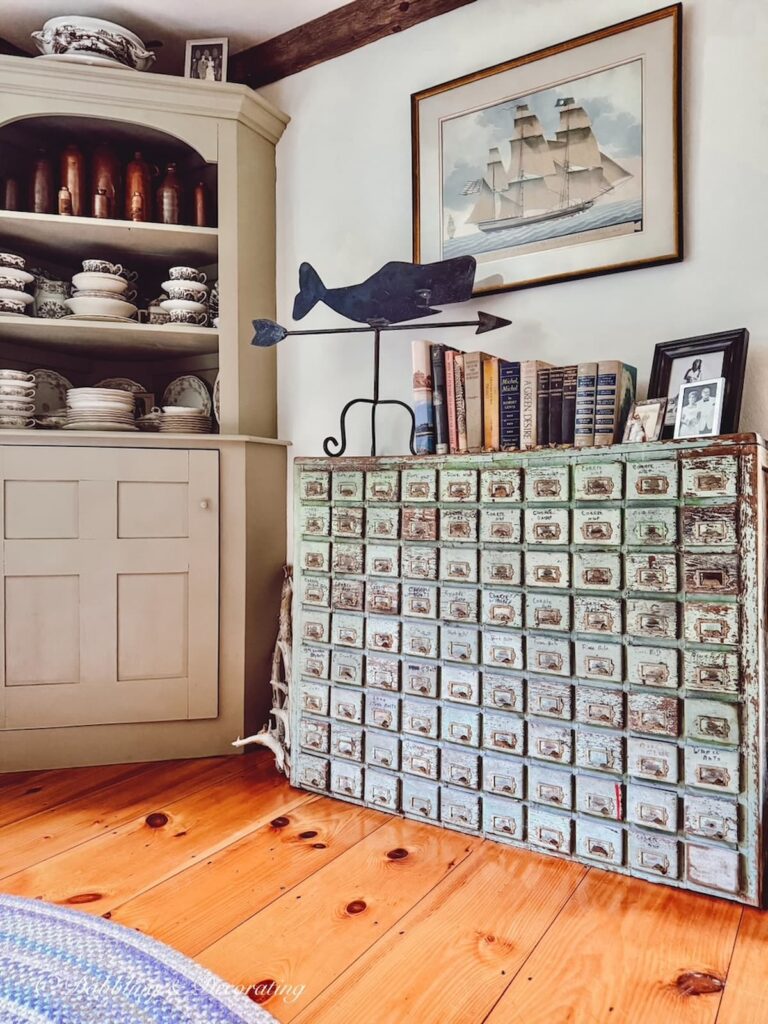
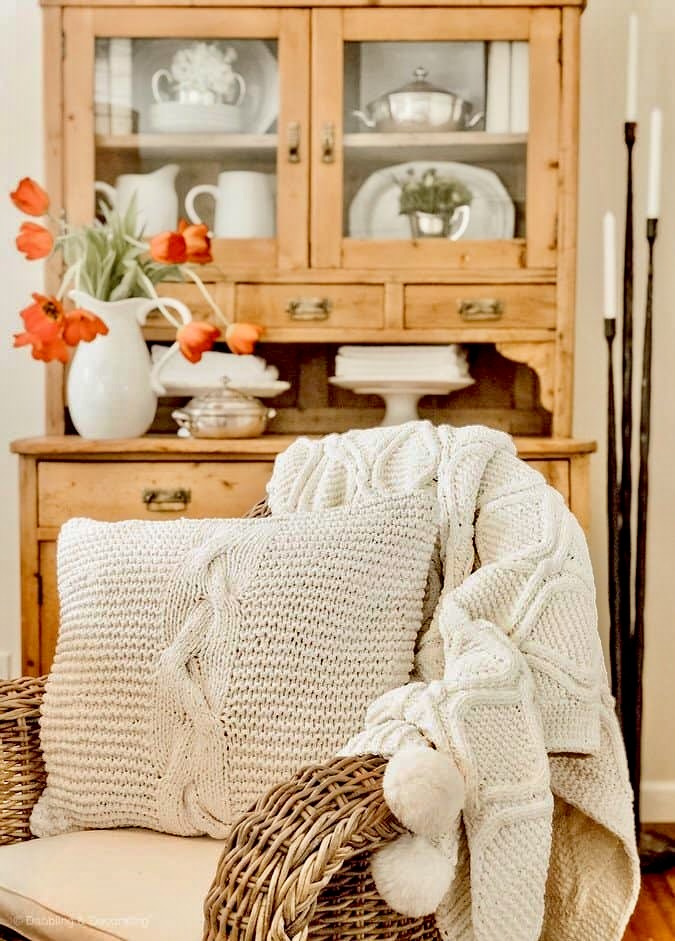
Looking for more vintage hutch styling ideas? Here are a few favorites:
Frequently Asked Questions About a Scullery-Inspired Kitchen Workroom
A scullery-inspired kitchen workroom is a space near the kitchen designed for extra storage, prep, collecting, and everyday use. It takes inspiration from old-world sculleries and butler’s pantries, but can be adapted in a simpler, more flexible way for modern homes.
A traditional scullery was often used for prep, storage, and cleanup, sometimes with a sink and more built-in functions. A kitchen workroom is a looser, more personal version of that idea and can be shaped around how you actually live, store, and use the space.
An awkward open-floor-plan corner can become a useful storage area, a breakfast nook, a sitting room, or a scullery-inspired kitchen workroom. The best solution depends on how your home functions and what kind of space you truly need.
A scullery-inspired kitchen workroom can include a sturdy table, a vintage hutch or cabinet, closed storage, baskets, dishes, linens, pottery, and a few flexible seating pieces. The goal is to create a room that feels useful, organized, and full of character.
A hutch or cabinet with closed storage is often the better choice if you want to tuck things away and reduce visual clutter. It can hold dishes, bowls, platters, cake stands, and serving pieces while still adding warmth and antique charm to the room.
Start with foundation pieces that feel practical and lived in, like an old pine table, a soft rug, natural textures, and storage furniture with character. Then add familiar details like wicker chairs, pottery, baskets, and artwork so the room feels collected and comfortable instead of overly styled.
That depends on how much you want to display, but closed storage is often easier in an open floor plan. It helps hide visual clutter, keeps everyday pieces close at hand, and makes the room feel calmer and more functional.
Join the Vintage Circle — Familiar Finds, Styled Your Way™
Love vintage treasures, thrifted gems, and a home that tells your story? Leave a comment, share this post with a kindred spirit, or head to my Start Here page to explore more. Want fresh prompts and timeless ideas? Subscribe to join our Seasonal Vintage Decor Styling Challenge for weekly inspiration and behind-the-scenes peeks.
Pin forLater!


I love the wicker chairs in this post. Can you please tell me where you got them?
Thanks so much. They are old Pottery Barn chairs from a dining room set I bought about 13 years ago. They have similar ones, but they’re not exactly the same. Hope this helps.
Loved this post, Ann! Love to see your thought process as you rethink a space. That soft blue is perfect for the space. It really layers perfectly with the natural wood tones. And who doesn’t love Windham Antiques?? Can’t wait to see what you come up with next!!
Xo
Cara
Thanks so much Cara, it’s definitely a work in progress and my mind is spinning with so many fun ideas… Have a great weekend.