
Curious about vintage yellowware? Learn how to collect it, what antique yellowware bowls are worth, and how to style mixing bowls and pitchers in your kitchen or hutch.
If you’ve ever spotted a stack of golden antique bowls at a flea market and wondered, Is that yellowware? And what is it worth? You’re not alone. Vintage yellowware has become one of the most charming and collectible kitchen staples, especially classic mixing bowls, blue-banded pitchers, and striped pottery pieces that feel right at home on open shelving or in a farmhouse hutch.
In this post, I’m sharing how to identify authentic yellowware, what vintage yellowware bowls are worth today, where to find them, and how I style these warm, timeworn pieces throughout my kitchen and dining spaces. Whether you’re just starting a collection or adding to one, yellowware is one of those vintage finds that brings instant character and history to a home.
Vintage Home Decorating Guides and Styling Inspiration
Are you curious about vintage decor but don’t know where to start? These cornerstone guides are packed with seasonal styling tips, how-tos, and inspiration to help you confidently decorate with charm and character.
Yellowware Quick Facts
• Origin: England, late 18th century
• Peak popularity: 19th-century American kitchens
• Most collectible pieces: Blue-banded yellowware mixing bowls
• Current value range: Most vintage yellowware bowls sell between $25–$150 depending on size and condition
• Best display ideas: Open kitchen shelving, dining room hutches, or stacked collections
What Is Vintage Yellowware? History, Characteristics, and Why It’s Collectible
Vintage yellowware (sometimes spelled yellow ware) is a type of pottery known for its warm golden-yellow color, created from iron-rich clay fired at high temperatures. First produced in England in the late 1700s and widely adopted in America by the mid-19th century, yellowware quickly became a hardworking staple in everyday kitchens.
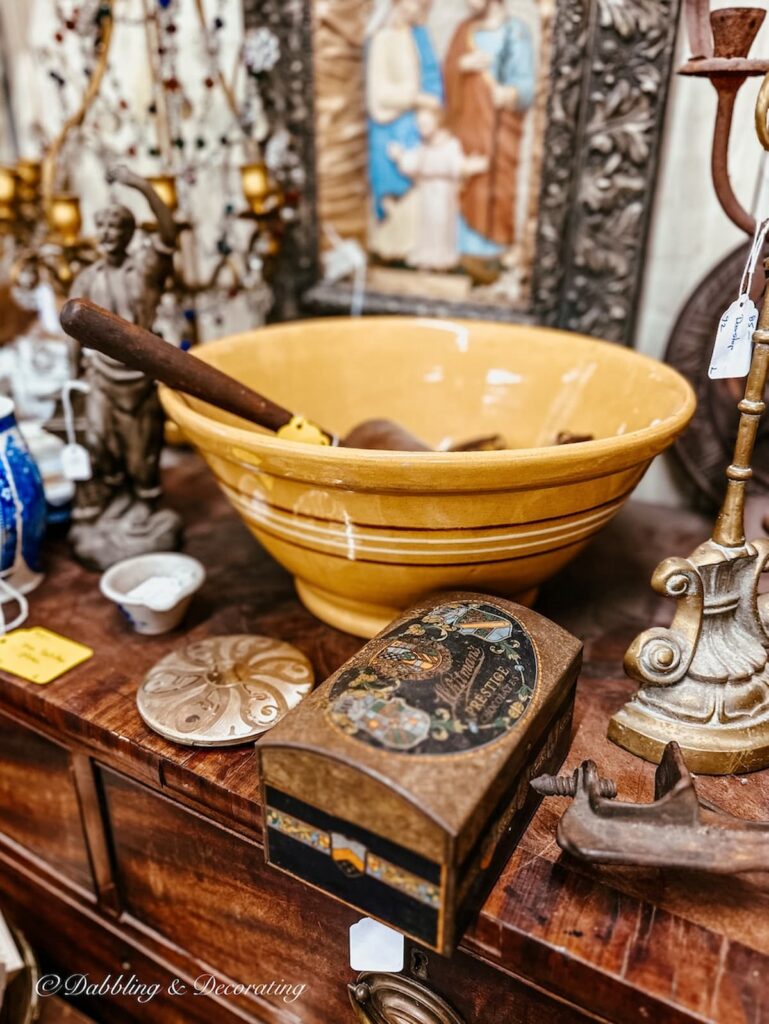
Unlike delicate china, yellowware was durable, practical, and affordable. Large yellowware mixing bowls were used for baking bread, whipping cakes, and preparing family meals. Over time, these humble kitchen tools became some of the most sought-after pieces for collectors.
My thoughts on collecting and styling yellowware were recently featured in GOODHOUSEKEEPING’s article 10 Kitchen Antiques Suddenly Back in Demand, According to Collectors.
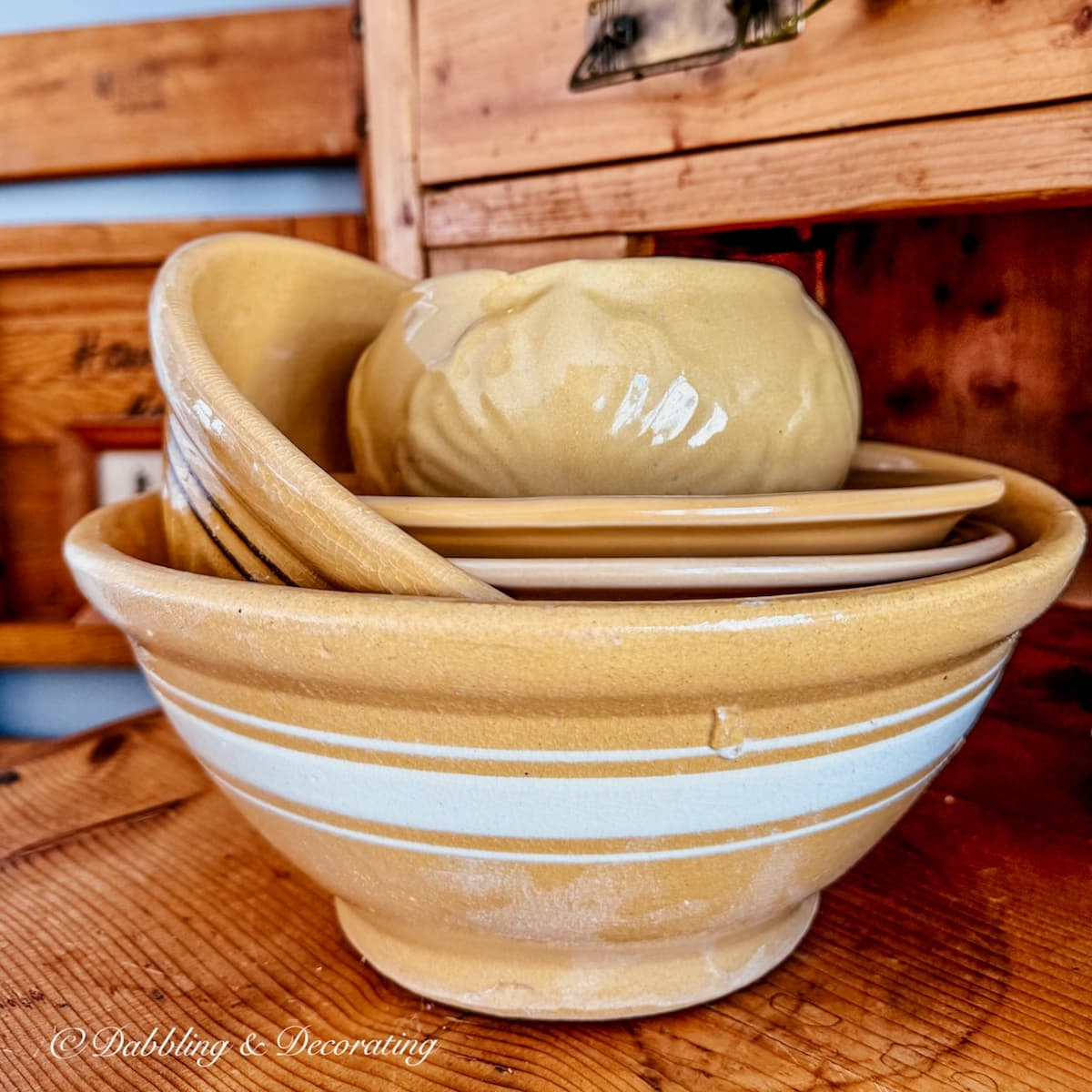
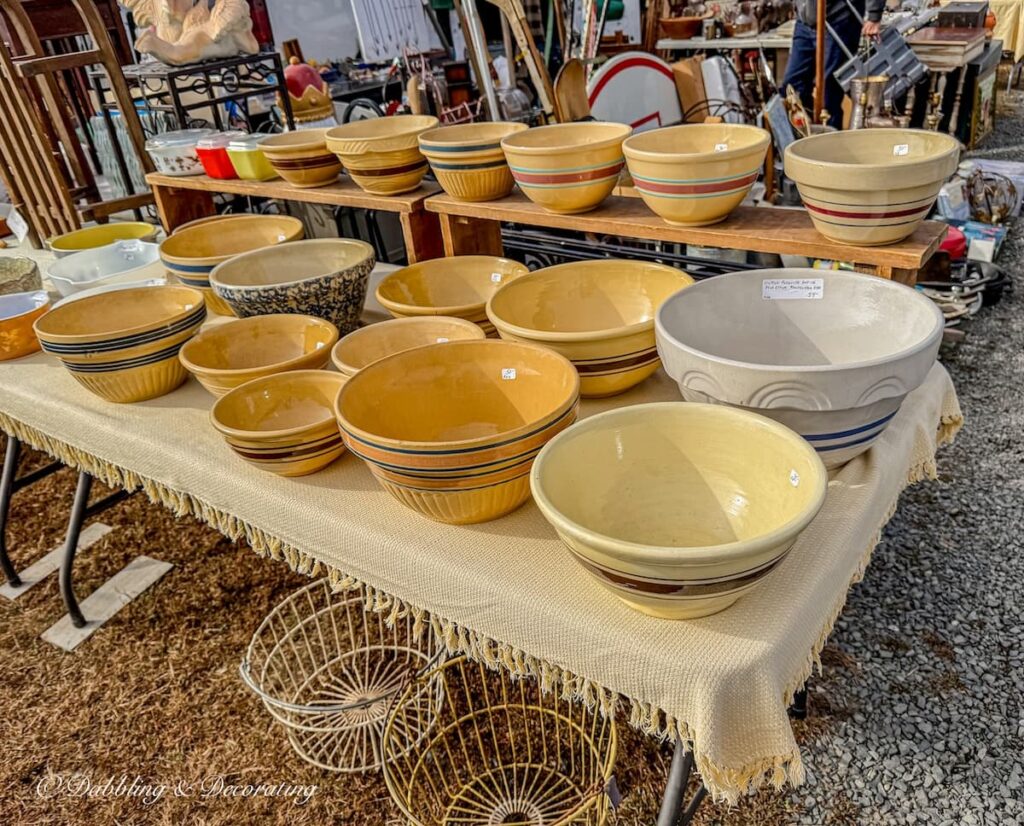
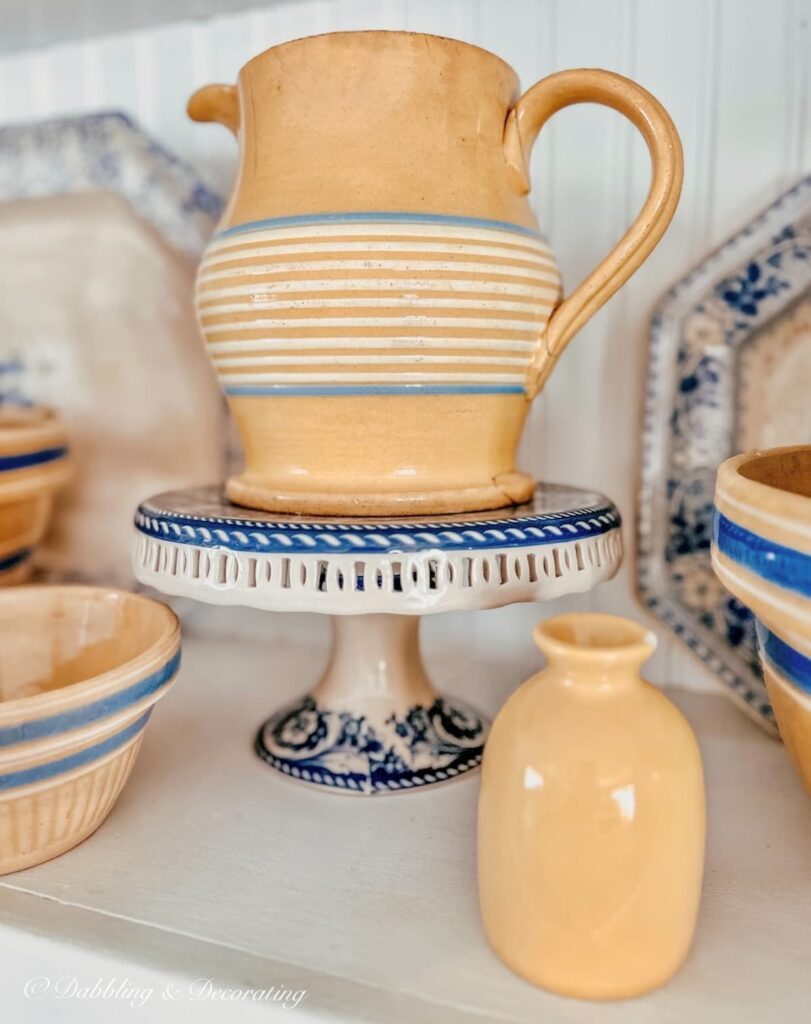
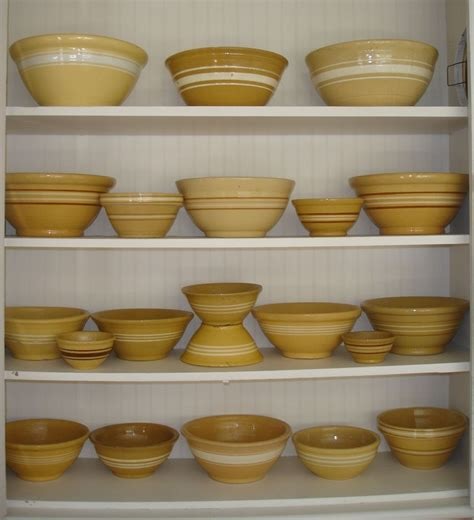
One of the most recognizable features of antique yellowware bowls is the banded slip decoration- those creamy white or colored stripes applied around the rim. These simple bands became a signature look, especially on nesting mixing bowls and pitchers. Because yellowware was handmade and regionally produced, variations in glaze, thickness, and finish are common. Some pieces feel smooth and refined, while others have a rustic, homespun character that only adds to their charm and value.
Ready to Embrace Vintage Decorating?
New to vintage collecting? This beginner’s guide will walk you through how to start collecting vintage home decor, what to look for, where to shop, and how to style your favorite finds with confidence.
Already have a collection you love? Don’t miss my favorite decorating with vintage collections ideas with stylish, creative ways to decorate with what you’ve found.
Want to Go Deeper into Yellowware Identification?
If you’re serious about collecting vintage yellowware bowls and pitchers, a dedicated identification guide can be incredibly helpful. The Collector’s Guide to Yellowware by Lisa McAllister and John Michael is considered one of the most comprehensive resources for understanding markings, regional production, and value variations.
For collectors who love the details, it’s a great companion to flea market hunting and estate sale shopping.
This post may contain affiliate links, which won’t change your price but will earn us commission.
Yellowware vs. Stoneware and Crocs: How to Tell the Difference
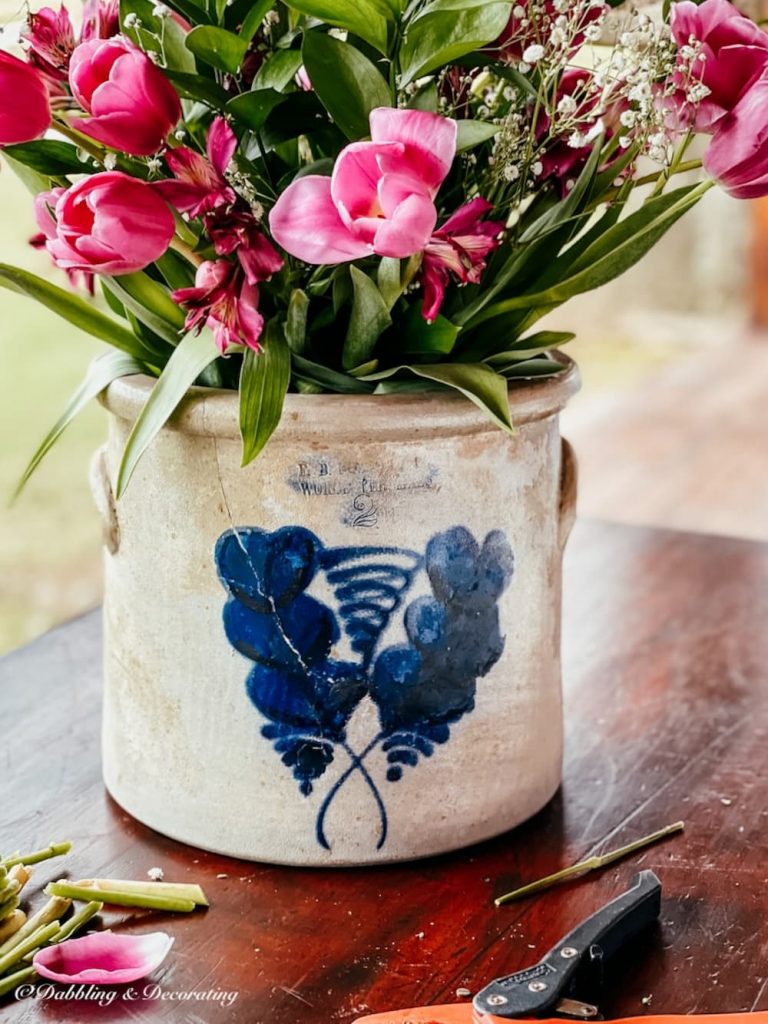
One of the most common questions collectors ask is how to tell vintage yellowware apart from stoneware or crocks. The easiest way to identify yellowware is by its warm golden-yellow clay body, which comes from iron-rich clay fired at lower temperatures. In contrast, stoneware and crocks are typically gray, brown, or buff in color and feel heavier and denser due to higher firing temperatures. Yellowware often features slip-decorated bands in blue or white around the rim, while stoneware crocks are usually glazed in earthy browns, salt glaze, or cobalt designs. If you’re holding a piece and see that soft buttery yellow tone beneath the glaze, you’re likely looking at true vintage yellowware rather than traditional stoneware.
Decorative Yellowware Details That Make These Pieces So Collectible
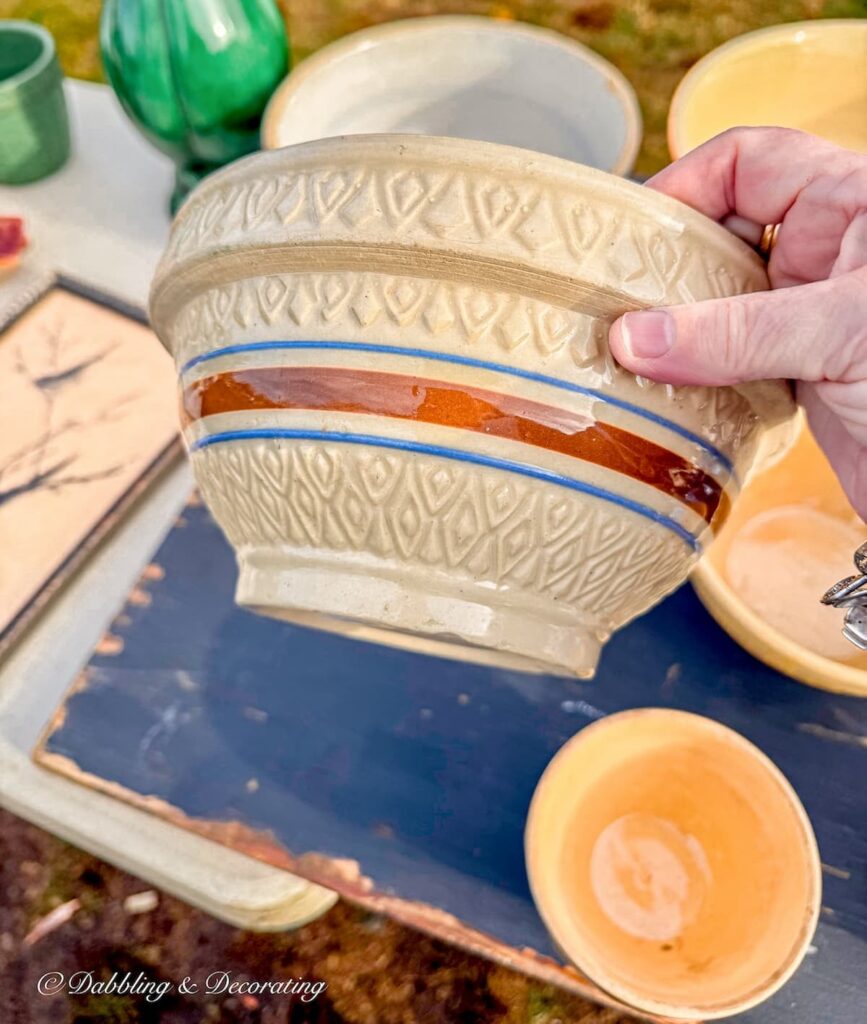
When learning how to identify yellowware bowls, it’s often the decorative details that reveal age, rarity, and value. Beyond the warm golden clay body, antique yellowware is known for subtle surface variations that collectors actively seek out.
These details can dramatically influence what a piece is worth, and they’re what make collecting yellowware bowls so addictive.
Slip-Banded Yellowware Bowls
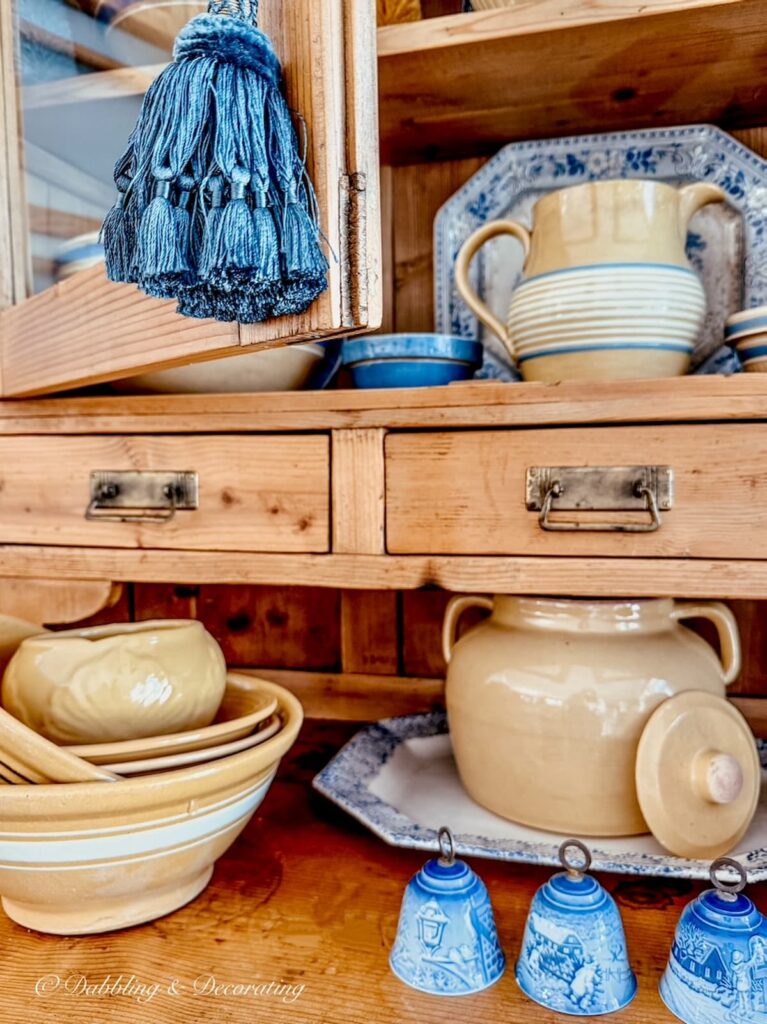
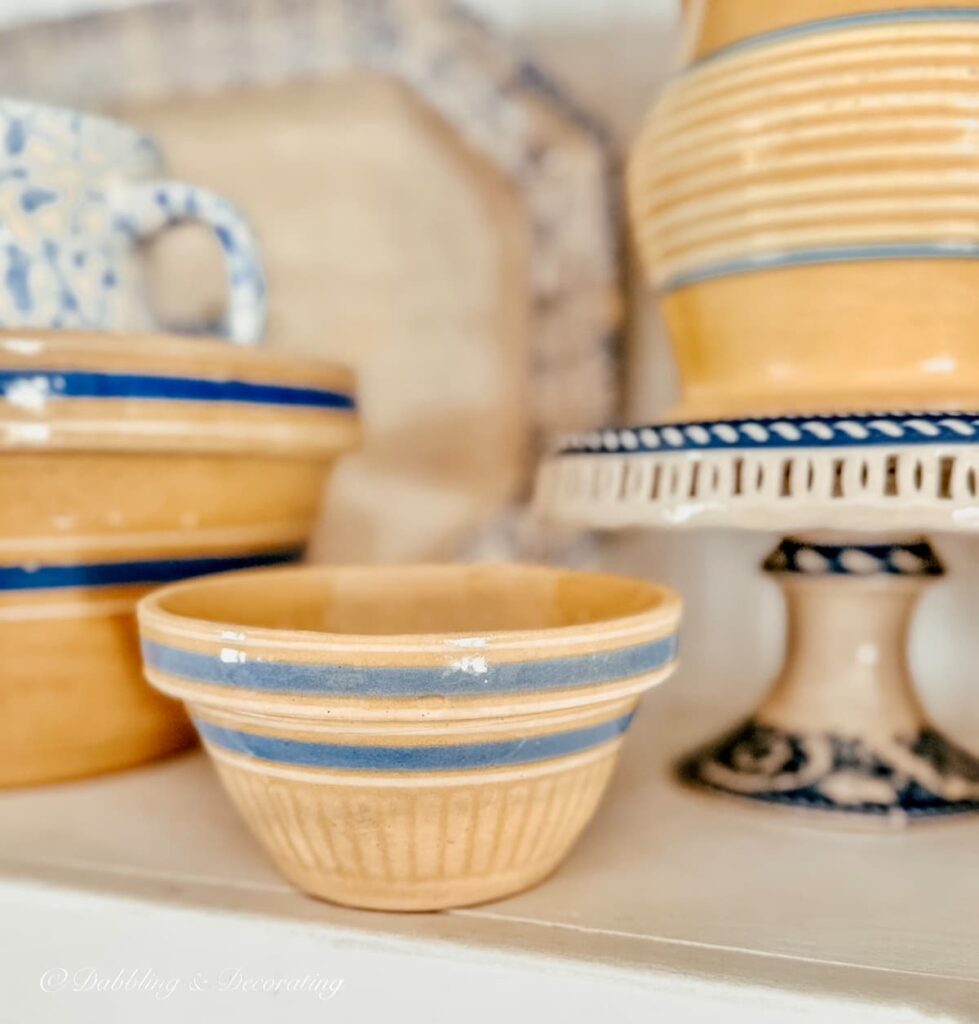
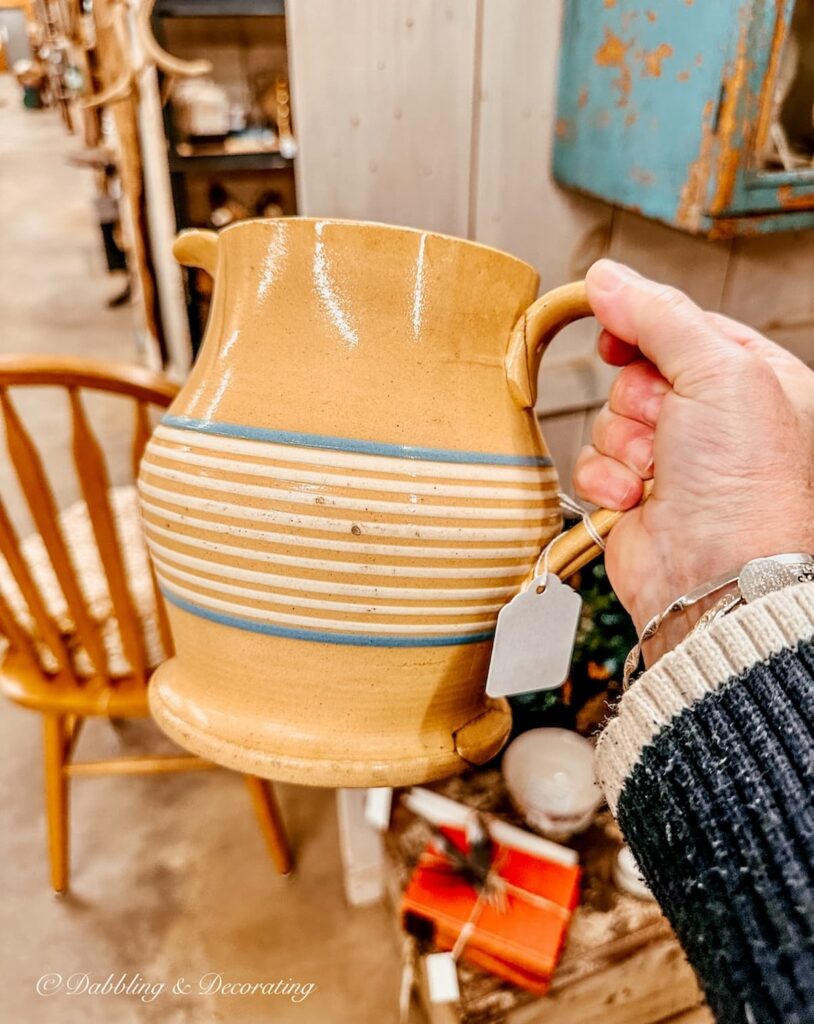
The most recognizable form of antique yellowware features slip banding, smooth rings of white, blue, or brown clay applied around the rim before firing. Blue-banded yellowware bowls are especially desirable and consistently rank among the most collectible pieces.
Molded or Embossed Yellowware
Some vintage yellowware was pressed into decorative molds, creating raised floral or geometric patterns. These molded pieces are less common and can command higher value depending on condition and clarity of design.
Seaweed-Decorated Yellowware
A rarer and more artistic technique, seaweed decoration features dark, trailing glaze lines that resemble underwater plant life. These pieces are highly sought after by advanced collectors.
Spatterware and Sponge Decoration
Sponged or spatterware yellowware bowls feature flecked or marbled glaze patterns applied by hand. This playful surface treatment adds character and increases collectibility.
Engine-Turned and Checkerboard Designs
Some antique yellowware bowls include impressed textures created before glazing. These subtle patterns give depth and are strong indicators of earlier production.
Classic Blue and White Striping
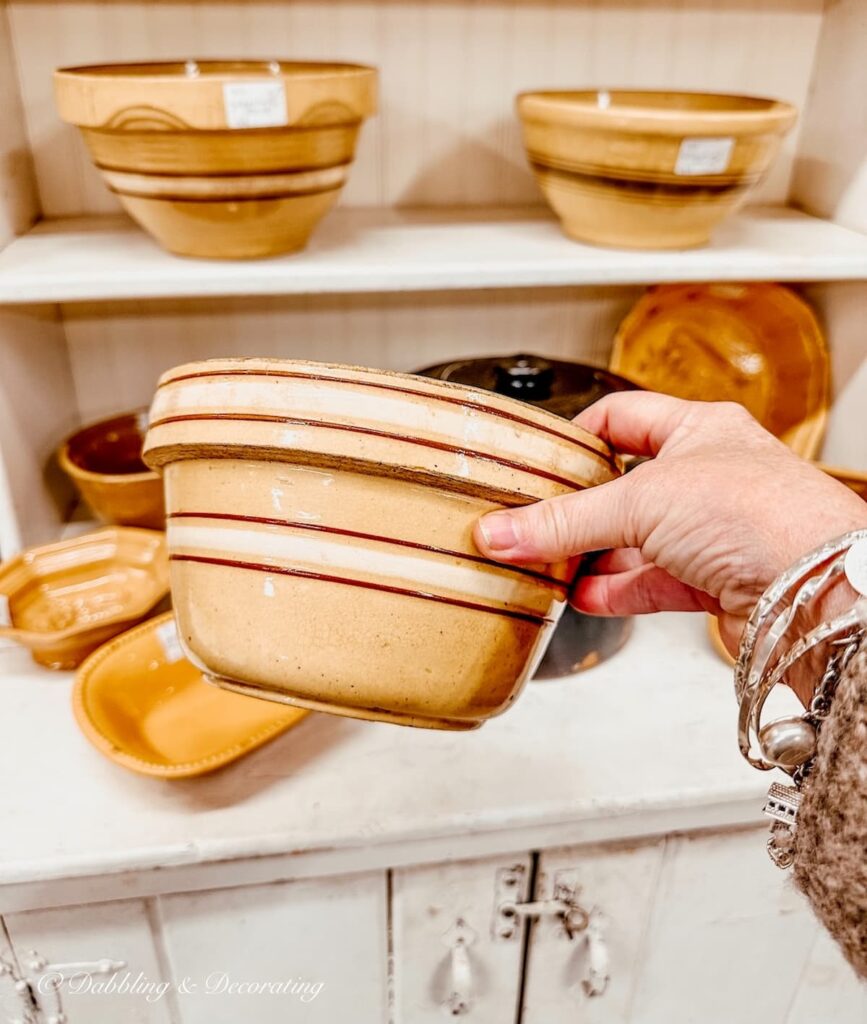
Perhaps the most iconic look in vintage yellowware collecting, blue and white bands offer timeless appeal. These are the pieces I reach for most often when styling open shelves or layering in a hutch display. My favorite yellowware pieces to collect are those with classic blue and white striping, especially when paired with my mother’s vintage bowls featuring white and brown bands.

Try a Styling Tip!
Looking for simple, vintage-inspired decorating ideas you can try in an afternoon? Explore all my Styling Tips for easy seasonal projects, quick DIYs, and creative ways to style your home with charm.
How to Collect Vintage Yellowware (And Why Now Is the Time)
Collecting vintage yellowware doesn’t require a massive budget, but it does require a good eye and a little patience. Because yellowware has followed decorating trends for decades, understanding where and how to shop can make all the difference.
Love Collecting Vintage Pieces?
Follow along on my Vintage Collectibles Pinterest board for even more antique and vintage collecting ideas, from yellowware and ironstone to pewter, vintage books, and layered heirloom pieces.
Where to Find Vintage Yellowware (And a Collector’s Tip)
Vintage yellowware bowls and pitchers can still be found in surprising places if you know where to look:
Yellowware isn’t always displayed prominently. Dealers sometimes tuck it behind larger stoneware pieces or mix it in with crocks and everyday pottery. Shop Vintage Yellowware on Etsy
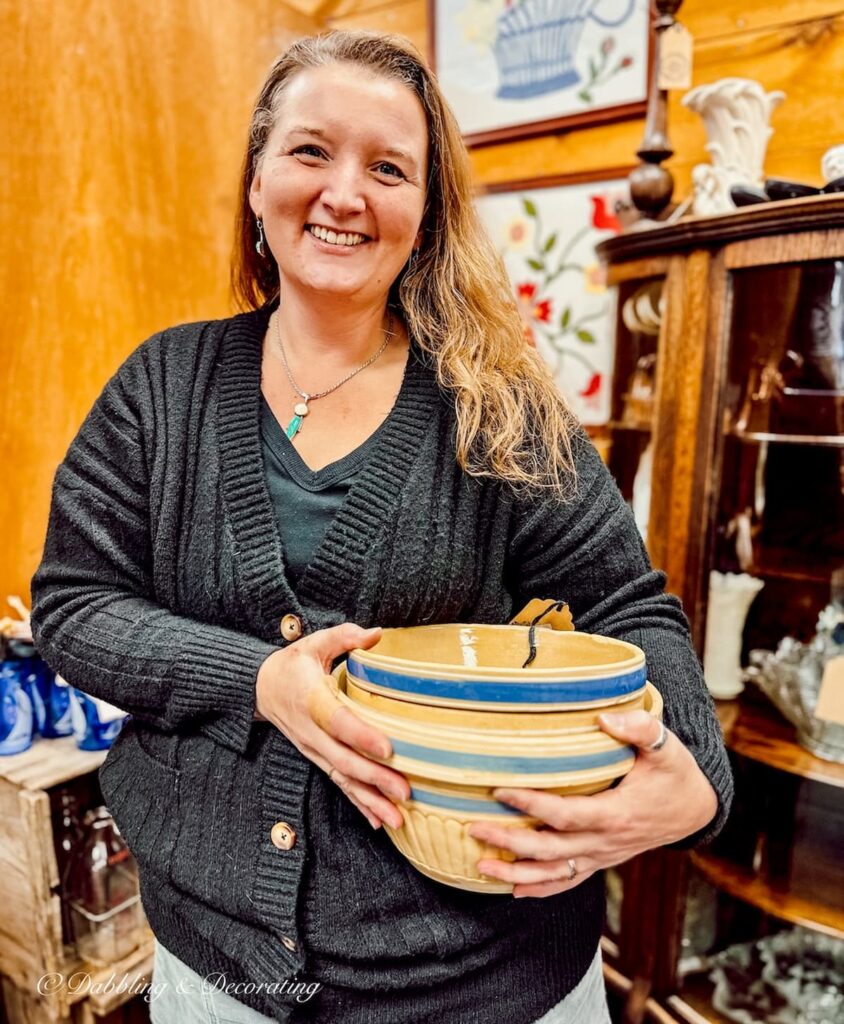
On a recent antiquing day in Maine, I searched an entire shop without spotting a single piece of yellowware. Before leaving, I asked the dealer if she had any tucked away. She walked behind the counter and returned with three beautiful blue-banded yellowware bowls, all for $40. They had been there the whole time, just not where I expected.
Collector’s Tip
Always ask dealers if they have additional yellowware in storage or recently acquired pieces not yet displayed. Many antique shops rotate stock or keep fragile items behind the counter.
And let’s be honest, you rarely regret adding another yellowware bowl to a stack.
Antiquing & Thrifting New England Shopping Guides: Vintage Stores, Markets & Must-Visit Stops
Join me as I explore the best antique and thrift stores from Maine to Vermont, and even Paris and Canada. It’s your go-to guide for planning your next treasure-hunting adventure.
What to Look For When Collecting Yellowware
When shopping for antique yellowware, pay attention to:
Stackable mixing bowls remain the most popular pieces for collectors, but pitchers and smaller bowls are often easier to find at lower price points.
Why Now Is a Good Time to Start Collecting
Yellowware has experienced waves of popularity, especially during the Martha Stewart era of the 1990s and the farmhouse decorating surge of the mid-2010s. During those peaks, large striped bowls could command high prices in antique shops.
Today, demand has stabilized, and prices have softened in many markets, making this one of the best times in years to begin or expand a yellowware collection. Yellowware production peaked in the mid-1800s, making most surviving pieces over 100 years old.
Shop Vintage Yellowware on Etsy
Which brings us to the next question most collectors ask…
What Is Vintage Yellowware Worth Today?
If you’re wondering what vintage yellowware is worth, the good news for collectors is that prices have softened in recent years, making this an ideal time to buy.
In the 1990s and early 2000s, antique yellowware bowls with crisp blue or white bands regularly sold for $60 to $150 in antique shops, especially larger 19th-century mixing bowls in excellent condition. As farmhouse and primitive decorating trends peaked, demand drove prices even higher.
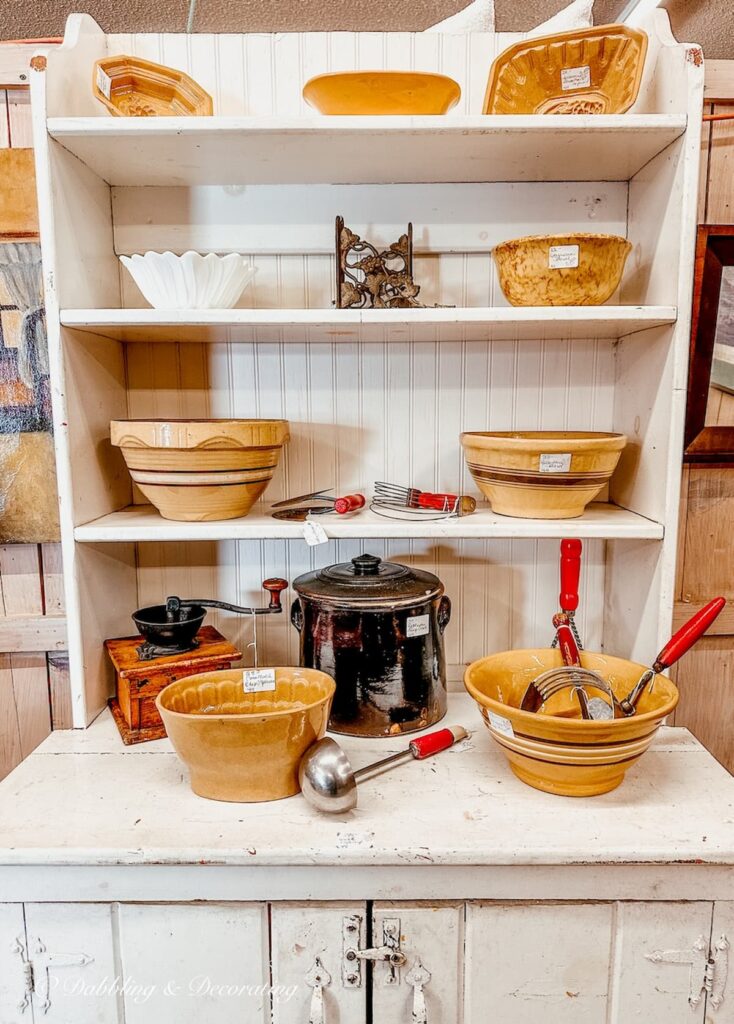
Today, many vintage yellowware bowls can be found in the $25 to $40 range at estate sales and flea markets, with larger or rarer pieces ranging from $50 to $125 depending on size, decoration, and condition. Rare seaweed-decorated examples, unusually large mixing bowls, or pieces with strong provenance may command more.
Condition matters. Chips, cracks, and heavy staining will lower value, while clear banding, even glaze, and minimal wear increase desirability.
Because antique yellowware remains relatively affordable compared to other 19th-century pottery, it’s one of the most accessible vintage collections to start. Whether you’re stacking mixing bowls or hunting for striped pitchers, now is one of the best times to expand your collection.
Sunday Home Style
Inspired by homes that feel like Sunday—quiet, layered, and filled with familiar finds. These styling tips share the vintage touches, everyday rituals, and warm moments that make a home feel like you.
Vintage Yellowware Decorating Ideas for Kitchen and Home
Vintage yellowware isn’t just collectible, it’s incredibly versatile to decorate with. Whether styled on open kitchen shelving, layered in a dining room hutch, or tucked into a cozy corner, yellowware bowls and pitchers add warmth, texture, and timeless charm to any home.
Here’s how I style and display my yellowware collection in our open kitchen in Vermont.
Explore Vintage Kitchen Decorating Ideas
Love the look of a warm, lived-in vintage kitchen? Explore my Vintage Kitchen Decorating Guide for easy decorating ideas, thrifted finds, and simple styling tricks that add instant character.
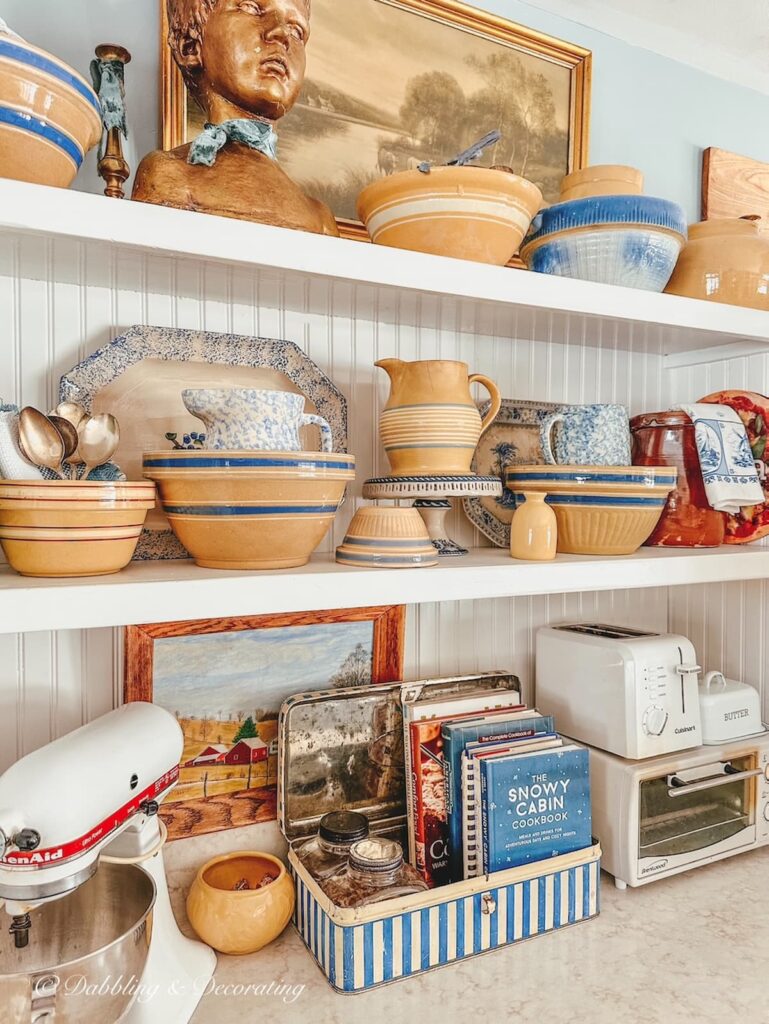
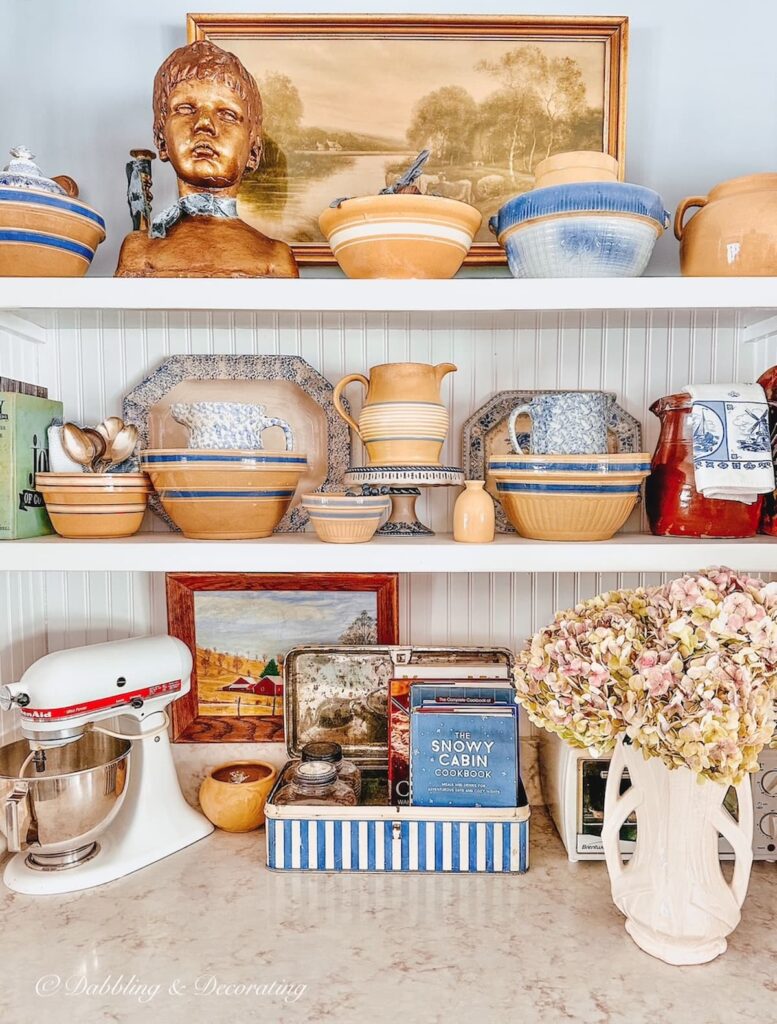
Styling Yellowware on Open Kitchen Shelving
I didn’t originally set out to collect yellowware; the collection slowly found me.
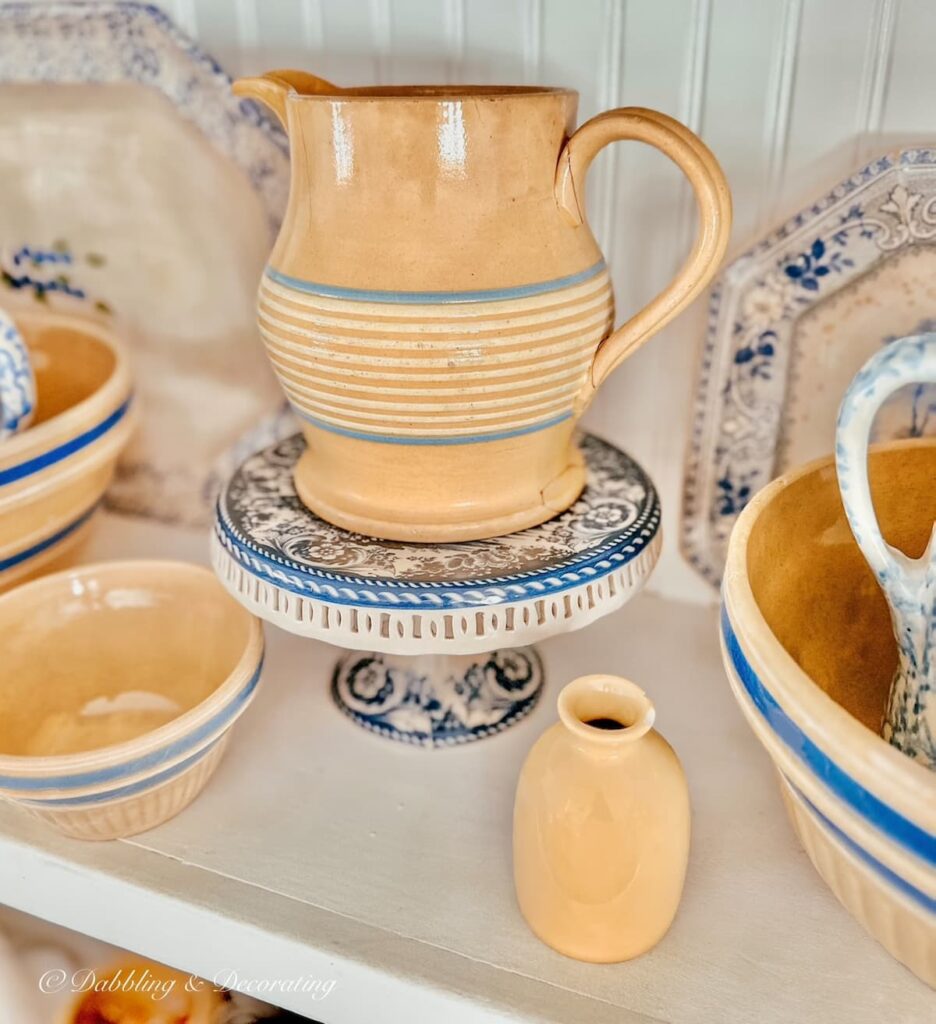
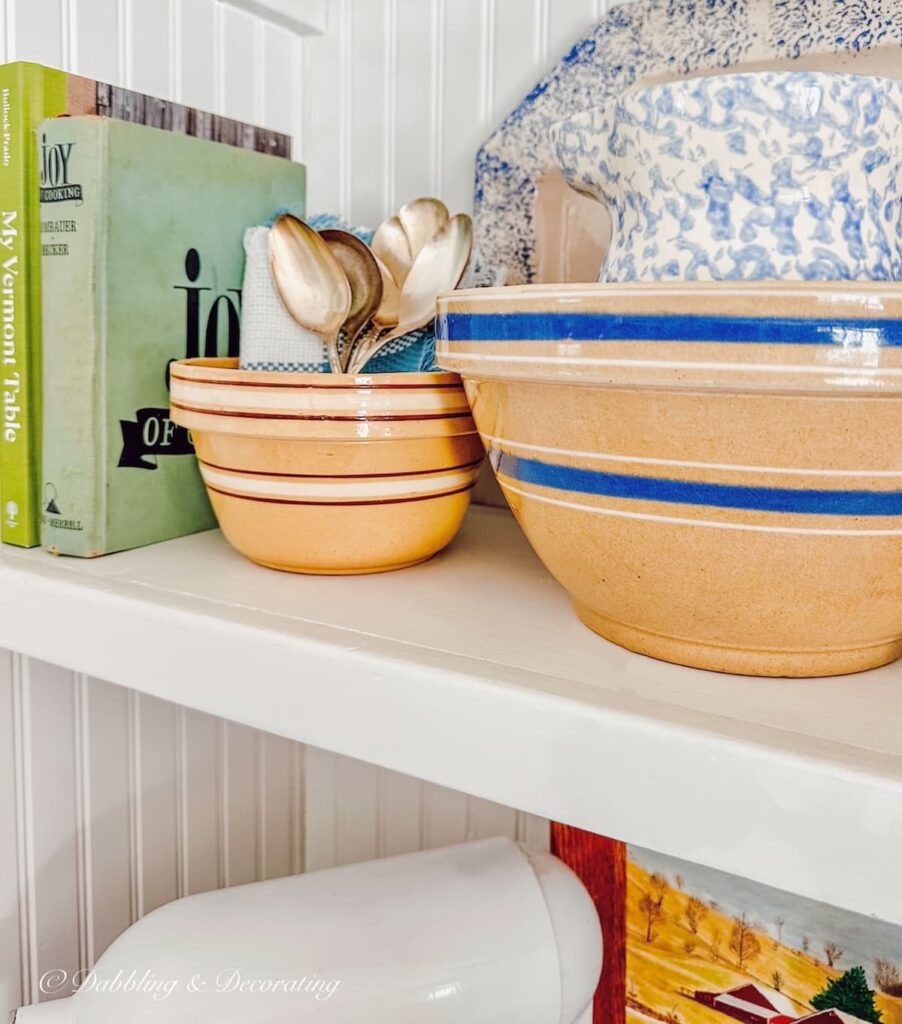
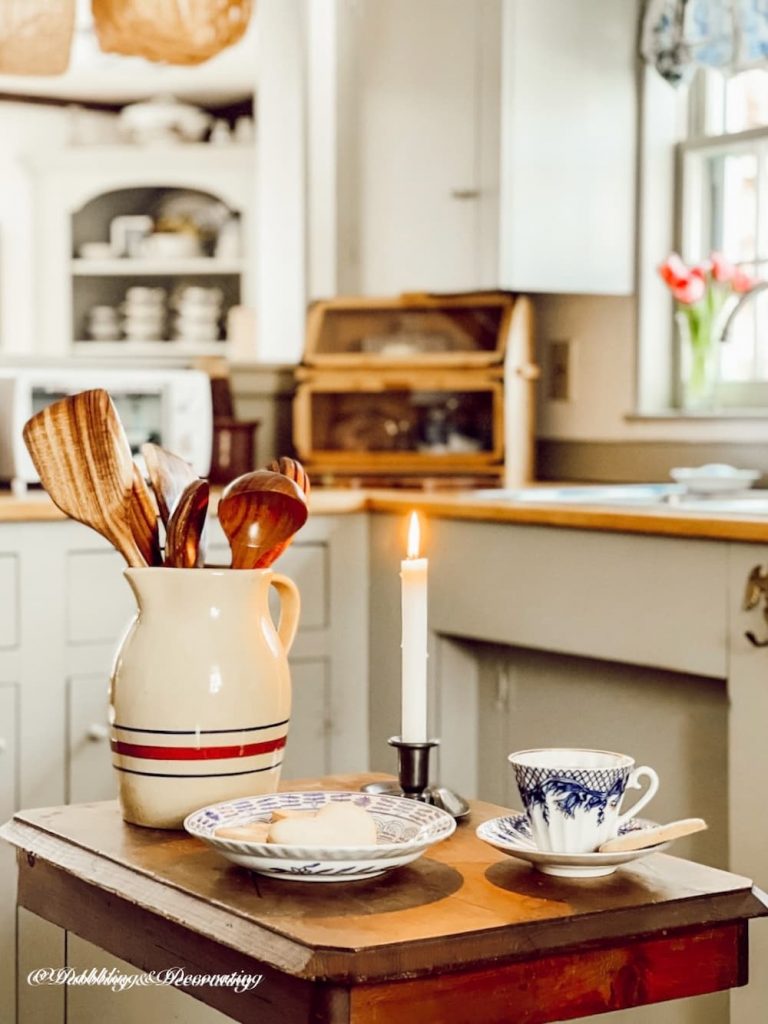
Some pieces were inherited from my mother, including classic antique yellowware bowls with white and brown striping. Others were thrifted finds, like the blue-banded pitcher I discovered while Thrifting with the Gals (you can see that quick video here).
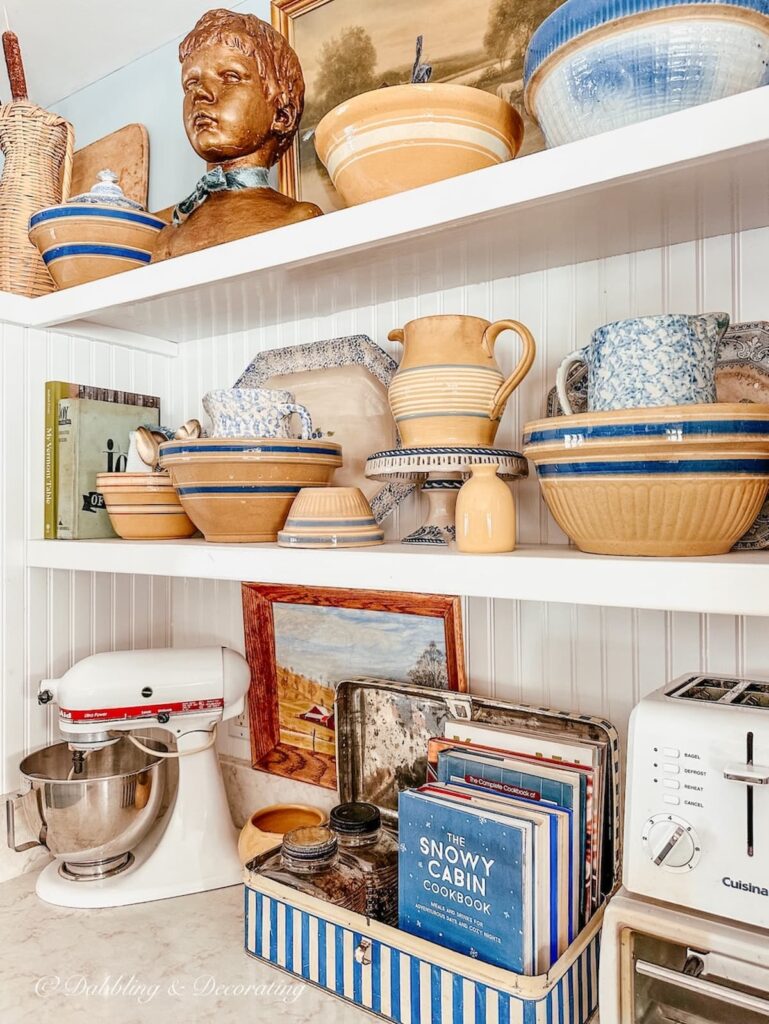
When I first placed a few blue-striped yellowware bowls on our open white kitchen shelving, something clicked.
The warm golden tones against crisp white paint created instant contrast. Layering the plain pieces with striped bowls, blue bands, white bands, and soft brown slip decoration gave the shelves a collected, curated feel rather than a perfectly matched set.
Try a Styling Tip!
Looking for simple, vintage-inspired decorating ideas you can try in an afternoon? Explore all my Styling Tips for easy seasonal projects, quick DIYs, and creative ways to style your home with charm.
How to Layer Yellowware for a Collected Look
Yellowware shines when it’s layered. On our shelves, I mix:
The key is contrast. The smooth glaze of antique yellowware bowls paired with wood, linen, and darker pottery creates visual interest without feeling busy. Mixing mid- and late-19th-century pieces with newer thrifted finds keeps the display feeling personal and lived-in. Because antique yellowware remains relatively affordable compared to other 19th-century pottery, it’s one of the easiest vintage collections to start.
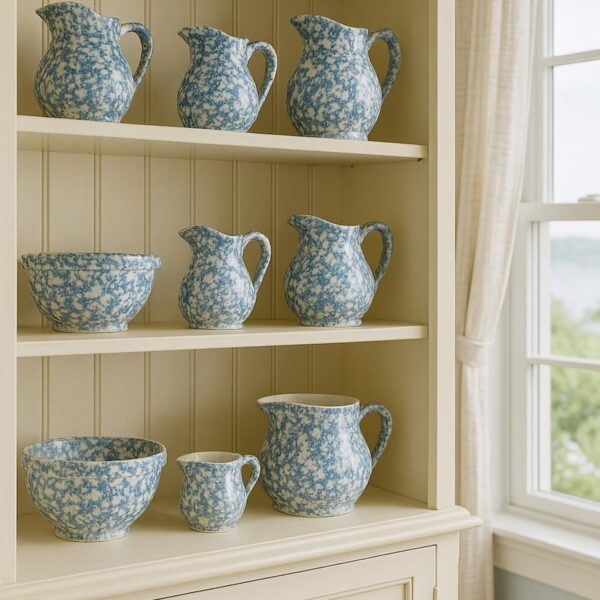
A Guide to 17 Vintage Pitcher Decor Ideas
Collect and decorate with charm using this vintage pitcher decor guide. Discover 17 types of collectible pitchers and creative ways to style them throughout your home and every season.
Why Yellowware Works in Any Room
Yellowware pairs effortlessly with:
Its soft golden hue adds warmth without overpowering a space. And because most pieces are functional, bowls, pitchers, crocks, they transition easily from display to everyday use. That’s the true magic of decorating with vintage yellowware: it’s practical, beautiful, and full of story.
The Secret Cupboard: Vintage Decorating Ideas Readers Love Most
Peek inside The Secret Cupboard, a cozy collection of vintage decorating ideas readers love most. Filled with thrifted finds, styled corners, and quick home inspiration.
How to Style Vintage Yellowware in a Dining Room Hutch
If you’re looking for a way to display vintage yellowware beyond open shelving, a dining room hutch might be your most versatile canvas.
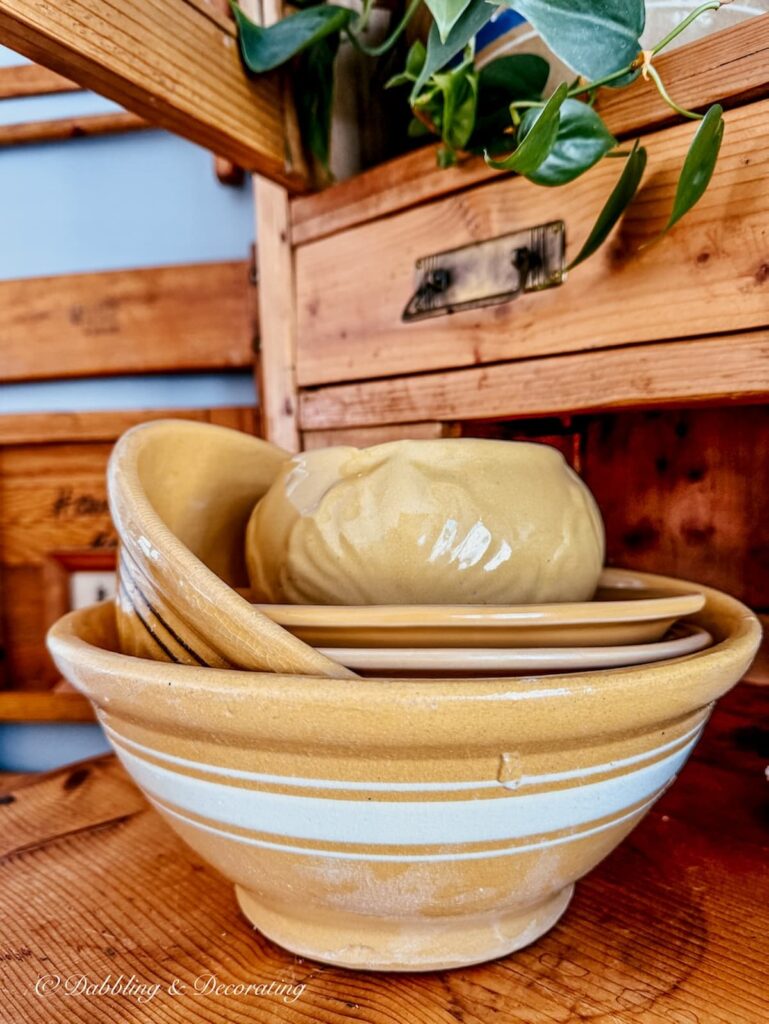
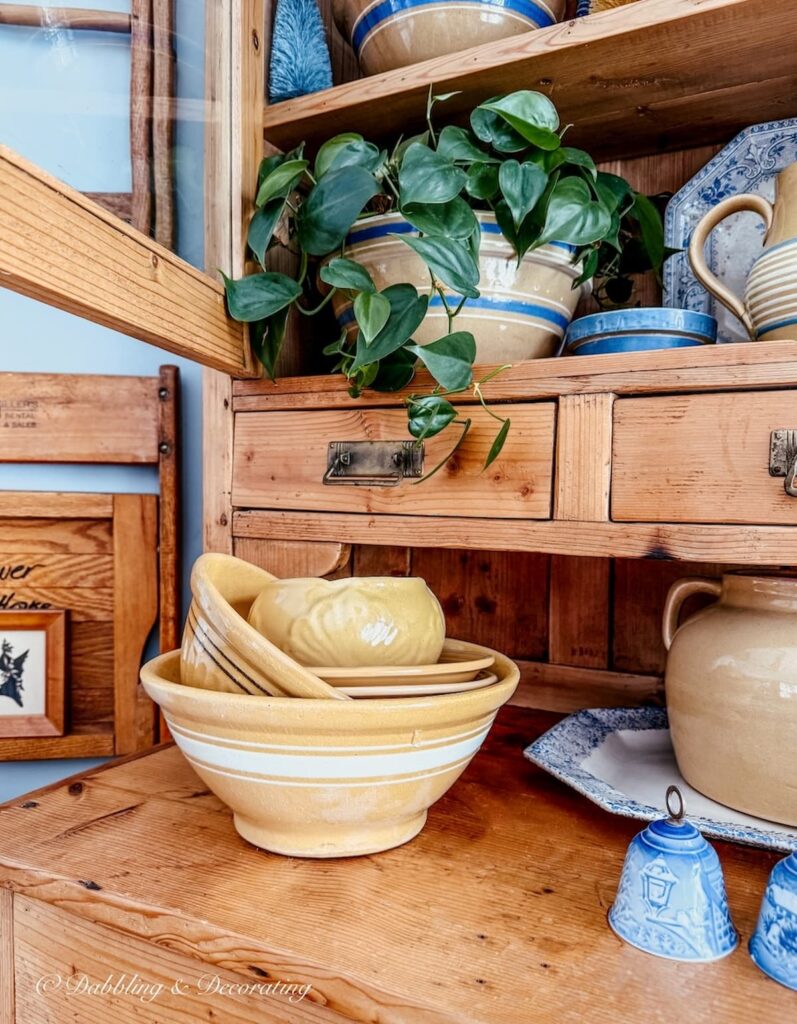
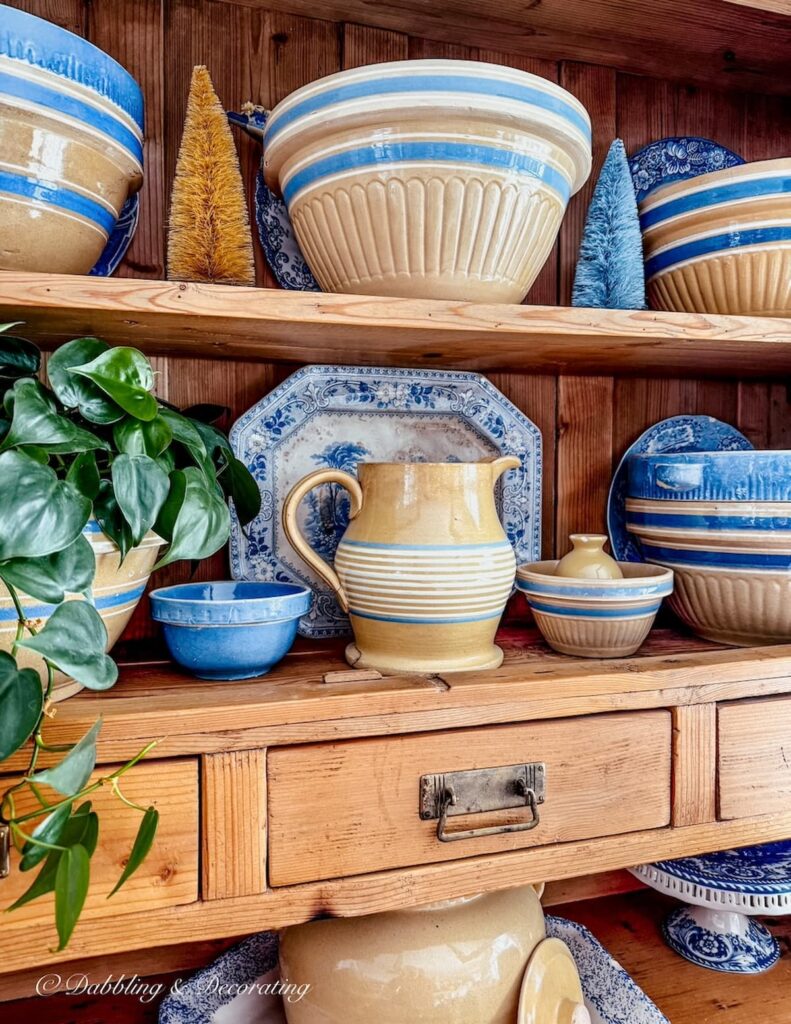
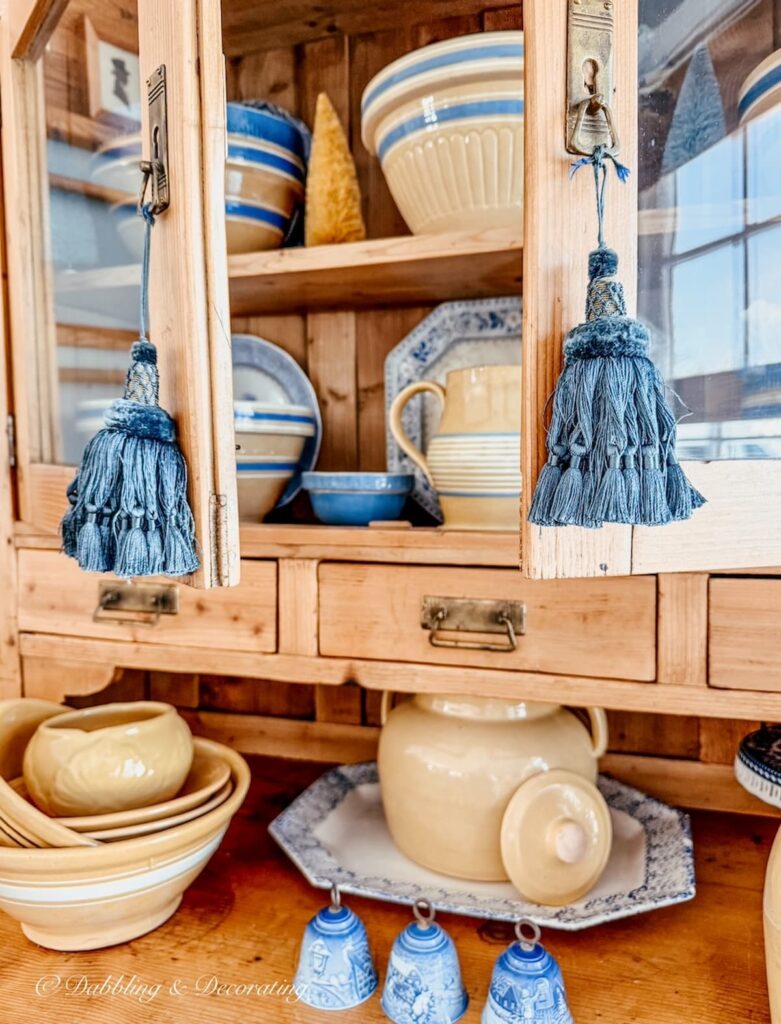
In our Vermont dining room, I styled my collection of yellowware bowls with blue bands inside a vintage pine hutch, and the result instantly warmed the entire space. The rich caramel tone of the wood pairs beautifully with the creamy yellow clay and soft cobalt striping, creating that collected-over-time look I always love.
Love decorating your vintage hutch with seasonal inspiration? Explore a few more of my favorites in these posts:
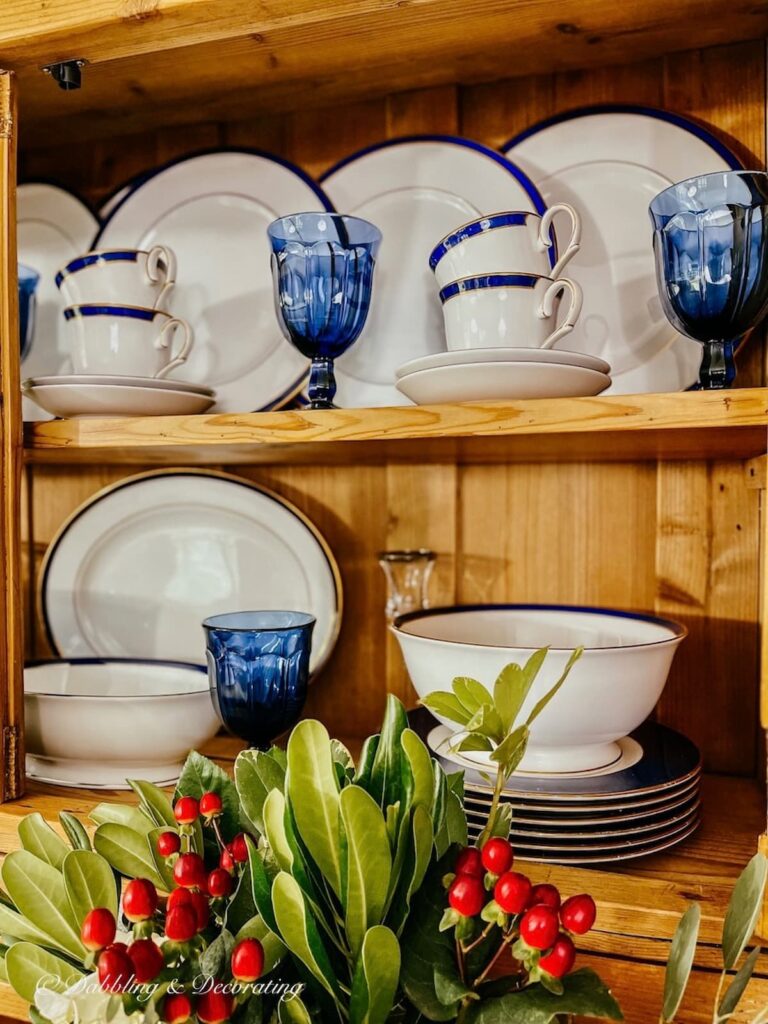
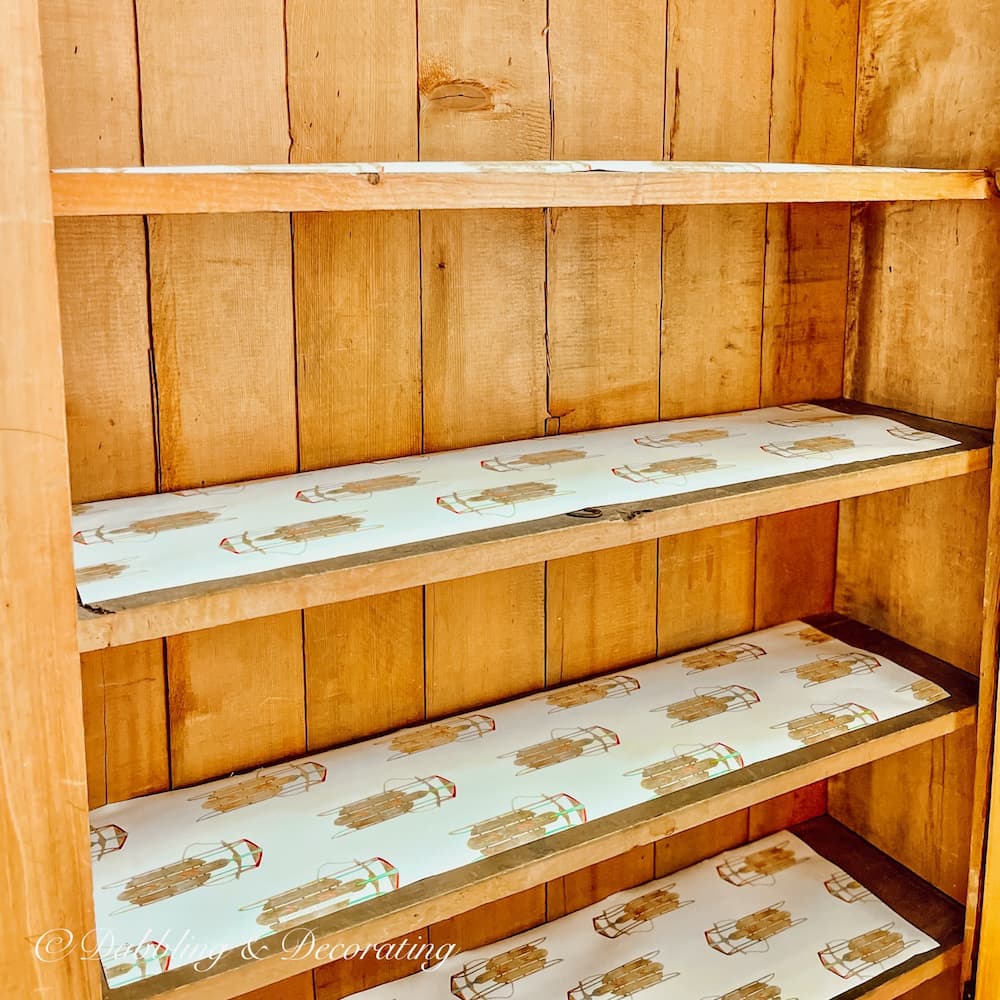
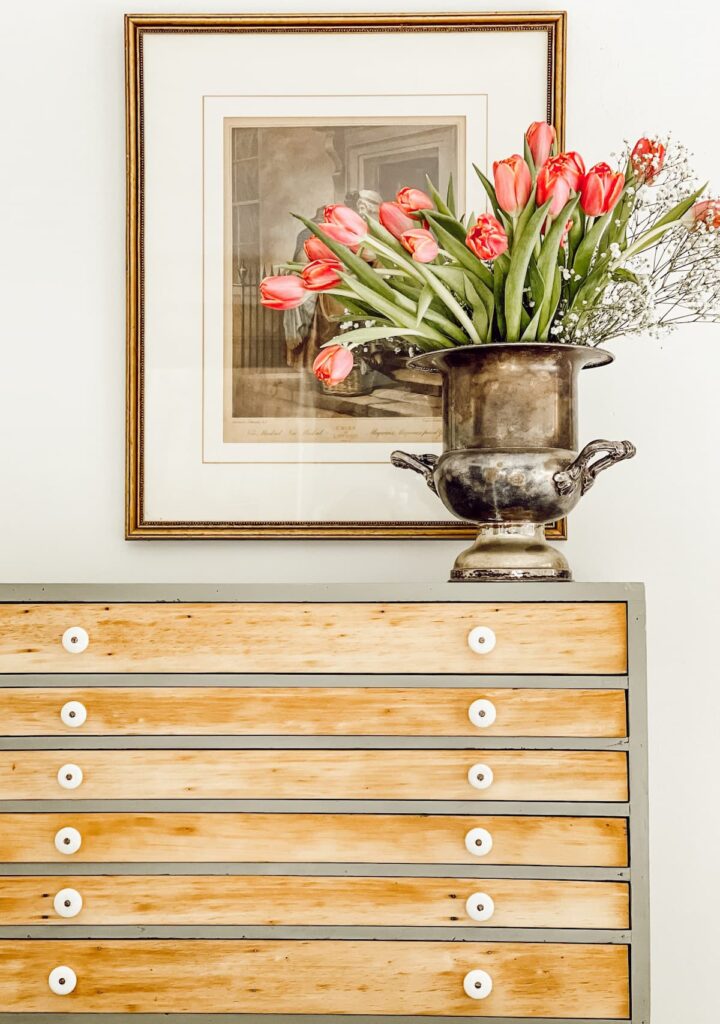
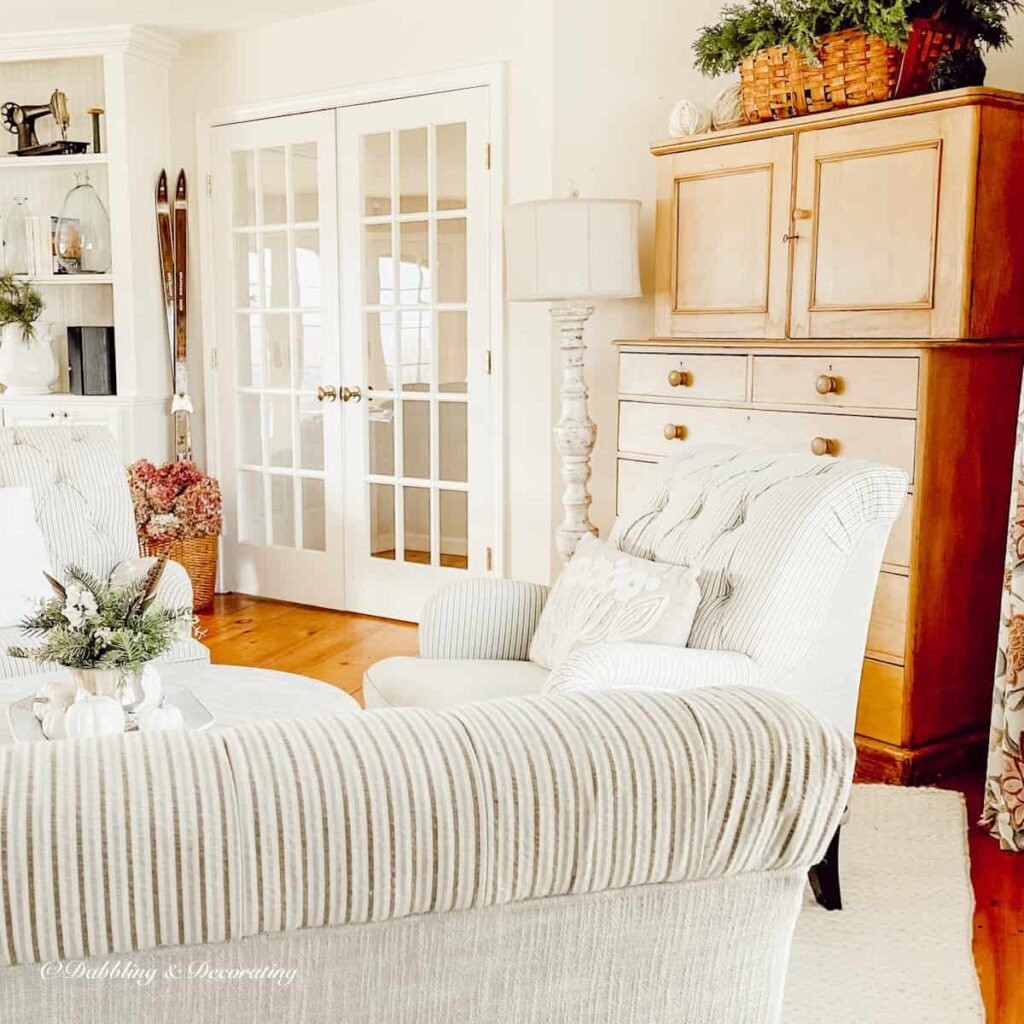
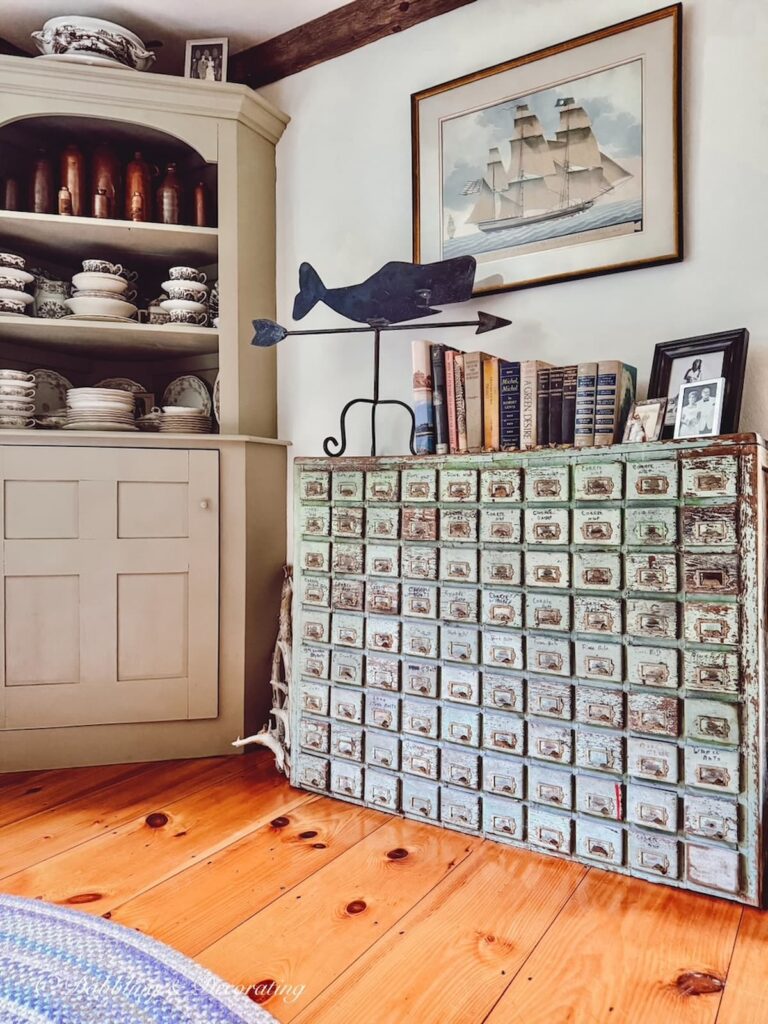
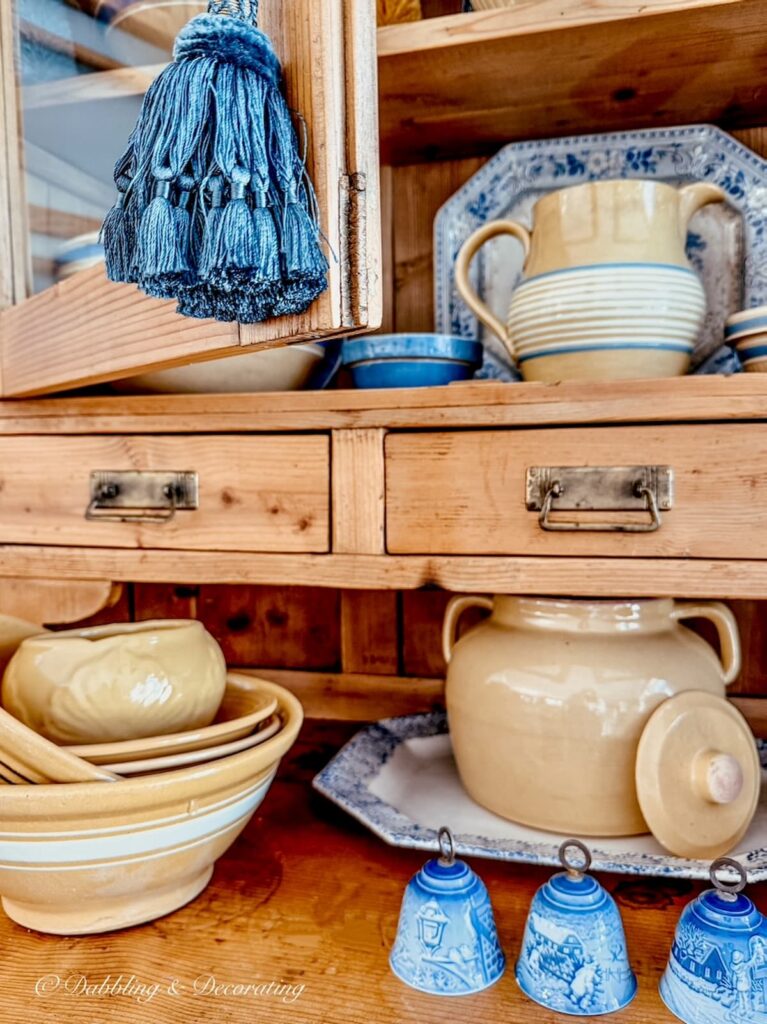
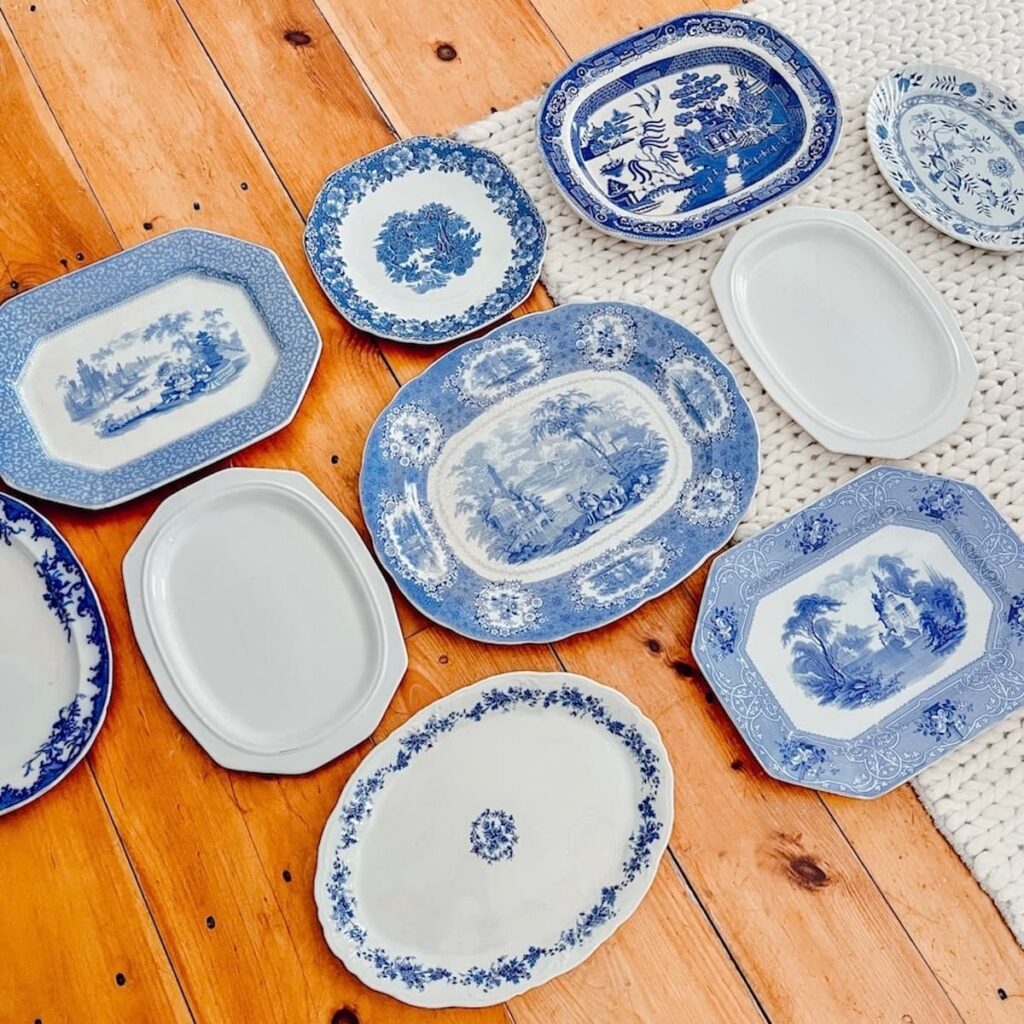
To build depth, I started with larger antique yellowware mixing bowls stacked along the upper shelves. Behind them, I layered blue and white vintage platters as a backdrop, letting their pattern subtly frame the bowls without competing with them. Smaller striped bowls and yellowware pitchers sit toward the front, where their banding can really shine.
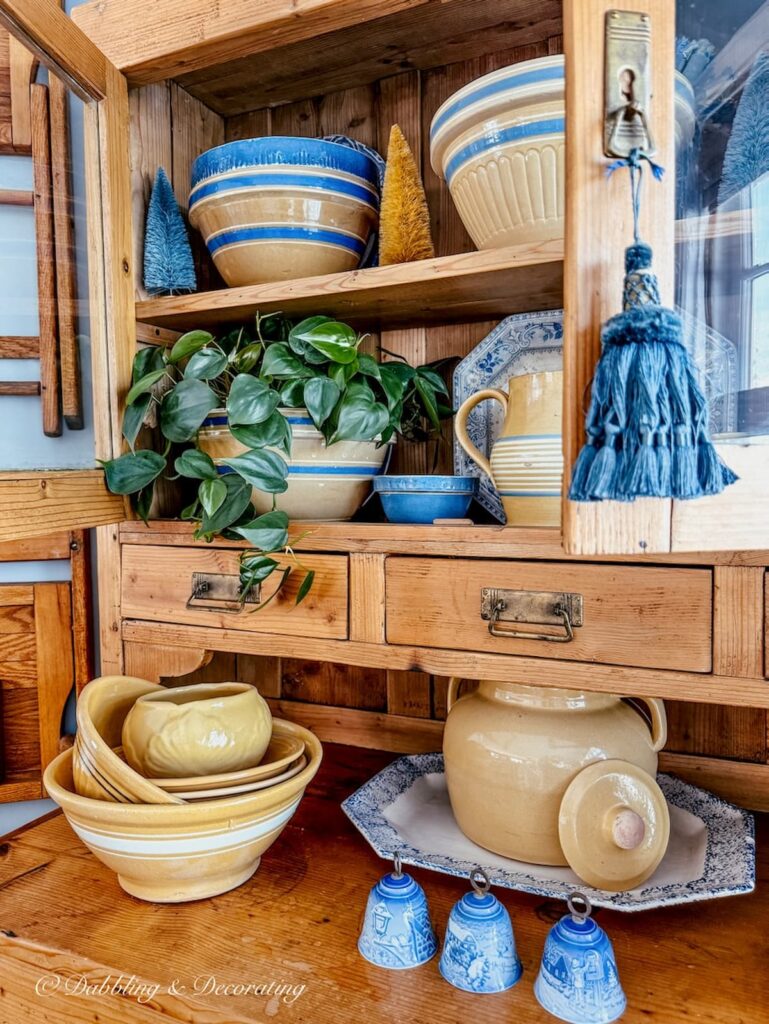
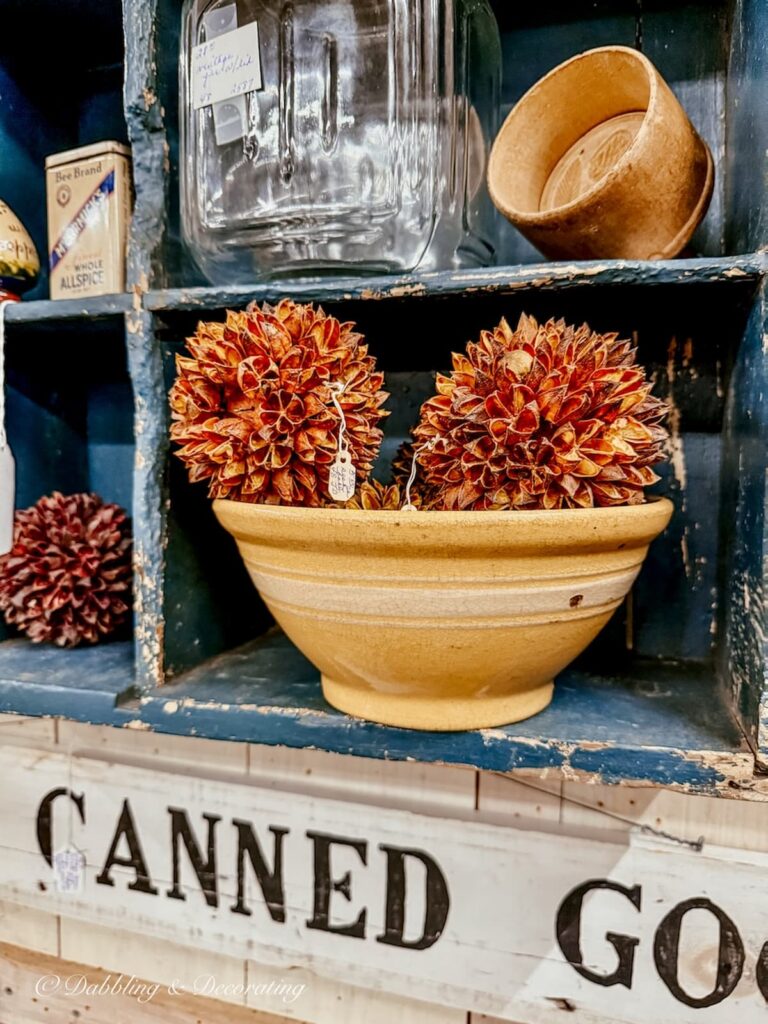
To tie the colors together, I added blue stoneware, a few collected spongeware pitchers, and soft pussy willows for height and movement. The blue accents echo the slip-decorated stripes on the bowls, making the entire hutch feel intentional without feeling staged.
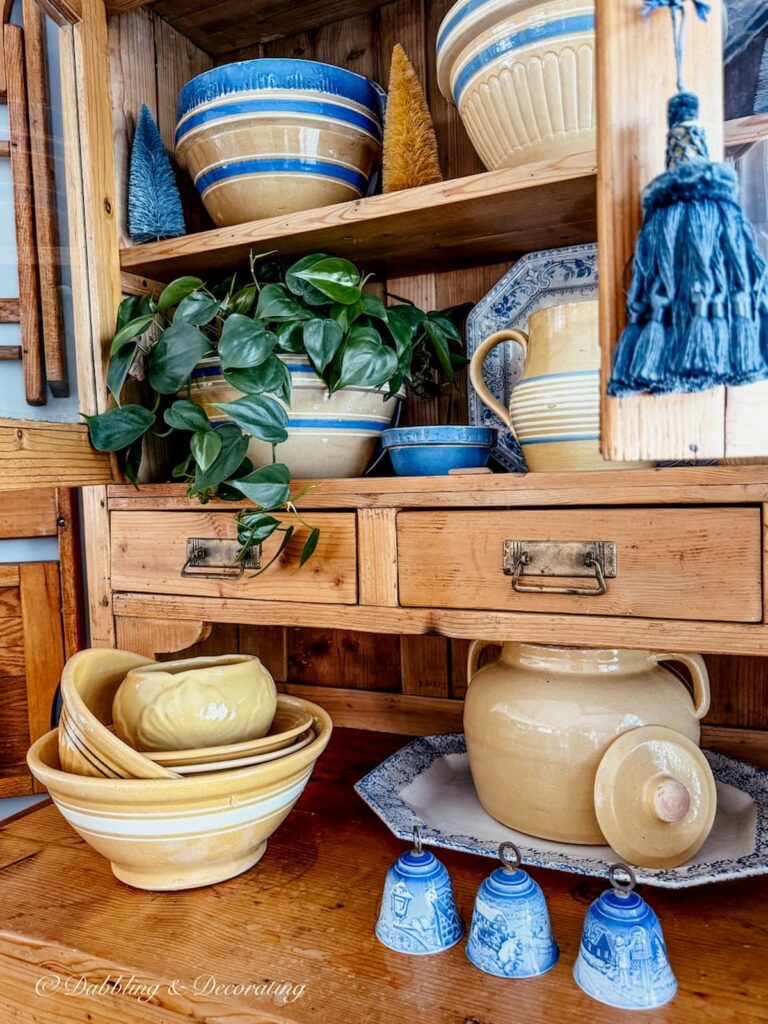
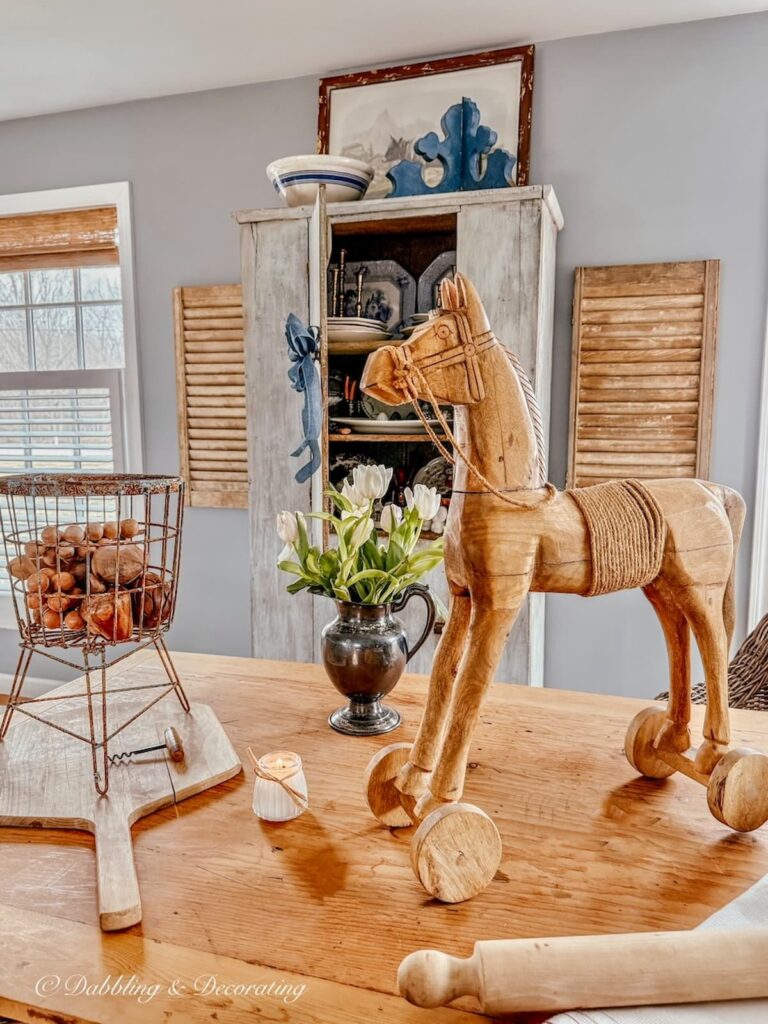
One of my favorite styling tricks? I removed the hutch doors for a while to give the yellowware more breathing room and a relaxed, open-shelf feel. Recently, I reattached the doors and added two thrifted blue tassels I found for three dollars each at Stonehouse Antique Center. That small detail completely changed the look, proof that even the tiniest vintage addition can shift a display from simple to special.
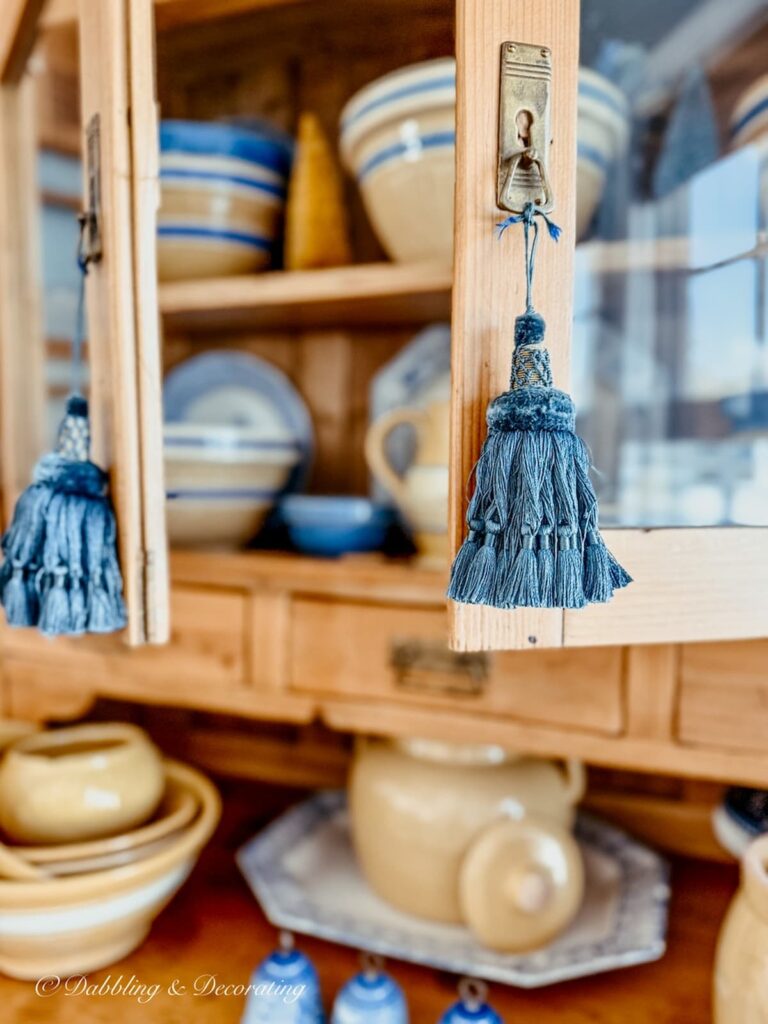
Whether the doors are on or off, this yellowware hutch display turns everyday antique pottery into a true focal point in the dining room.
Tip: Don’t Be Afraid to Rework Your Hutch
Vintage yellowware displays don’t have to stay fixed. Try removing hutch doors for an open, airy look, or swap lower cabinet doors for simple linen curtains to soften the space. Rearranging shelves, stacking bowls differently, or rotating in seasonal accents keeps your antique yellowware collection feeling fresh year-round.
Why Vintage Yellowware Will Always Feel at Home
Vintage yellowware has a way of making a kitchen feel layered, lived-in, and storied. Whether you’re collecting classic yellowware bowls with blue bands, hunting for rare decorative pieces, or simply styling a stack on open shelving, these antique treasures bring warmth and authenticity to any space.
Part of their charm is accessibility. Compared to many 19th-century antiques, yellowware remains surprisingly affordable, making it one of the easiest vintage collections to start. With its timeless color, handcrafted character, and endless styling possibilities, vintage yellowware continues to earn its place in kitchens and hutches across generations.
And once you start stacking, it’s hard to stop. Shop Vintage Yellowware on Etsy
The Vintage Posts Readers Love Most
Start with the posts readers come back to again and again. These vintage decorating ideas are rooted in New England, styled with thrifted and antique finds, and filled with real-life tips you can use in your own home. Familiar Finds, Styled Your Way.
How to Start a Vintage Booth: Tips, Display Ideas, and Lessons Learned
Eclectic Decorating Style Guide: How to Layer Vintage, Antique, and Thrifted Decor
9 Vintage Booth Displays That Made Me Stop (And What You Can Learn From Them)
Scandinavian Spring Homes: 10 Light and Airy Cottage Tours to Inspire
Antique Oil Lamps: How to Repurpose Them Into Unique Flower Vases
More Vintage Kitchen and Antique Pottery Ideas
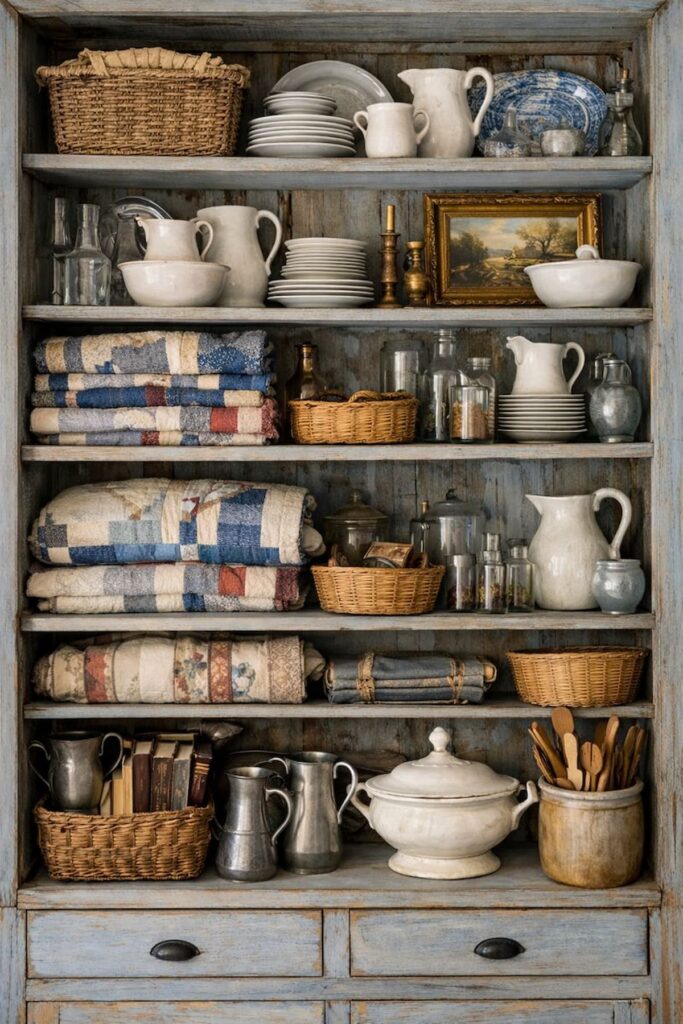
If you love collecting and styling vintage yellowware, you might also enjoy these antique kitchen and pottery finds. From crocks and mixing bowls to open shelving displays, these posts share more ways to decorate with meaningful, collected pieces.

Frequently Asked Questions About Yellowware
Vintage yellowware is a type of ceramic pottery made from yellow clay, known for its warm golden hue. Popular throughout the 19th and early 20th centuries, it was commonly used for kitchen essentials like mixing bowls, crocks, and pitchers. Today, yellowware is highly collectible for its rustic charm and nostalgic appeal.
Authentic antique yellowware is typically heavier, with a soft glaze that may show crazing (fine cracks). Many pieces are unmarked, and handmade imperfections add to their charm. Reproductions tend to have a lighter weight, more uniform finish, or modern brand stamps. Aged patina and subtle inconsistencies often point to the real deal.
Due to the age and potential for lead-based glazes, vintage yellowware is best used for decorative purposes only. Unless a piece is confirmed food-safe by the seller, it’s safest to style yellowware on shelves, hutches, and tables rather than serve from it.
You can find yellowware at antique shops, flea markets, estate sales, online marketplaces like eBay and Etsy, and even thrift stores. Prices can vary widely based on size, condition, glaze style, and rarity. Tip: flea markets and rural antique barns often have the best bargains!
Highly sought-after yellowware pieces include large mixing bowls, pitchers with blue or white bands, embossed or molded designs, and rare finishes like seaweed decoration or spatterware. Collectors also love McCoy yellowware and early unmarked pieces with distinctive patterns.
Join the Vintage Circle — Familiar Finds, Styled Your Way™
Love vintage treasures, thrifted gems, and a home that tells your story? Leave a comment, share this post with a kindred spirit, or head to my Start Here page to explore more. Want fresh prompts and timeless ideas? Subscribe to join our Seasonal Vintage Decor Styling Challenge for weekly inspiration and behind-the-scenes peeks.
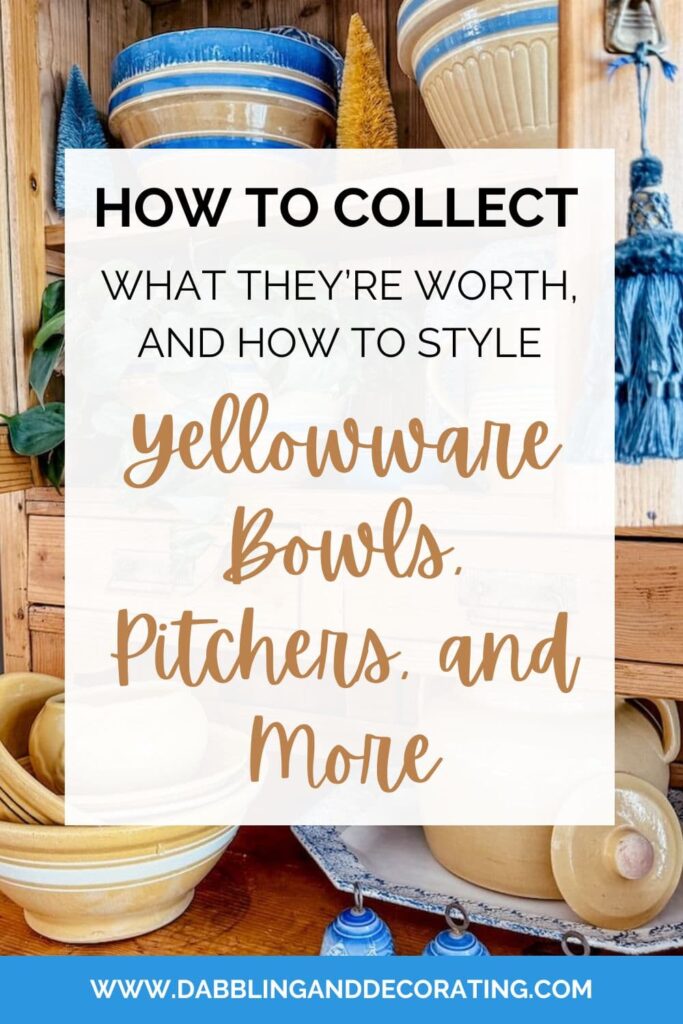
Pin it for later!



You know this collection speaks to my heart, Ann! And you have styled it all beautifully! Looks like you and Bernadette had a fun day!
Thanks so much Molly, It has such a nice fresh spring twist to it too!
Ann I am always amazed at how much we have in common. I started collecting yellow ware in the 80’s. It was my first collection. Though I have sold a lot of it, I have kept all my favorite pieces. I use it now with a collection of reproduction (I can’t afford the real deal) red ware. They compliment each other oh so well. I too collect Transferware in blue and white, collected mostly in the 90’s and still add to it from time to time. My love for antiques is as passionate as yours, as was my mother’s. I too inherited some outstanding pieces from my parents. Though I live in the midwest one of my favorite places to antique is Maine. I had more fun when my parents and I took a 3 week driving trip to Maine, New Hampshire, and Vermont. They showed me all their favorite haunts. Your blog for me is such a joy, and I never want to miss it. Please stop over to my blog I think you will enjoy it. https://fortheloveofold.com
Shelley thank you so much for your beautiful message, it means so much to me! I’m looking forward to stopping by your blog!