

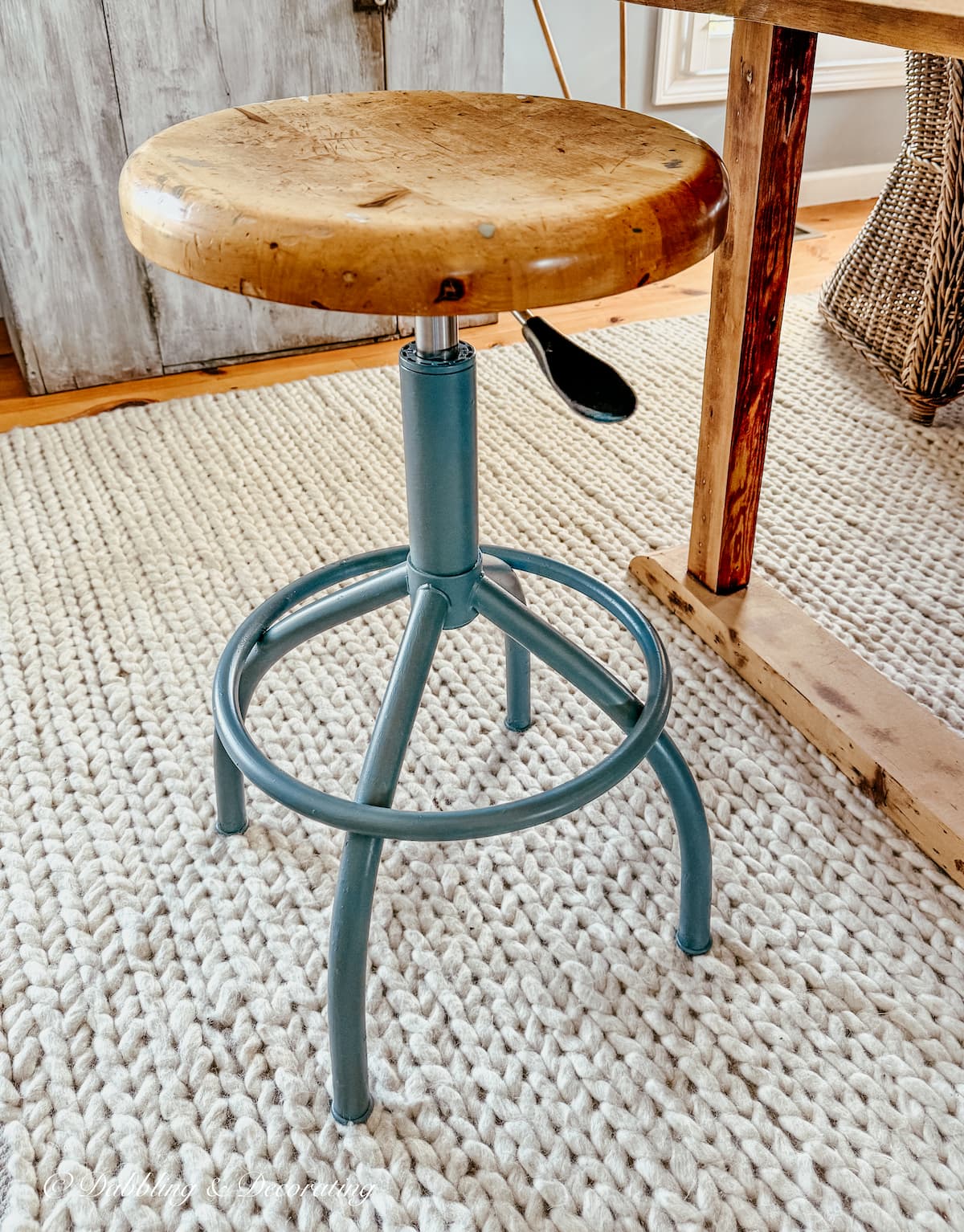
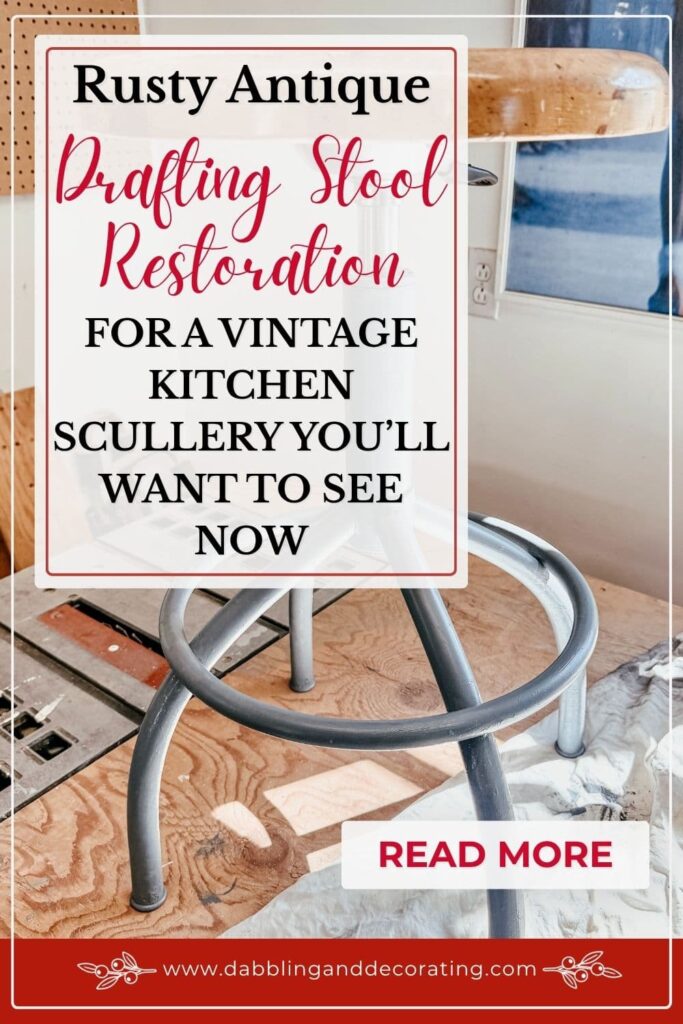
See how this antique drafting stool restoration transformed a rusty old stool with a blue-gray painted finish for our vintage kitchen scullery.
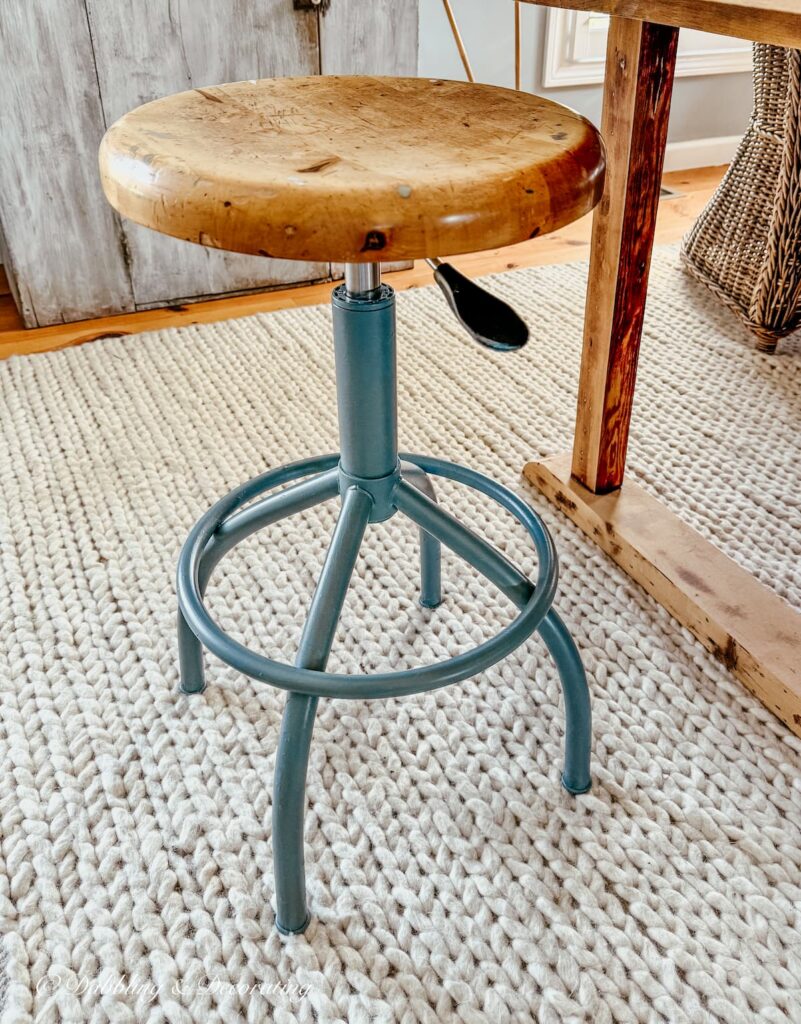
After looking all summer for an antique drafting stool for our Vermont scullery, I found one at Chandler and Company’s barn sale in South Berwick, Maine, for just $35. I loved its old working-stool character, but once I got it home, the rust was more than a little cleaning could fix. Rather than give up on a piece I’d been searching for all summer, I decided to restore the metal base with an unexpected blue-gray finish while leaving that wonderfully worn wooden seat untouched.
This antique drafting stool restoration turned out to be surprisingly simple, and completely changed the way the piece looks in our scullery. Here’s how I brought this rusty vintage find back to life, and a little inspiration for the next old stool you might otherwise pass by.
Easy DIY Home Decor Projects with Vintage Style
Explore our easy DIY home decor guide with vintage style, using thrifted and repurposed finds. Simple, beginner-friendly ideas to decorate your home with charm.
How to Clean Rust During an Antique Drafting Stool Restoration
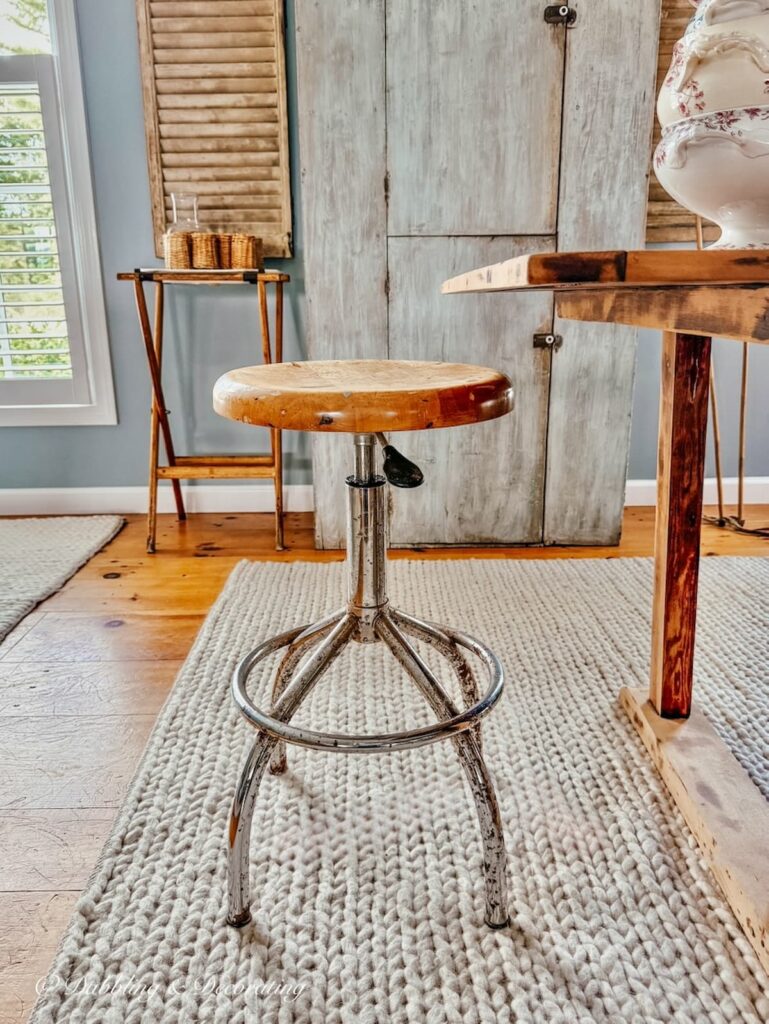
Once I had the drafting stool at home and sitting in our Vermont scullery, I took a closer look at the metal base. I loved the worn wooden seat and wanted to keep the original silver finish if I could, so I started with 0000-grade steel wool, hoping a little cleaning would bring it back. Unfortunately, it barely made a difference. The more I worked on it, the more I realized the rust was much more extensive than I had noticed at the barn sale.
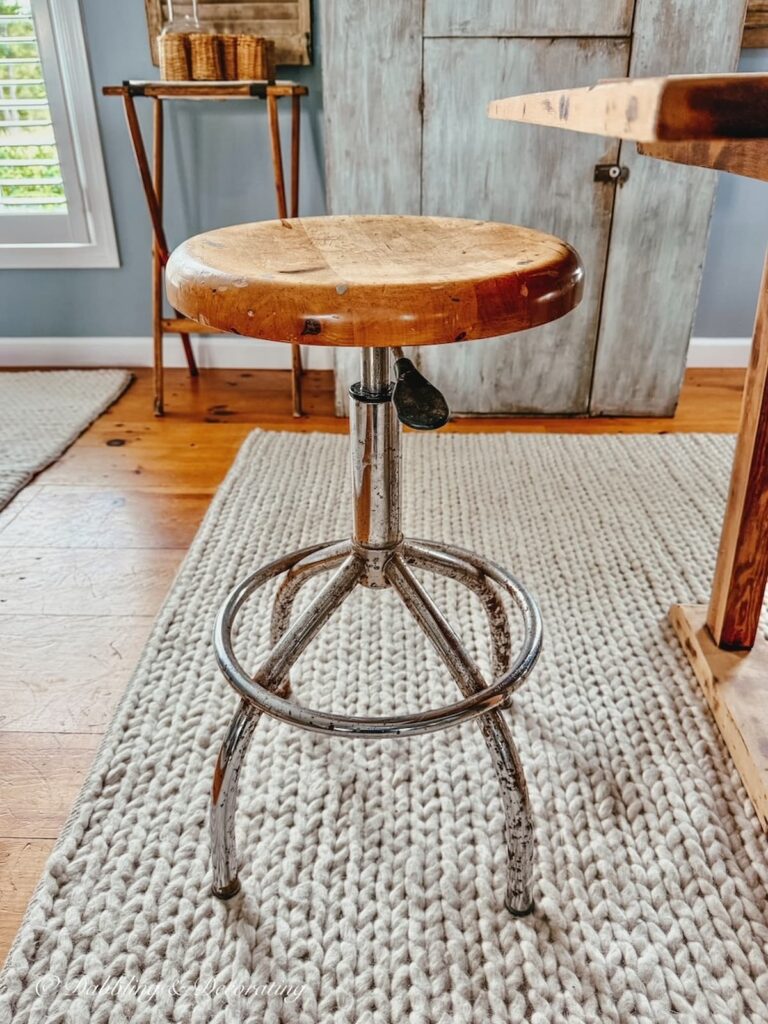
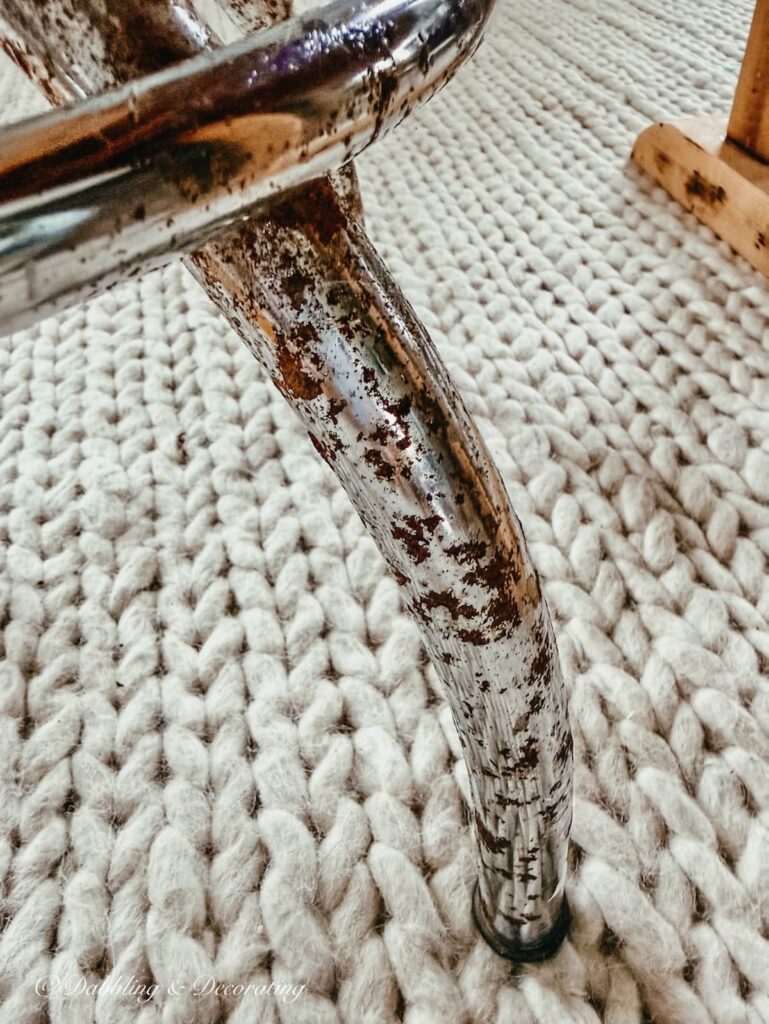
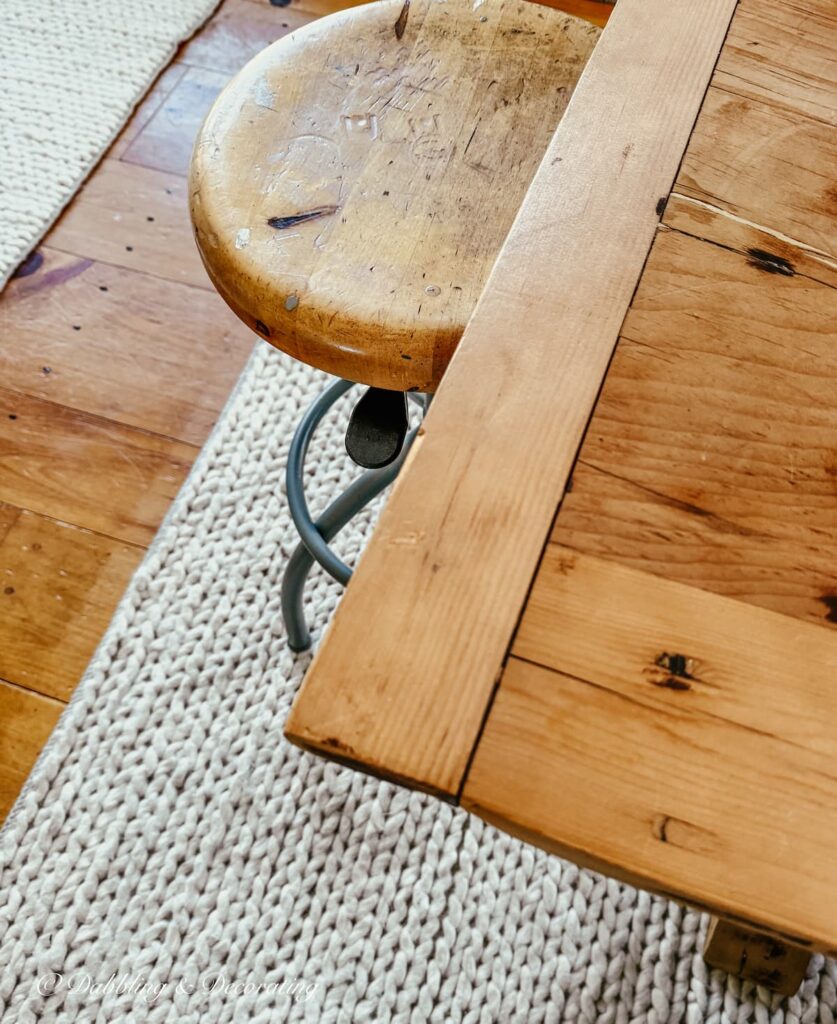
A few close-up photos tell the story better than I can. The metal was pitted and heavily rusted in places, and I knew I wasn’t going to get the cleaner look I wanted with steel wool alone. That’s when I turned to ChatGPT to explore a few other options, including something I had never really considered before: painting the metal base.

Thrifting with the Gals
Love the thrill of the hunt? Thrifting with the Gals is a blog series packed with secondhand scores, vintage styling ideas, and real-time thrift adventures you won’t want to miss.
Choosing a Paint Color for an Antique Drafting Stool Restoration
Painting the metal base was not my original plan. I had hoped to preserve the silver finish, but once I realized the rust wasn’t going to clean up, I started wondering what a painted vintage drafting stool might look like in our scullery. Steve had suggested painting it from the beginning, but I wasn’t convinced. I had never really thought about painting metal furniture, and I didn’t want to lose the stool’s old working character.
I turned to ChatGPT to help me visualize a few paint colors before making a decision. We started with aged zinc, muted blue-gray, and warm mushroom. Seeing the different finishes on the stool, especially in the actual scullery, made it much easier to imagine what would work with our Stardew Blue walls, wooden table, blue hutch, and butcher block.
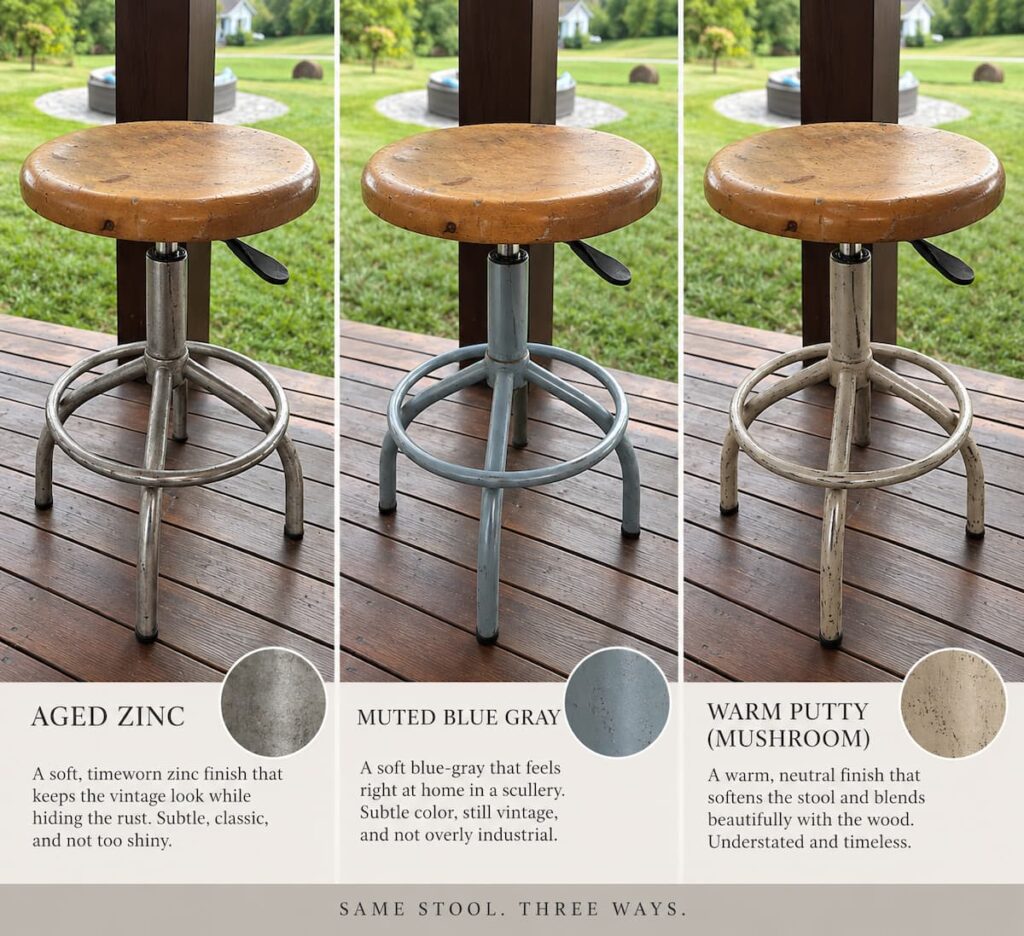
The aged zinc looked too much like the original metal, while the mushroom felt a little muddy in the room. I loved the blue-gray immediately because it gave the stool more of an old artist’s studio feel. In the end, I decided to use our custom blue-gray paint formula, the same color we use in our Maine home. I already have the paint, I know how much I love the color, and I think it will be just right in the Vermont scullery.
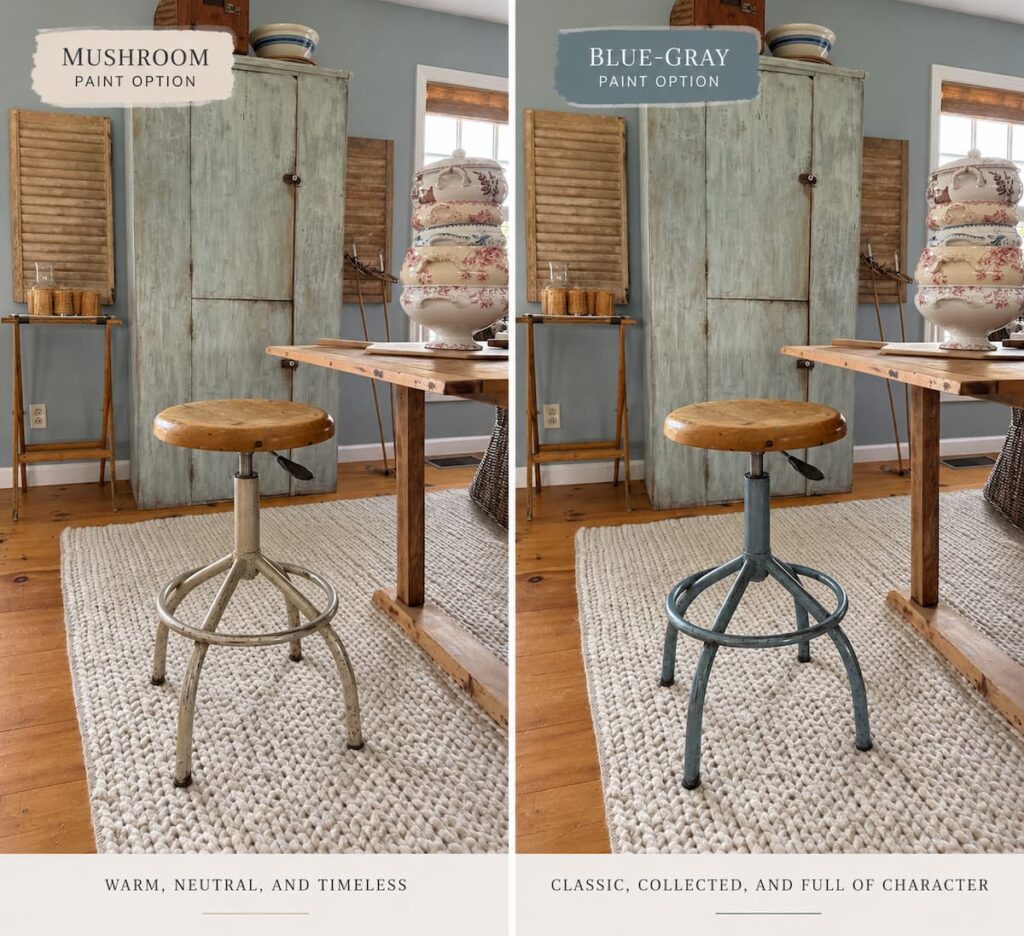
The plan is to paint only the metal base, leaving the worn wooden seat and black adjustment handle exactly as they are. I want the stool to feel like an old painted working piece, not something brand new. And if the color doesn’t turn out quite as I imagine, well, it’s paint. I can always change it.

Explore Vintage Kitchen Decorating Ideas
Love the look of a warm, lived-in vintage kitchen? Explore my Vintage Kitchen Decorating Guide for easy decorating ideas, thrifted finds, and simple styling tricks that add instant character.
How to Restore and Paint a Rusty Antique Drafting Stool
Once I decided to paint the metal base, I wanted to keep the process simple. This stool will only get light use in our scullery, so I wasn’t looking for a complicated restoration—just enough prep to stop the rust, give the paint something to adhere to, and preserve the character I loved about the stool in the first place. Here’s the process I used.
Supplies You’ll Need
- 0000-grade steel wool or a small wire brush
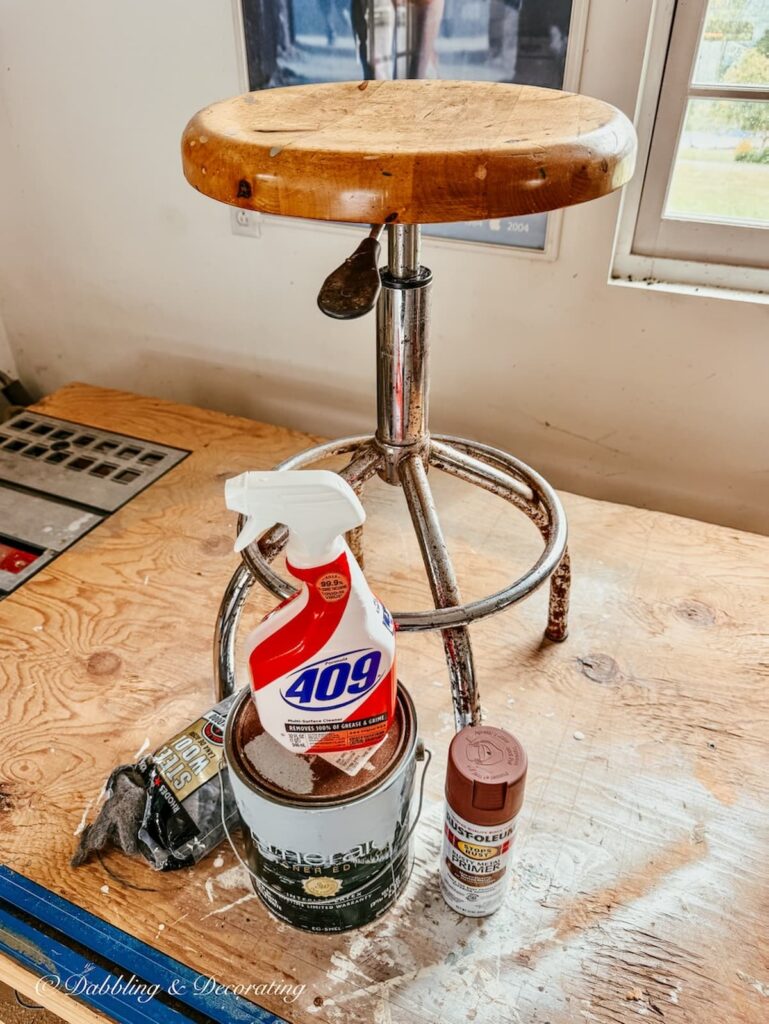
- Degreasing or paint-prep cleaner (409 Cleaner is what I used)
- Clean rags
- Painter’s tape
- Paper or plastic for protecting the wooden seat
- Rust-inhibiting metal primer
- Small paintbrush
- Your chosen paint color
- Fine-grit sandpaper or sanding sponge, optional for light distressing
- Clear protective topcoat, only if your paint requires one
This post may contain affiliate links, which won’t change your price but will earn us commission.
Pro Tip
A couple of details to keep in mind: the Rust-Oleum primer is typically an oil-based product, so check that it’s compatible with your paint before applying the topcoat. Also, follow the cleaner’s label for rinsing and drying, because you don’t want cleaner residue underneath the primer.
Step 1: Clean the Rust and Grime From the Metal
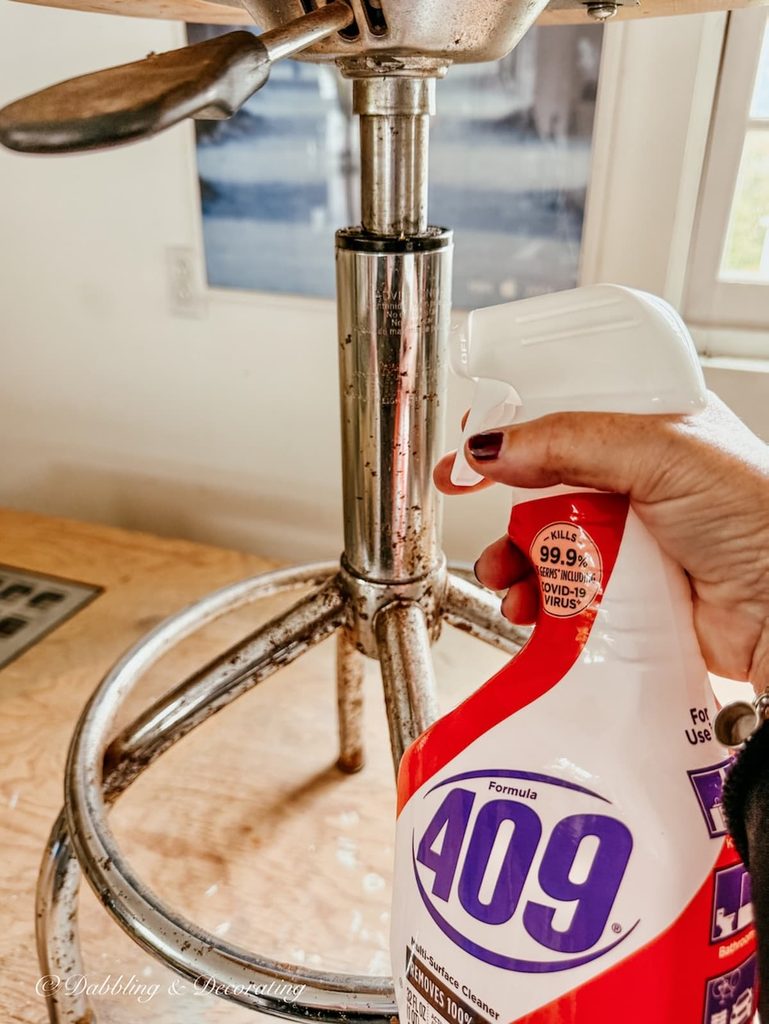
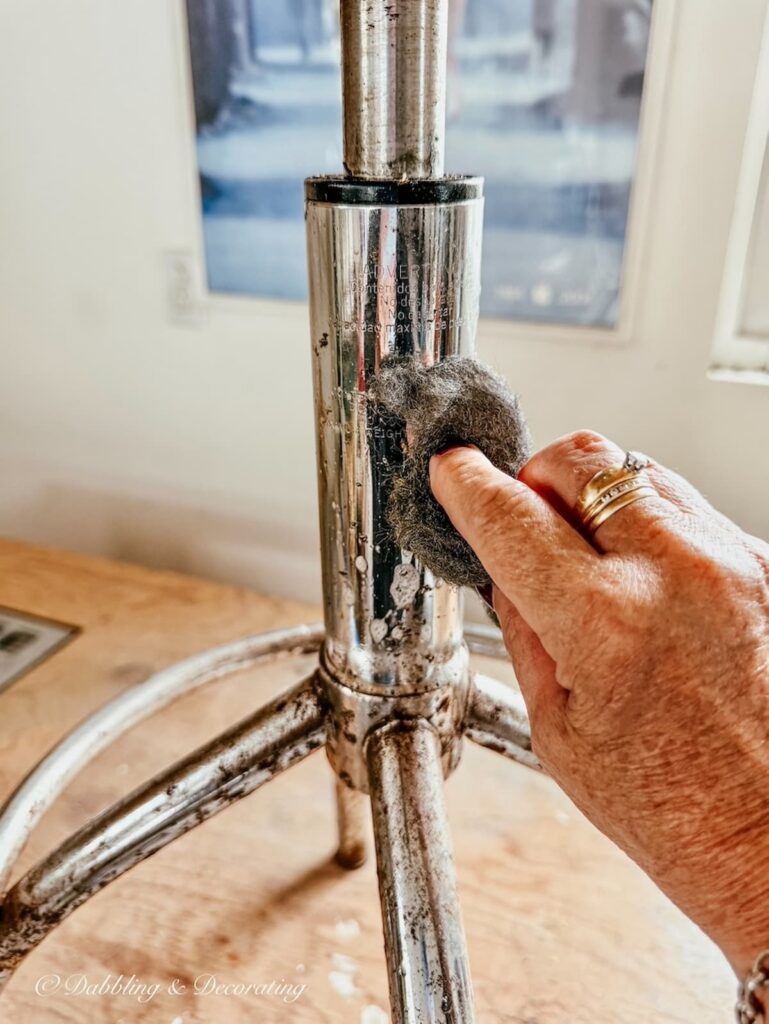
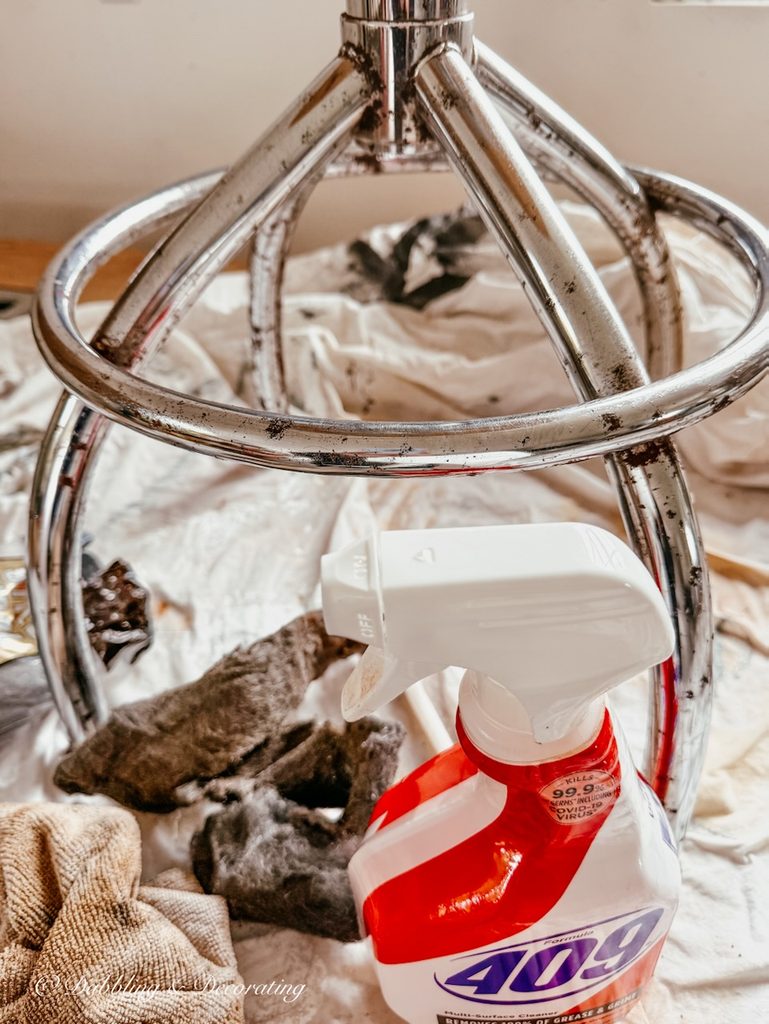
I sprayed the metal base generously with 409 Multi-Surface Cleaner and used 0000-grade steel wool to work away the rust and grime. Holding the steel wool at both ends, I rubbed it back and forth over the metal, almost like polishing with a cloth. The dirt and rust-colored residue came pouring off! After about 15 minutes, I wiped everything down with a clean rag, and the difference was remarkable. It cleaned up so well that I actually questioned whether I wanted to paint it after all. But I still think a blue-gray finish will give the stool the look I’m hoping for in our scullery.
Vintage Home Decorating Guides and Styling Inspiration
Are you curious about vintage decor but don’t know where to start? These cornerstone guides are packed with seasonal styling tips, how-tos, and inspiration to help you confidently decorate with charm and character.
Step 2: Protect the Original Wood and Hardware
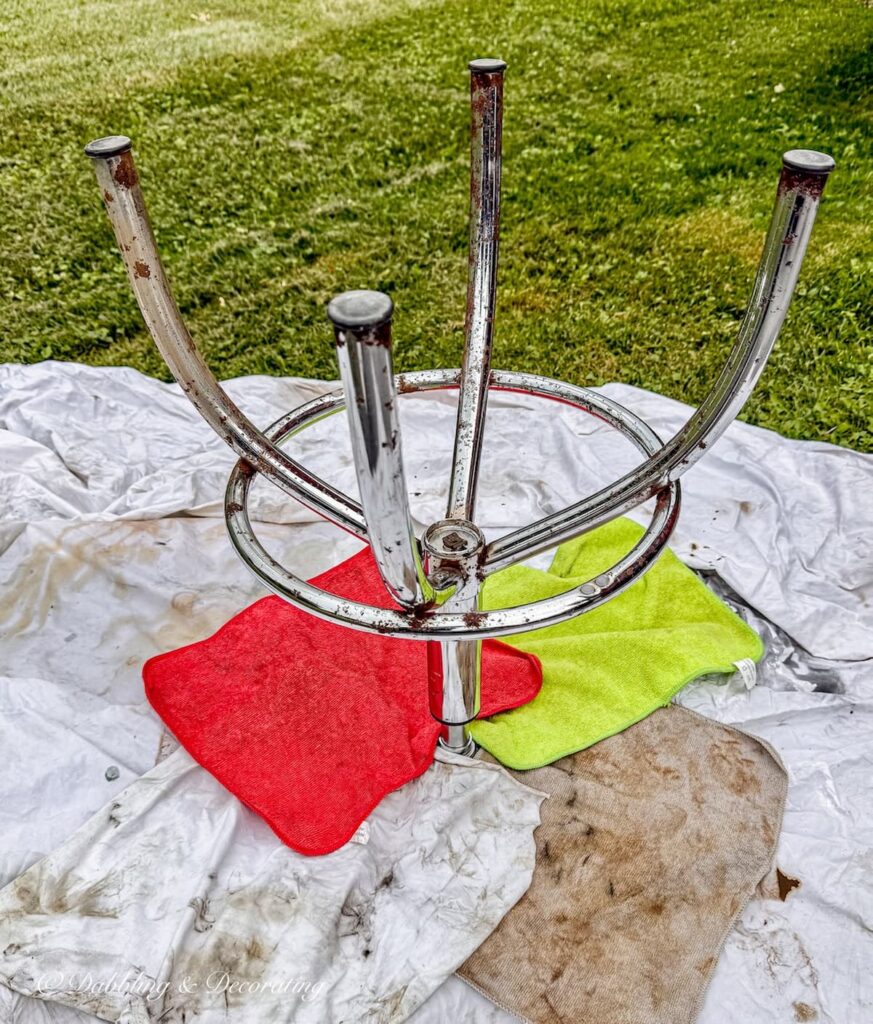
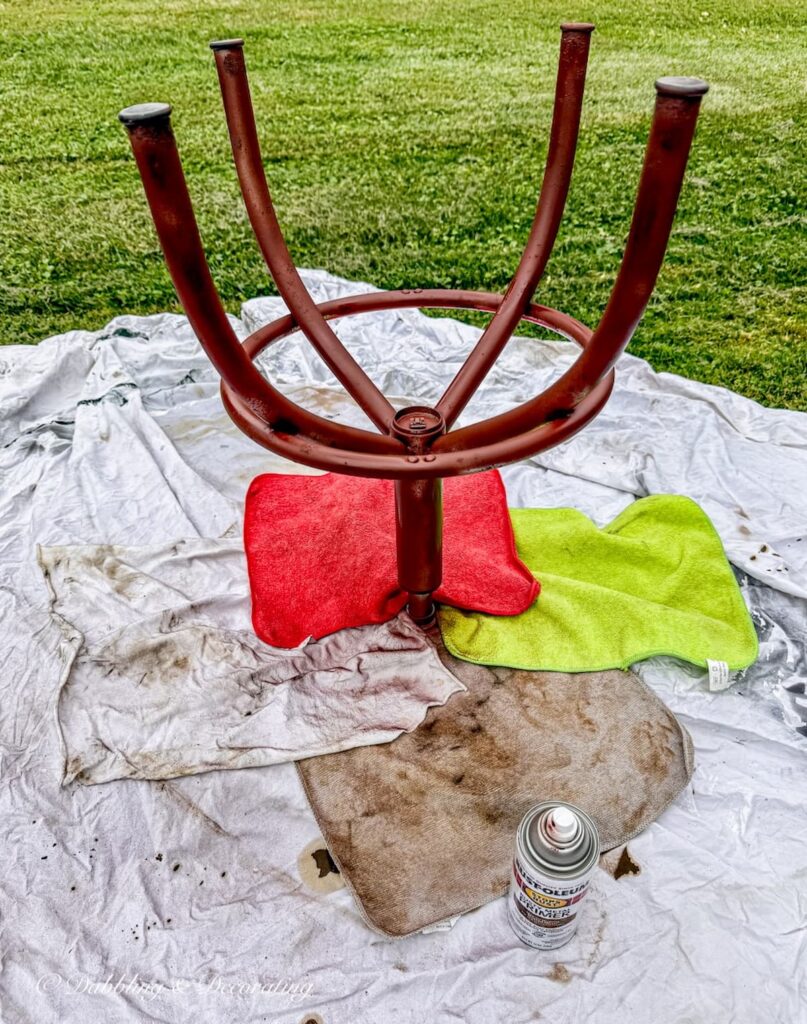
Before priming, I turned the stool upside down and simply covered the wooden seat and black adjustment handle with old rags. I skipped the painter’s tape altogether, making sure everything I wanted to preserve was well covered before spraying the metal base.
Ready to Embrace Vintage Decorating?
New to vintage collecting? This beginner’s guide will walk you through how to start collecting vintage home decor, what to look for, where to shop, and how to style your favorite finds with confidence.
Already have a collection you love? Don’t miss my favorite decorating with vintage collections ideas with stylish, creative ways to decorate with what you’ve found.
Step 3: Prime the Rusty Metal
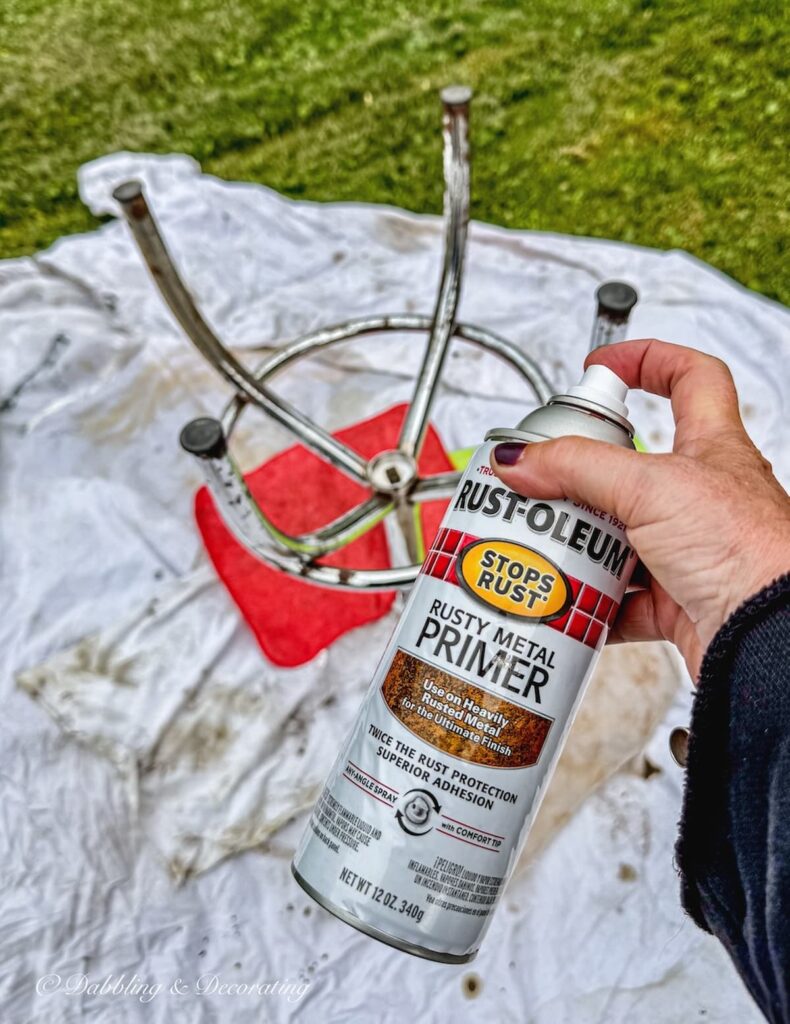
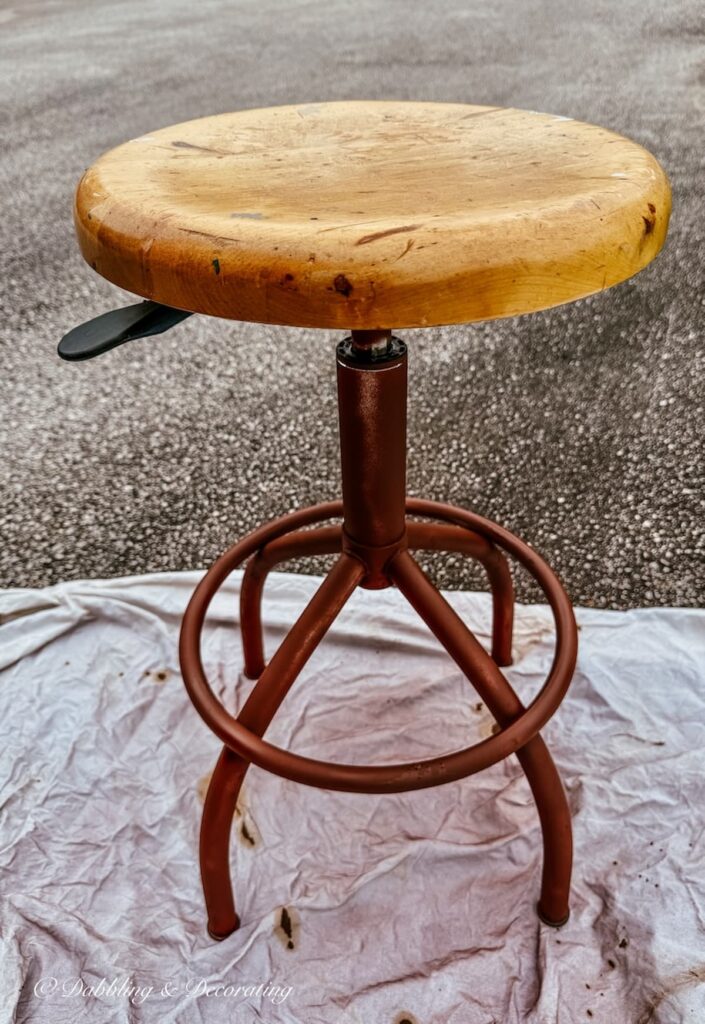
This was the step I was most nervous about—once the brown primer went on, there was no going back! I used Rust-Oleum Stops Rust Rusty Metal Primer, turned the stool upside down, protected the wooden seat with rags, and sprayed the metal in light coats, following the directions on the can. Once it was dry enough to handle, I flipped it upright and touched up the areas I couldn’t reach, leaving the rust-free metal beneath the seat untouched. I was surprised by how much I liked the covered base already, and now I can really picture it in blue-gray.
A Little Primer Patience… Ugh!
One thing I wasn’t expecting was the recoat time. The Rust-Oleum primer I used instructed me to recoat within one hour or wait 48 hours before painting over it, even though mine felt dry much sooner. I waited the full 48 hours before adding the blue-gray paint. Be sure to check the directions on your own primer, as drying and recoat times can vary.
Step 4: Paint the Drafting Stool
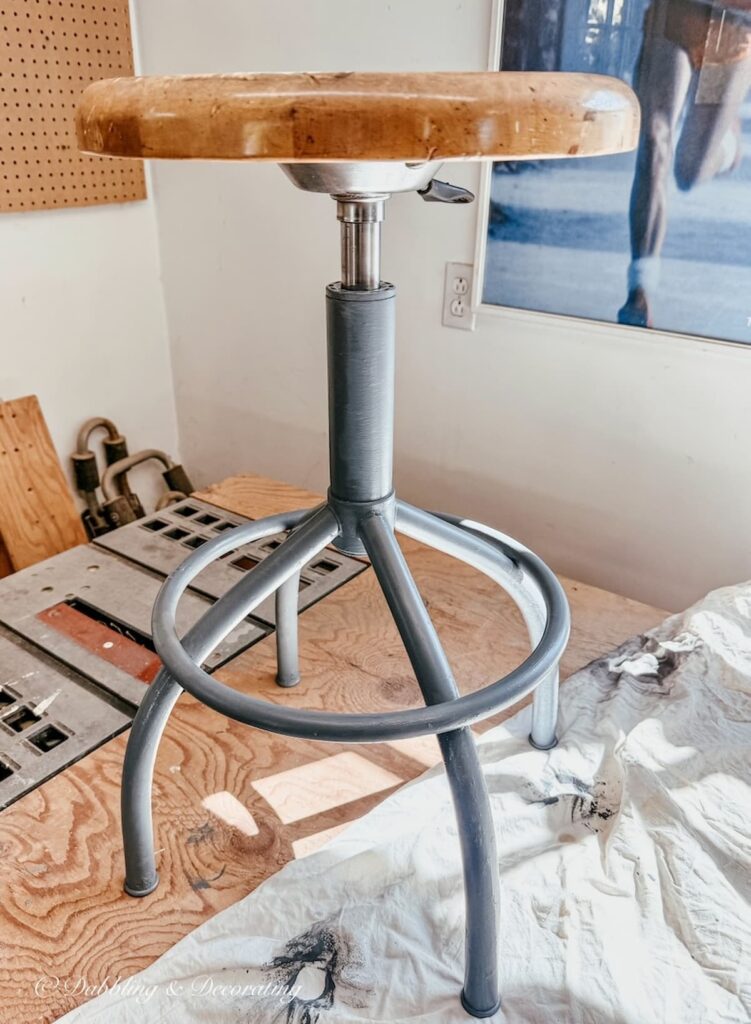
I applied two thin coats of our custom blue-gray paint formula, allowing the first coat to dry before adding the second. I wanted the stool to feel more like an old artist’s or craftmaker’s stool than a freshly refinished piece, and the custom blue-gray completely changed the look of the metal base.
The Secret Cupboard: Vintage Decorating Ideas Readers Love Most
Peek inside The Secret Cupboard, a cozy collection of vintage decorating ideas readers love most. Filled with thrifted finds, styled corners, and quick home inspiration.
Step 5: Decide Whether to Add a Little Wear
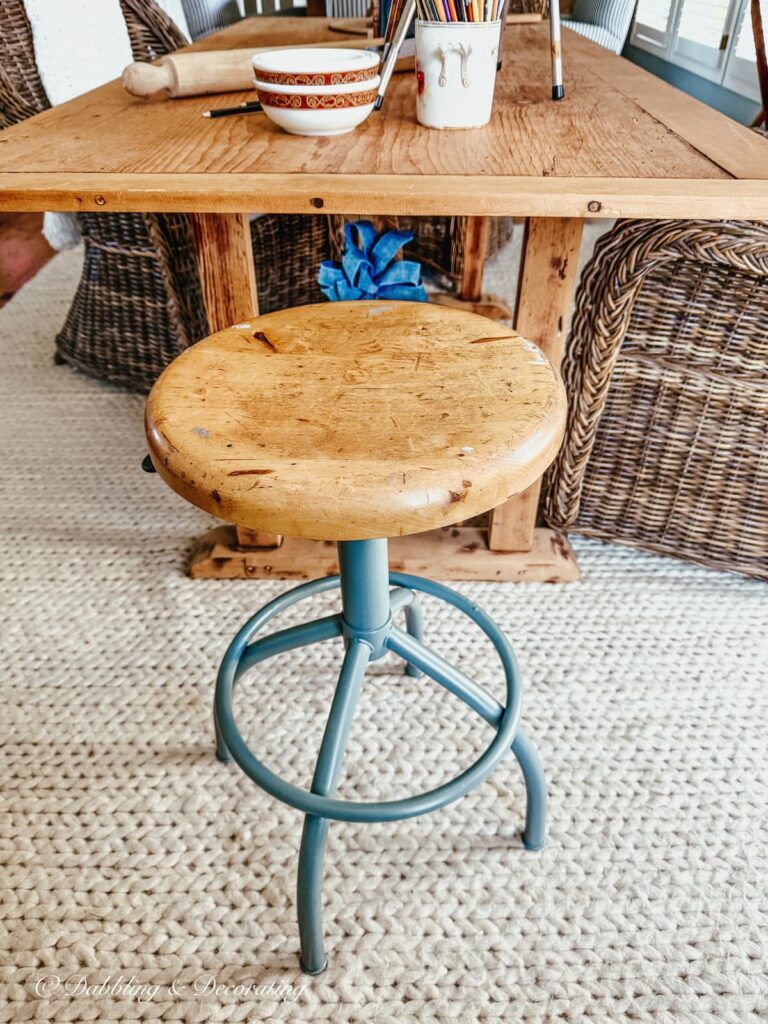
Once the paint dried, I decided not to sand or distress the metal at all. The original wooden seat already has plenty of genuine scratches, marks, and wear, which gives the freshly painted base all the age and character it needs. I loved the blue-gray just as it was, so sometimes knowing when to stop is the best finishing touch!
Try a Styling Tip!
Looking for simple, vintage-inspired decorating ideas you can try in an afternoon? Explore all my Styling Tips for easy seasonal projects, quick DIYs, and creative ways to style your home with charm.
Styling a Vintage Drafting Stool in the Scullery
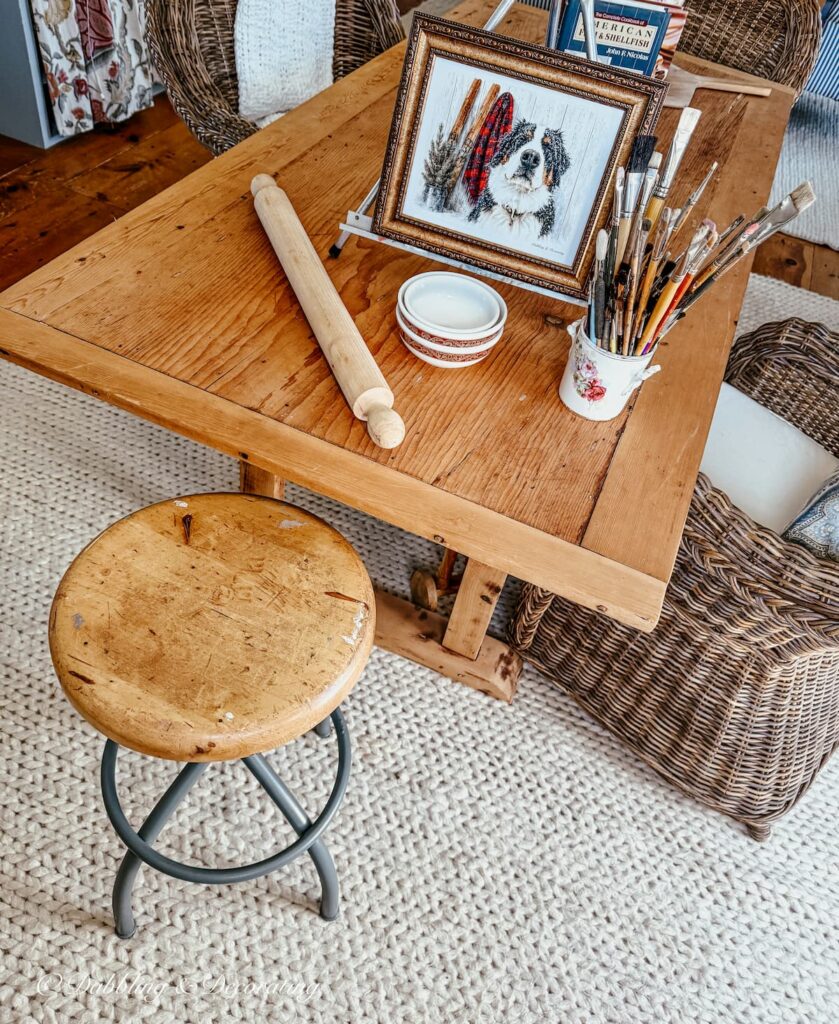
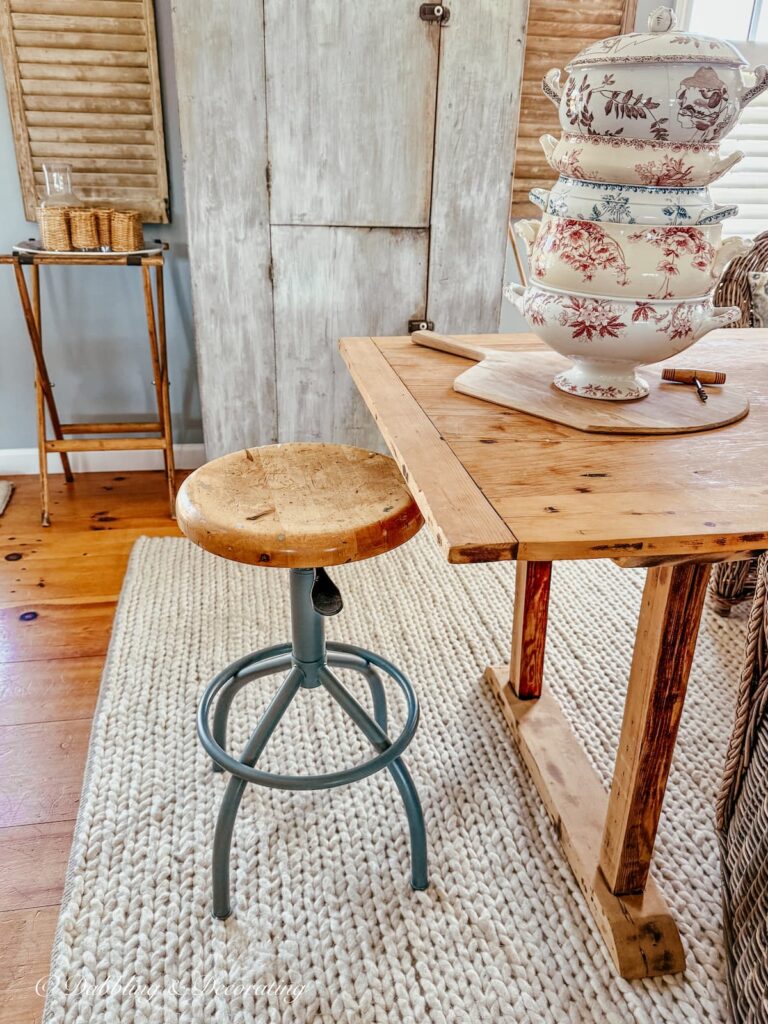
The little drafting stool has found its place in the scullery, although I have a feeling it won’t stay in any one spot for long. I’ve been moving it from one end of our old wooden worktable to the other, tucking it underneath when I want it out of the way, and pulling it back out whenever I need an extra perch or a small surface nearby.
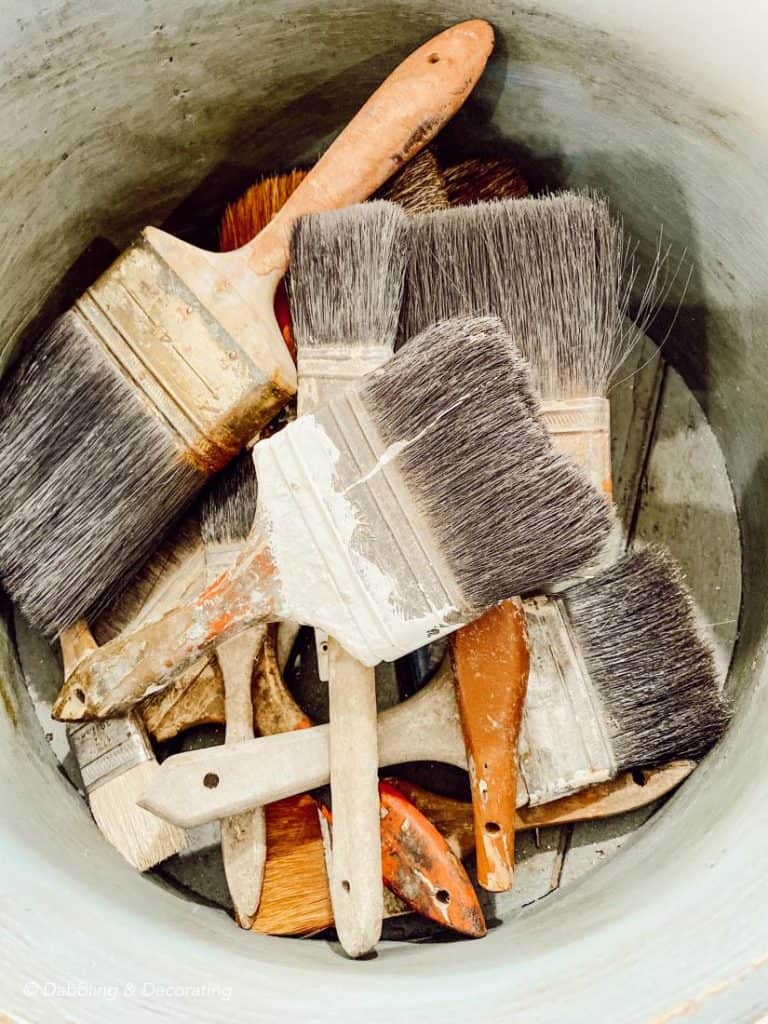
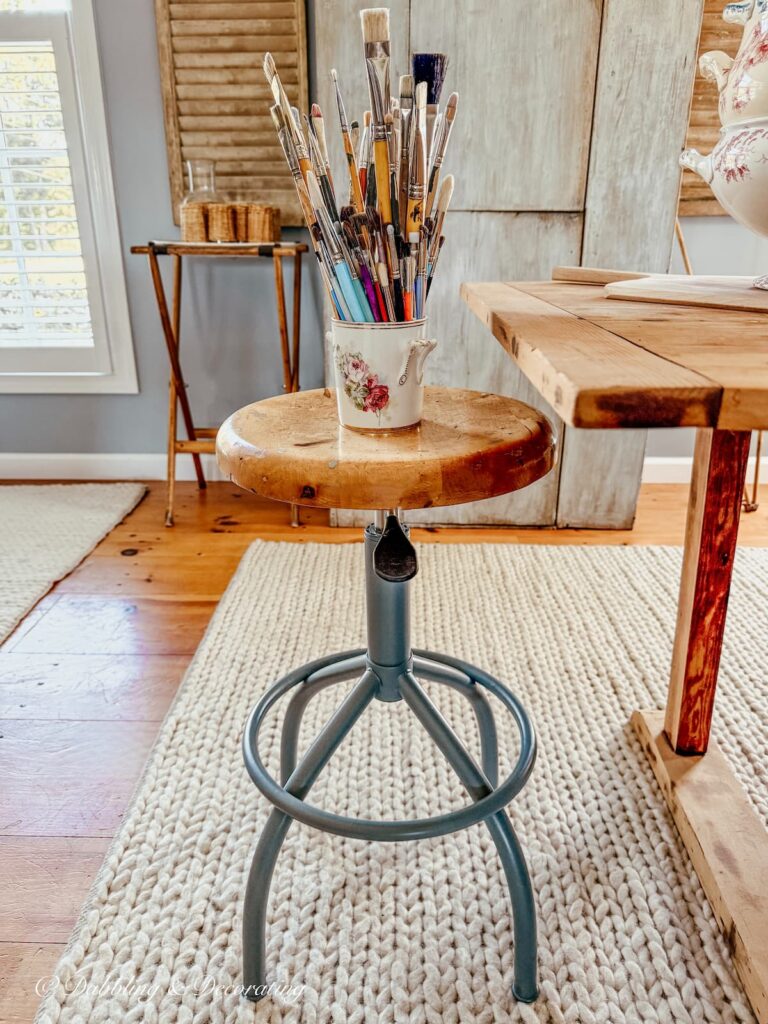
An old ceramic jar filled with paintbrushes seemed right at home on the worn wooden seat, bringing out that artist’s-studio quality I saw in the stool as soon as we started experimenting with blue-gray paint.
Want to See More of Our Vintage-Inspired Scullery?
This little drafting stool is just one of the many vintage finds I’ve been adding to our Vermont scullery since I started creating the space this spring. It began with a $250 butcher block worktable and an antique hutch, and I’ve been adding, rearranging, and finding new pieces for it ever since. Explore the scullery and see how this little kitchen workroom continues to come together.
What began as a rusty industrial stool now feels like an old working piece that could have been used for painting, drafting, cooking, or any number of projects over the years, and that’s exactly how I plan to use it here.
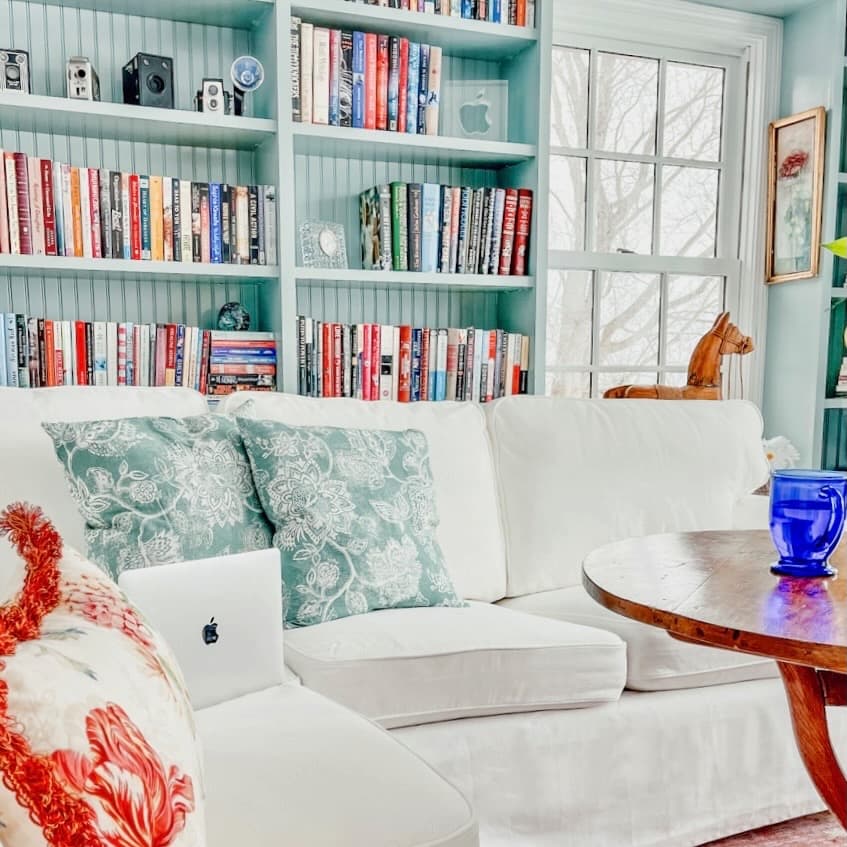
Eclectic Decorating Style Guide
Want to create a home that feels cozy, collected, and completely you? This guide dives into how to layer vintage, antique, and thrifted pieces effortlessly, sharing easy tips to help you embrace an eclectic vintage style that tells your story, one thrifted find at a time.
A Rusty Drafting Stool Restoration Worth Saving
This little drafting stool turned out even better than I imagined when I brought it home from the barn sale. I’m glad I didn’t let all that rust scare me away, and even more glad I finally gave in and painted the metal base. The blue-gray completely changed its personality while the worn wooden seat kept everything I loved about it in the first place. Now it’s a useful little working stool for the scullery, ready to move around the table wherever I happen to need it.
The Vintage Posts Readers Love Most
Start with the posts readers come back to again and again. These vintage decorating ideas are rooted in New England, styled with thrifted and antique finds, and filled with real-life tips you can use in your own home. Familiar Finds, Styled Your Way.
How to Start a Vintage Booth: Tips, Display Ideas, and Lessons Learned
Eclectic Decorating Style Guide: How to Layer Vintage, Antique, and Thrifted Decor
9 Vintage Booth Displays That Made Me Stop (And What You Can Learn From Them)
Scandinavian Spring Homes: 10 Light and Airy Cottage Tours to Inspire
Antique Oil Lamps: How to Repurpose Them Into Unique Flower Vases
The next time you spot an old drafting stool, or any rusty little piece that looks like it might be too far gone, take another look. A good cleaning and a little paint may be all it needs. And if you enjoy giving overlooked vintage finds a new place at home, be sure to explore more of my Thrifting with the Gals finds and vintage decorating ideas here on the blog.
Looking for more vintage furniture makeovers and ideas? You may also enjoy some of these reader favorites:
Join the Vintage Circle — Familiar Finds, Styled Your Way™
Love vintage treasures, thrifted gems, and a home that tells your story? Leave a comment, share this post with a kindred spirit, or head to my Start Here page to explore more. Want fresh prompts and timeless ideas? Subscribe to join our Seasonal Vintage Decor Styling Challenge for weekly inspiration and behind-the-scenes peeks.
Pin it for later!

Shop Rusty Drafting Stool Restoration Supplies
This post may contain affiliate links, which won’t change your price but will earn us commission.
*You can find the exact custom blue-gray paint formula I used here.